Your search Nicopolis ad Istrum gave 1508 results.

He was cornicularius, supply officer, to the prefect of the Legion XXII Primigenia.


He was from Aphrodisias in Caria, where he erected a relief depicting Mithras killing the bull.


Centurio frumentarius probably from Tarraco, who served in the Legio VII Gemina located in Emerita Agusta.

Pater patratus, he financed the restoration of a Mithraeum in Milan.

Senilius Carantinus, also named Cracissius, was a citizen (civis) of Mediomatrici.

Vir perfectissimus and priest of Zeus Brontes and Hekate, he erected a mithraeum in Rome.



Together with his uncle, he was a syndexios of the Mithraeum in Stockstadt.




Fructus was the slave who paid for the erection of the Mitreo del Sabazeo in Ostia.

Solder of the Legio II Augusta who dedicated a monument to Mithras Invictus in Isca.
This rock-cut Mithraeum occupies the north-eastern slope of the Grand-Rebberg at Saarburg, featuring a stepped entrance, a sloping central aisle, lateral benches, and a spring-fed water conduit.
White marble statue found near the Scala Santa in Rome depicting Mithras as bull-slayer, accompanied by the dog, serpent and scorpion, with the bull’s tail ending in ears of grain.
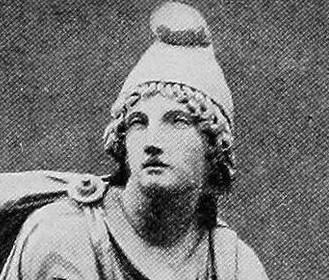
Historian, Platonist, and practicing Mithraist writing on tradition, transcendence, and the soul’s ascent through history, myth, and metaphysics.
This altar dedicated to Sol Invictus Mithras by a certain Septimius Zosimus was found in the Basilica of San Martino ai Monti in Rome.
