Your search Podersdorf am See gave 2324 results.
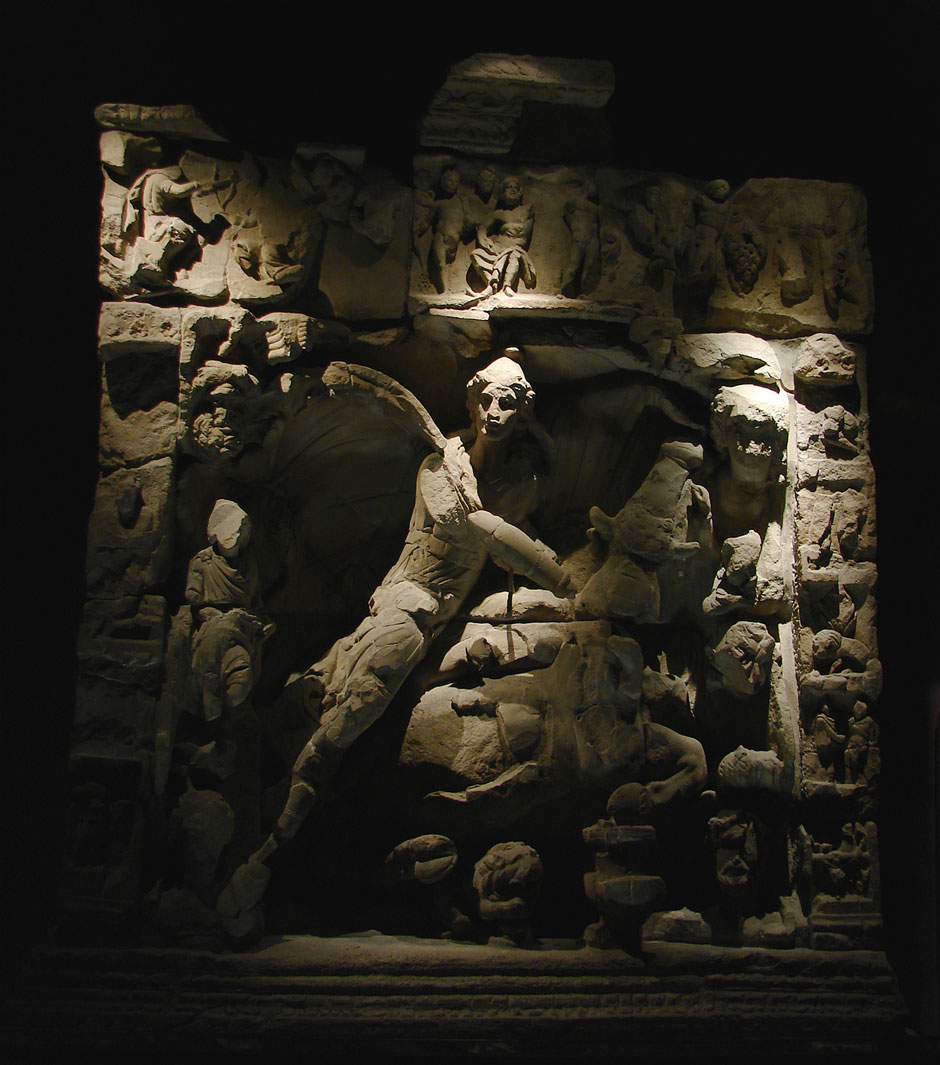
The Tauroctony of Saarbourg (Sarrebourg, ancient Pons Sarravi), France, contains most of Mithras deeds known in a single relief.

Mithraic relief from Rome reproduced in figure 169 of the corpus.

Altar from Kokardscha near Adam Klissi, ancient Tropaeum Traiani in Moesia Inferior, dedicated to Deo invicto for the welfare of Emperor Marcus Antoninus Verus by Annius Saturninus, centurion of Legio XI Claudia.
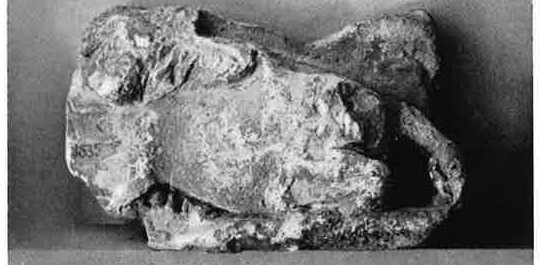
Fragment of a sandstone tauroctony relief from Schwadorf area, ancient Aequinoctium in Pannonia Superior, depicting Mithras killing the bull; the upper part of Mithras's body, the head, and parts of the bull are lost.
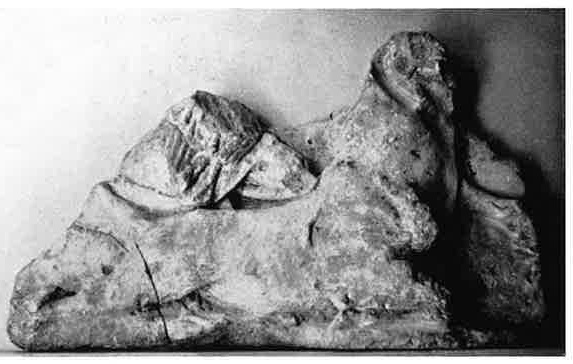
Fragment of a large sandstone tauroctony relief from Schwadorf, ancient Aequinoctium, depicting Mithras killing the bull; the upper part of the god's body, his head, the end of the tail, and the scorpion are lost.
Fragments of an altar and an inscription from the Mithraeum at Moosham, Noricum, preserving only the opening of a pro salute dedication; traces of fire are visible.
Life-sized sandstone head with long curly hair and Phrygian cap, found at the foot of the Hohenklingen near Stein am Rhein, Raetia; probably belonging to a statue of Cautes or Cautopates.
Sandstone altar found together with the Vocco altar at Rottenburg am Neckar, ancient Solicinium, bearing a fragmentary dedication and decorated with trees on its lateral faces.
Finds discovered near the crossing of the criptoporticus of the Mithraeum at Capua, including marble plate fragments, a tuff base, red lamps, and animal bones.
Miscellaneous finds from the middle of the Mithraeum of Capua, including a terracotta antefix with centaurs, basins, marble bases, lamps with a Sol head, and coins of M. Aurelius and Constantine.
Badly damaged fresco fragment showing a person in red attire in a kneeling position, from the initiation sequence of the Mithraeum of Capua.
Head in Phrygian cap with a sorrowful expression, used as a protome in the Amphitheatre of Capua and interpreted as a head of Mithras.
Inscription dedicated to Sol Invictus at Lambaesis, of uncertain Mithraic attribution.
Altar inscription dedicated to Sol Augustus by the decurion Valerius Carpus, from Timgad (ancient Thamugadi).
Great royal inscription of Antiochus I of Commagene carved on the thrones at Nemrud Dağı, invoking Apollo-Mithras-Helios among the guardian deities of the kingdom, 69–34 B.C.
Group of nearby religious dedications associated with soldiers of the Legio III Augusta and the wider sacred landscape around the Mithraeum.
Limestone altar dedicated to Sol Invictus Mithras by the governor and military commander Marcus Valerius Maximianus.
Assemblage of lamps, keys, torches, an iron knife, pottery, glass fragments, and five coins from Mithraeum III at Heddernheim, ancient Nida
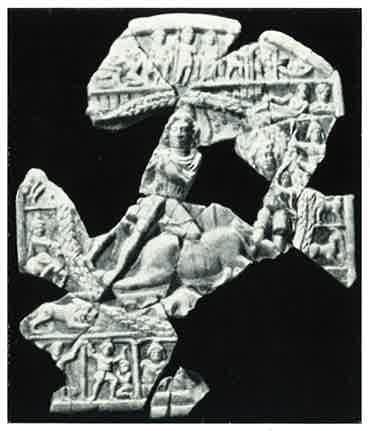
Fragments of a white marble arched tauroctony from Mithraeum III at Heddernheim, ancient Nida, showing Mithras killing the bull in a leaf wreath
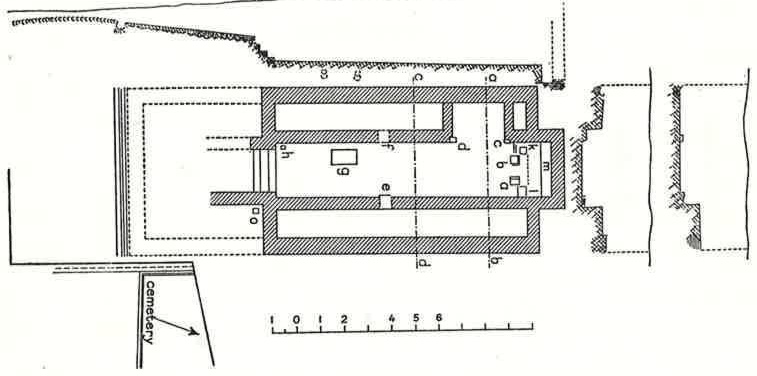
Third Mithraic sanctuary found north-west of the cemetery at Heddernheim, ancient Nida, in 1887 and fully excavated by G. Wolff in 1890
