Your search Podersdorf am See gave 2329 results.
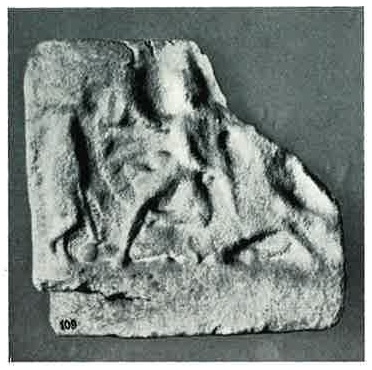
Marble tauroctony relief from Ruše, Noricum, showing a grotto scene in which Cautopates holds the torch downward against the rocky ground and supports his head with his left hand in a pensive attitude; the upper left corner preserves a bust of Sol.

Small marble tauroctony relief from Ruše, Noricum, badly weathered, depicting the bull-slaying in a grotto-like niche with cross-legged torchbearers on bases.

Small rectangular Mithraic sanctuary (spelaeum 8.00 m long) found in 1935–36 in a gravel terrace at Schachadorf near Wartberg an der Krems, Noricum; the building is divided into a pronaos and an inner cult room, and shows traces of fire destruction.
Small bronze bust of Sol with five rays found at Strasbourg, ancient Argentoratum, during construction works in the 1860s–70s; associated with the Mithraic assemblage from the city.
Statue of Cautopates from Neuenheim, holding a downward torch with both hands, now in the Kurpfälzisches Museum at Heidelberg
Rocky base from the Mithraeum at Neuenheim probably originally supporting a representation of Mithras' rock-birth
Votive sandstone altar from Wiesbaden, ancient Aquae Mattiacae, dedicated to Deo Soli invicto by Caius Silvinius Maternus, in honour of the Domus Divina
Ara litteris rubricatis from Mainz, ancient Mogontiacum, dedicated to Deo invicto Mithrae, with the dedicant's name only partly legible

Fragment of a white sandstone tauroctony relief from Mainz, ancient Mogontiacum, found reused in the wall of a house in 1864
Fragmentary sandstone altar from Mainz, ancient Mogontiacum, dedicated to Deo invicto Mithrae by Marcus A., a duplicarius of an ala
Yellow sandstone altar from Mainz, ancient Mogontiacum, dedicated to Deo invicto Mithrae on behalf of the salus of soldiers of Cohors I Ituraeorum
Fragmentary Latin inscription from Rückingen recording a dedication to a goddess whose name is only partially preserved
Sandstone Mithras relief discovered in 1950 near Rückingen, proving the existence of a Mithraeum there from the late second to early third century AD
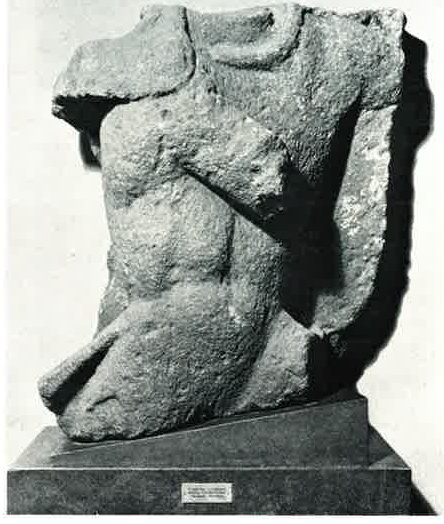
Marble relief fragment showing Mithras slaying the bull, originally belonging to a lost second Mithraeum at Friedberg.
Ritual terracotta offering plate decorated with a serpent and traces of white paint from the Friedberg Mithraeum.
Large quartzite tauroctony relief with torchbearers, zodiacal imagery and traces of ancient red paint from the Friedberg Mithraeum.
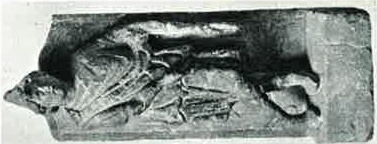
Limestone relief of the torchbearer Cautopates standing cross-legged in Oriental dress.
Complex military inscription invoking Apollo, Sol and Luna under Severus Alexander.

Colonia Ulpia Traiana Augusta Dacica Sarmizegetusa was the capital and the largest city of Roman Dacia, later named Ulpia Traiana Sarmizegetusa after the former Dacian capital, located some 40 km away. The city was destroyed by the Goths.
Antioch was the capital of Roman Syria and gateway between the Mediterranean and the eastern provinces.
