Your search Quirinalis, Via Rasella gave 94 results.

Marble plate recording the construction of a centenarium Solis by the governor Septimius Flavianus, found at Bir Haddada in the Ager Sitifensis, dated 315/316 A.D.
Altar with a fragmentary inscription from Mithraeum II at Stockstadt, preserving only the abbreviated dedication to Deo invicto Mithrae
Marble inscription discovered near the Via Cupa mentioning an offering to the invincible Mithras by Apollonius Tetes Syras of Marcianopolis.
Upper portion of a white marble column from the Mithraeum at Sarmizegetusa, Dacia, bearing the abbreviated dedication to Soli invicto Mithrae.
Fragmentary inscription from the Mithraeum at Sarmizegetusa, Dacia, preserving only the end of a name (-nus) and the abbreviated votive formula.
Inscription from Carnuntum, Pannonia Superior, preserving only the abbreviated dedication to Invicto deo Mithrae sacrum.
Fragmentary marble inscription from Stix-Neusiedl, Pannonia Superior, preserving only the end of a dedicant's name (-mus) and the abbreviated closing formula.
Fragmentary marble inscription from Mithraeum II at Ptuj, ancient Poetovio, preserving only the abbreviated dedication to Deo Soli invicto Mithrae.
Upper portion of a marble altar from Mithraeum II at Ptuj, ancient Poetovio, preserving only the abbreviated dedication to Deo invicto Mithrae.
Votive inscription from Heddernheim, ancient Nida, dedicated to Fortuna by Tacitus, an eques of the Ala I Flavia Milliaria

In this relief of Mithras as bull slayer, recorded in 1562 in the collection of A. Magarozzi, Cautes and Cautopates have been replaced by trees still bearing the torches.

Peltuinum was a Roman town of the Vestini on the Via Claudia Nova, founded in the mid-1st century BC. It developed into a regional centre with city walls, a sanctuary, a theatre and an amphitheatre, and was monumentalised in the early Imperial period
Cales was an ancient city of Campania, in today's comune of Calvi Risorta in southern Italy, belonging originally to the Aurunci/Ausoni, on the Via Latina.
The Roman settlement overlooked a passage between the Hodna and the Sahara via the Aïn Rich plain and the valley of the Oued Chaïr, between the Ouled-Naïl and Zab mountains.
Volsinii or Vulsinii, is the name of two ancient cities of Etruria, one situated on the shore of Lacus Volsiniensis, and the other on the Via Clodia, between Clusium and Forum Cassii.
Carsulae was a Roman municipium in the region of Umbria, now preserved as an archaeological site, about 4 km north of the small town of San Gemini. Its foundation dates back to 220 BC with the construction of the Via Flaminia.

Slave and vilicus in the household of Tiberius Claudius Livianus, linked to the earliest known Mithraic tauroctony.
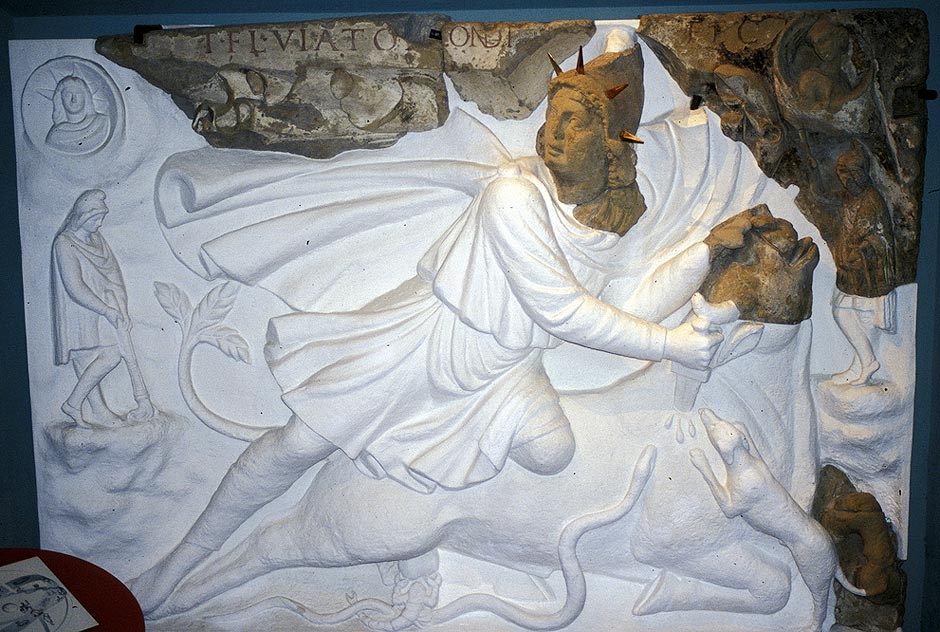
Of this great relief of Mithras slaying the bull only a few segments remain.
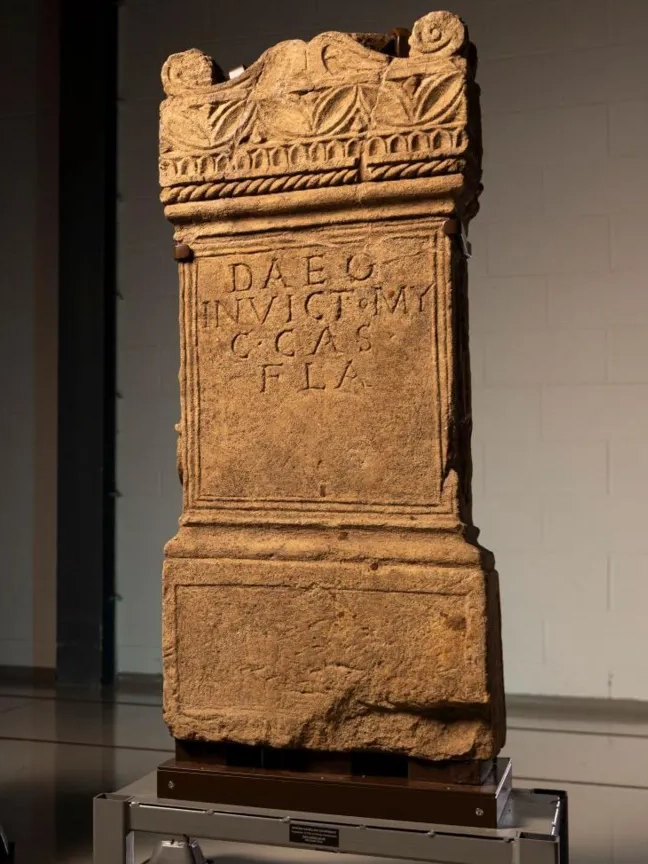
This second altar discovered to date near Inveresk includes several elements unusual in Mithraic worship.
At Rome’s twilight, amid political upheaval and Christian ascendancy, Vettius Agorius Praetextatus embodied pagan intellect, virtue, and authority across senatorial, military, and mystical spheres.
