Your search Rab gave 45 results.

The island settlement of Arba occupied a strategic position along the eastern Adriatic maritime routes.
Arabia connected the Roman Near East to caravan routes, desert frontiers and the commercial networks of the southern Levant.

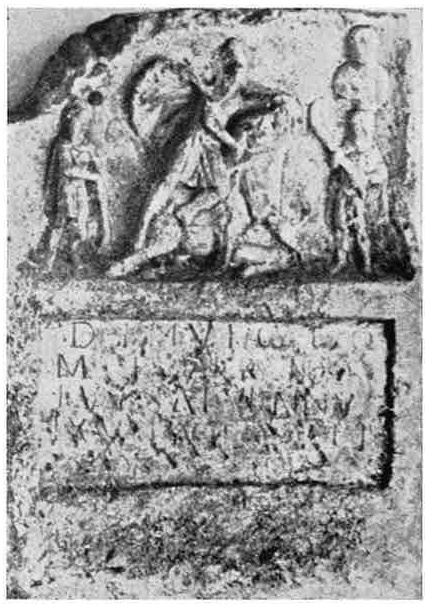
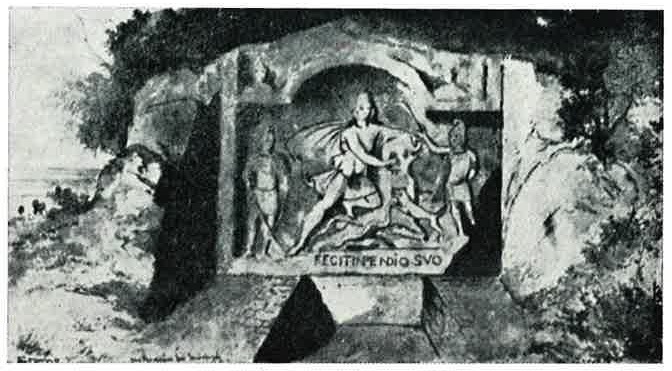
Altar found at Rab, ancient Arba in Dalmatia, in 1867, bearing a dedication to Invicto by Octavius Geminus; the Mithraic attribution is uncertain.
Scarabantia became one of the principal urban centres of western Pannonia near the Amber Road.
Trabzon is a historic city on the Black Sea coast of northeastern Turkey, founded in 756 BC as Trapezous by Greek colonists from Miletus. It passed from Achaemenid control to the Kingdom of Pontus, then became part of the Roman and Byzantine empires.
.jpg)
Sucidava stood on the lower Danube frontier and formed part of the defensive network of late antique Dacia.
Marble inscription fragment from the Mithraeum at Sopron, ancient Scarabantia, preserving only the closing votive formula.
Marble statuette of Cautopates from the Mithraeum at Sopron, ancient Scarabantia, in Phrygian cap and Oriental dress, holding the torch downwards; the head is lost.
Marble statuette of Cautes from the Mithraeum at Sopron, ancient Scarabantia, in Phrygian cap and Oriental dress, holding the upraised torch with both hands; the head is lost.
Inscription from the Mithraeum at Sopron, ancient Scarabantia, dedicated to Deo Soli invicto Mithrae by Caius Valerius Respectus, IIIIvir Augustalis of the Colonia Scarabantiensis.
Marble tauroctony relief from the Mithraeum at Sopron, ancient Scarabantia, depicting the standard bull-slaying scene with raven, dog, serpent, scorpion, and torchbearers.
Marble tauroctony relief from the Mithraeum at Sopron, ancient Scarabantia, depicting the standard bull-slaying with raven, dog, scorpion, and cross-legged torchbearers.
Marble inscription fragment from the Mithraeum at Sopron, ancient Scarabantia, recording a dedication to Deo invicto Mithrae by an Augustalis.
Marble altar fragment from the Mithraeum at Sopron, ancient Scarabantia, dedicated to Deo invicto Mithrae by a dedicant whose name includes Secundinus.
Large marble tauroctony relief from the Mithraeum at Sopron, ancient Scarabantia, depicting the standard bull-slaying with raven, dog, serpent, and scorpion, flanked by cross-legged torchbearers.
Amorium, also known as Amorion, was a city in Phrygia, Asia Minor which was founded in the Hellenistic period, flourished under the Byzantine Empire, and declined after the Arab sack of 838.
An inscription from Aquileia recording a joint dedication to Deus Sol by the invincible Emperors Diocletian and Maximian, comparable to their dedication to Apollo Belenus elsewhere in the city.
An inscription to Sol Invictus Mithras found in the Vigna Patritii outside the Porta Pia in Rome, dedicated by Aelius Victorinus, a veteran of the emperors honourably discharged, with M. Aurelius Romulus as antistes and sacerdos of the cult.
Epigraphic testimony catalogued in the Année Épigraphique and Lugli’s Fontes for ancient Rome.
