Your search Rohr im Kremstal gave 1037 results.

White limestone fragment from the Mithraeum at Biljanovac, Moesia Superior, preserving the upper part of Mithras as bull-slayer in a sleeveless tunic.
Archaeological remains connected with the Praetorian camp and the presence of Mithraic worship among the imperial guard.
Relief featuring an enigmatic agricultural implement interpreted either as a scythe or an early type of plough.
Reworked limestone altar dedicated by the governor of Numidia during the period of the Diocletianic persecutions.
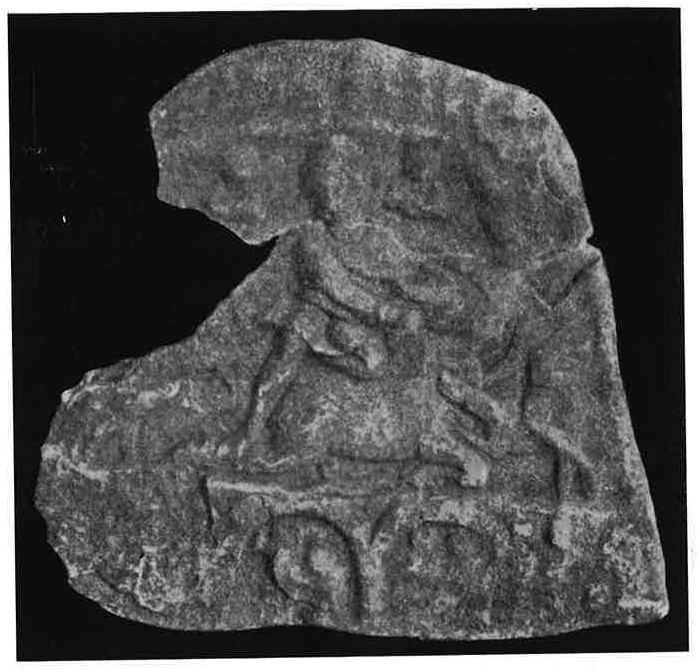
Arched marble tauroctony relief in two fragments from Sofia, ancient Serdica in Thracia, divided into three parts, with Mithras killing the bull in the centre and subsidiary scenes on either side; the weathered surface limits identification.
Fragment of a limestone column from the Mithraeum at Sarmizegetusa, Dacia, with a partially preserved inscription recording a dedication by multiple members of the Syrian community.
Inscription from the Mithraeum at Sarmizegetusa, Dacia, recording a dedication by Severus, imperial freedman, to Cautopates.
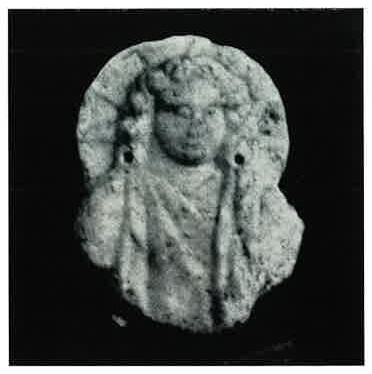
Fragment of a white marble statuette from the Mithraeum at Sarmizegetusa, Dacia, preserving the dressed bust of Sol in a nimbus and seven-rayed crown with traces of red colour; two bolt-holes at the bottom for attachment.
Three white limestone fragments from the Mithraeum at Sarmizegetusa, Dacia, preserving the hind leg of a lion in a vertical position and a serpent apparently moving towards a rock — possibly a rock-birth scene.
Fragment of a white limestone relief from the Mithraeum at Sarmizegetusa, Dacia, preserving the bust of Sol and a figure in Phrygian cap raising a right hand.
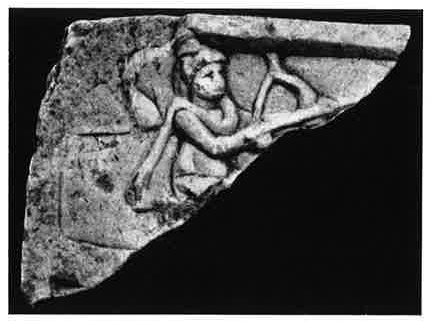
Fragment of a white limestone relief from the Mithraeum at Sarmizegetusa, Dacia, preserving the dressed bust of Sol and beside him a sitting Mithras visible to the knees, with an arch above.
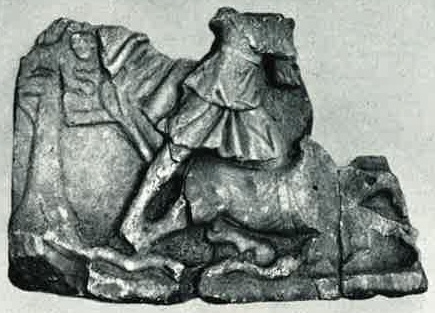
Three fragments of a large yellowish marble tauroctony from the Mithraeum at Sarmizegetusa, Dacia, depicting the damaged bull-slaying scene; at approximately 0.94 × 1.31 m one of the larger reliefs from the sanctuary.
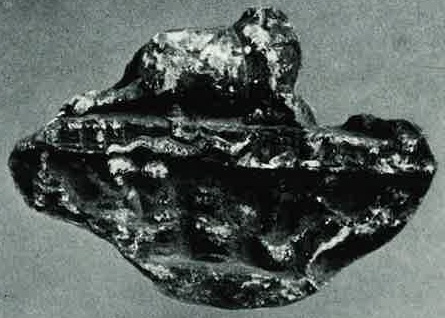
Lower part of a white limestone tauroctony relief from the Mithraeum at Sarmizegetusa, Dacia, preserving the bull with a broad belt and the Cautopates area.
Left lower corner of a marble tauroctony relief from the Mithraeum at Sarmizegetusa, Dacia, preserving the crossed legs of Cautopates with the forepart of his torch and a fragmentary inscription in the lower rim.
White marble altar or base from the Mithraeum at Sarmizegetusa, Dacia, dedicated to Soli invicto Mithrae by Carpion, imperial freedman and tabularius.
Inscription from Apulum, Dacia, dedicated to Soli invicto Mithrae by Turranius Marcellinus and Antonius Senecio Iunior, conductores armamentarii — managers of the imperial arms depots.
Lost limestone altar from Apulum, Dacia, decorated on the sides with a rose and serpent, on the reverse with a bull's head; the front bears a Mithraic inscription.
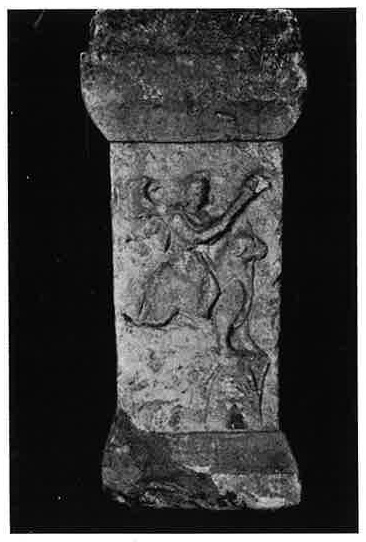
Limestone base from Apulum, Dacia, decorated on the front with Mithras riding the bull to the right while holding an upraised torch — the tauriphoros riding type, distinct from the tauroctony.
Limestone altar from Apulum, Dacia, decorated on one side with Medusa, on another with a vase, flowers, a bull's head, and a serpent; the front bears an inscription.
Limestone base from near the Kutyamál vineyard south of the fortress at Apulum, Dacia, decorated with Bacchic vine scrolls and grapes at the top.
