Your search Roman cemetery of St. Matthias gave 3406 results.
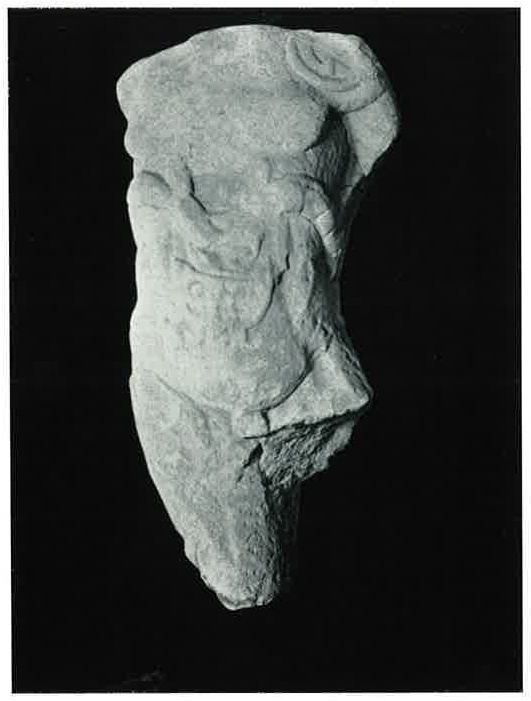
Sandstone statue from Wahlheim, Germania Superior, depicting a naked torso encircled by two serpents holding their heads towards the figure's face — the characteristic iconography of the leontocephaline Aion.

Small bronze statuette recovered from the river Saale near Burg Giebichenstein in 1900, depicting Mithras as bull-slayer without a Phrygian cap; the left leg is lost.
Bust of a diademed woman in red sandstone from the Mithraeum at Dieburg, probably representing Juno
Red sandstone fragment of a standing woman in a mantle from the Mithraeum at Dieburg, head and lower body lost, probably Minerva
Twenty-three fragments of a yellow sandstone statue of Mercury from the Mithraeum at Dieburg, dressed in a short mantle and holding a caduceus
Votive altar from the Mithraeum at Dieburg inscribed by Hermapiostor, dedicated ex iussu
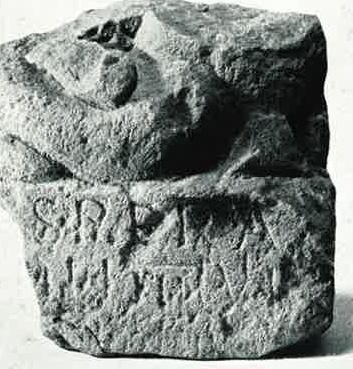
Fragment of a sandstone statue found during cellar excavations at Gross-Krotzenburg in 1848, possibly belonging to the Mithraeum
Marble stele relief with bull-slaying scene and subsidiary Mithraic episodes including the sacred banquet.
Fragmentary limestone statuette of a cross-legged torchbearer originally attached to a tauroctony relief.
Bearded nude statue formerly claimed to be Mithraic but later rejected as a seventeenth-century sculpture unrelated to the cult.
Fragmentary remains of statues identified as representations of the Mithraic torchbearers.
A marble statue fragment found at Sentinum (modern Sassoferrato) in ancient Umbria, walled in the atrium of the Palazzo Raccamadoro-Ramelli, showing Mithras tauroctone with dog, serpent and scorpion, one foot pointing towards a torchbearer; the bull's head, tail and Mithras'…
A small bone statuette from the Mithraeum at Spoleto, depicting a youth dressed in tunic and long cloak with a laurel wreath around the head.
A cone-shaped piece of stone with a square hole found to the left of the altar in the Mithraeum at Spoleto, unlikely to have supported a representation of Mithras's rock-birth despite earlier suggestions, given that the stone tapers slightly.
A white marble tauroctony statue fragment in the Palazzo Corsini in Florence, possibly from the Florentine area, heavily restored, with the upper body of Mithras and the bull's hind quarter with scorpion preserved but hind-legs lost and the god's head replaced by a petasus…
A white marble statue fragment from Rusellae in Etruria, now in the Museum of Grosseto, preserving the upper body of Mithras tauroctone with the head and neck of a different marble; both legs, the left arm and the right arm from the elbow are lost.
A Sol statue headless and lacking arms and feet, mentioned by Martelli as existing at Nersae alongside a fragmentary inscription, with no further details obtainable by Vermaseren or Cumont.
A statue found along the Via Cassia about six kilometres from Rome, tentatively identified as an Aion entwined by a serpent but possibly representing Atargatis according to Vermaseren, now in the Museo Nazionale delle Terme.
A cippus found in a vineyard near the Via Salaria by the Coemeterium Priscillae outside Rome, inscribed by Q. Hostilius Euplastus, a leo of the Mithraic mysteries, dedicating a gift to the god.
A white marble tauroctony statue found in 1925 at the ancient site of Lorium near the eleventh milestone on the Via Aurelia outside Rome, showing Mithras slaying the bull with dog, serpent and scorpion, accompanied by Cautes and Cautopates; now in the Palazzo Doria…
