Your search Roman cemetery of St. Matthias gave 2751 results.

Fragmentary limestone relief from Thun-Allmendingen of the same dimensions as the bull relief, depicting a swine; both may have formed part of the sanctuary's ritual décor.
Large limestone relief from Thun-Allmendingen depicting a bull walking to the left; the head is lost. At approximately 2.91 × 2.43 m one of the largest single-animal reliefs from a Mithraic context.
Two small limestone heads in Phrygian caps from the Stockhorn Mountains near Thun-Allmendingen, each approximately fist-sized, probably belonging to statues of the torchbearers.
Two fragments of a sandstone inscription from Gran in the Vosges, dated to the late second century, recording a dedication to Soli deo invicto by a servant of the dedicant, with possible mention of a portico and columns.
Sandstone plate from Beihingen in the Neckar valley, depicting on one side a youth in Oriental dress with a bow in an arched niche, and on the other a corresponding figure; both may represent torchbearers or Mithraic grades.
Sandstone slab from Kindenheim, Germania Superior, depicting a standing winged Aion with traces of a lion's mane on the breast and objects in both hands; the head and part of the body are damaged.
Second sandstone lion from Brumath, ancient Brocomagus, of uncertain Mithraic attribution; larger than the inscribed companion piece.
Sandstone altar found together with the Vocco altar at Rottenburg am Neckar, ancient Solicinium, bearing a fragmentary dedication and decorated with trees on its lateral faces.

Large grey sandstone tauroctony relief from Fellbach near Cannstatt, depicting the bull-slaying in a vaulted grotto with torchbearers, Sol, Luna, and subsidiary Mithraic scenes along the border.
Large votive altar from Murrhardt, dedicated to Soli invicto Mithrae by Sextus Iulius Florus Victorinus, tribune of Cohors XXIV Voluntariorum civium Romanorum, recording the full restoration of a Mithraic temple from its foundations.
Altar found at Recking near Heilbronn in 1615, dedicated to Soli invicto Mithrae by Publius Nasellius Proclianus, centurion of Legio VIII Augusta, who is also attested as dedicant of altars to Apollo Pythius and Fortuna.
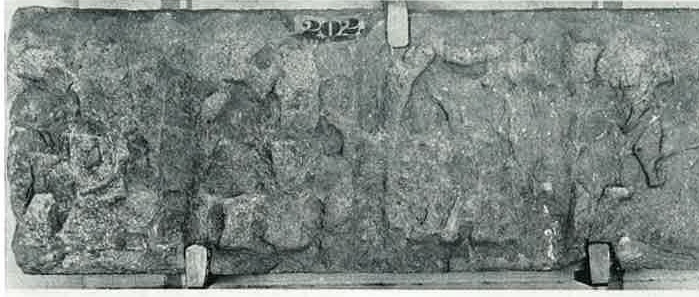
Badly damaged red sandstone relief from Hölzern, Germania Superior, depicting the standard bull-slaying scene; possibly forming part of the border zone of a larger composition.
Inscribed altar from Lengfeld near Aschaffenburg dedicated to Numini augusto deo invicto by Caius Atulius Maior ex voto
Large inscribed altar from Lengfeld near Aschaffenburg dedicated to Numini augusto Soli deo invicto by Lucius Trougillus ex voto
Stone head in a Phrygian cap found near Rothselberg in 1894, preserved in the Historisches Museum der Pfalz at Speyer, looking upwards
Grey limestone relief fragment from Rockenhausen found at the Pfingstborn spring, preserving part of the bull-slaying scene
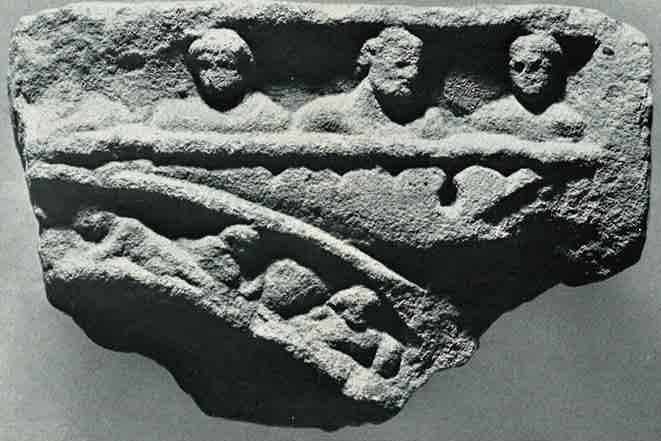
Fragment of a red sandstone relief found in the Frankfurterstrasse at Dieburg, depicting four divine busts in the upper corner of the composition
Various altar and base fragments, two sandstone balls, and two millstone fragments from the Mithraeum at Dieburg
Small yellow-red sandstone altar from the Mithraeum at Dieburg dedicated to Deo sancto Mercurio
Red sandstone altar from the Mithraeum at Dieburg that had been reused, its original inscription obliterated and replaced with a dedication to Deo invicto Mithrae
