Your search San Giovanni al Timavo gave 3665 results.

Fragment of a small altar from Ljubljana, ancient Emona in Pannonia Superior, preserving a dedication to Invicto Mithrae by a dedicant whose name ends in -quartus; the Mithraic attribution is not entirely certain.
Sandstone fragment of a Mercury statuette preserving part of the shoulder and caduceus.
Assemblage of lamps, serpent-vases and painted ritual pottery from the sanctuary complex.
Decorative bronze candlestick discovered near the entrance of the supposed Mithraic sanctuary.
Cult statue base discovered with a hooked ritual sword in front of the sanctuary niche.

This votive silver plaque depicting Mithras was found at the site of Pessinus, Ballıhisar, in Turkey.
A probable Mithraic sanctuary near Santa Maria in Domnica on the Caelian Hill, known from a group of dispersed reliefs formerly owned by Ottaviano Zeno.
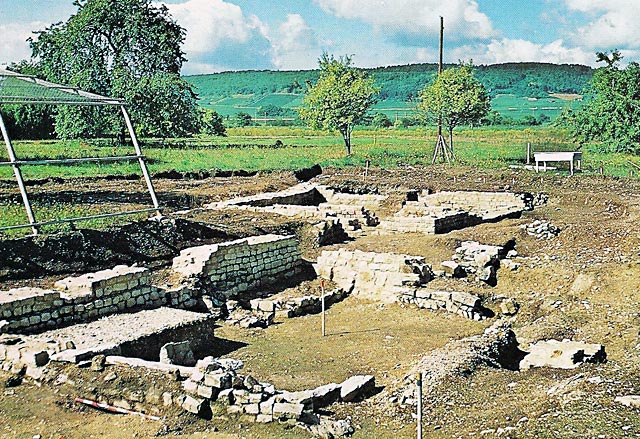
The Mithraeum des Bolards was integrated into a therapeutic cultural complex related to healing waters.
This supposed Mithraic altar from Soulan in the Pyrenees was later identified as a modern forgery, including both the inscription and the alleged cave context in which it was said to have been discovered.
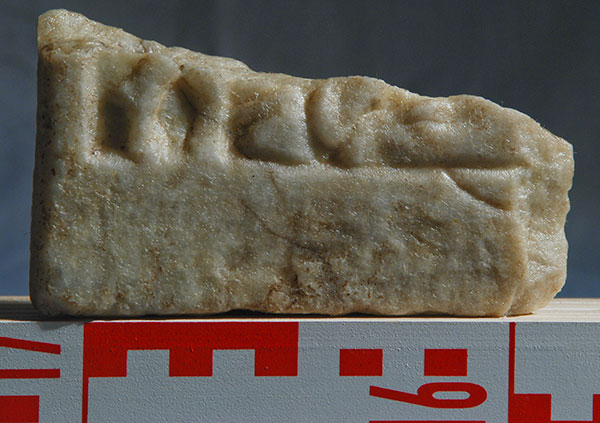
This small marble fragment preserves the crossed legs of a torchbearer, probably Cautopates, beside the hoof of the bull and the foot of Mithras.
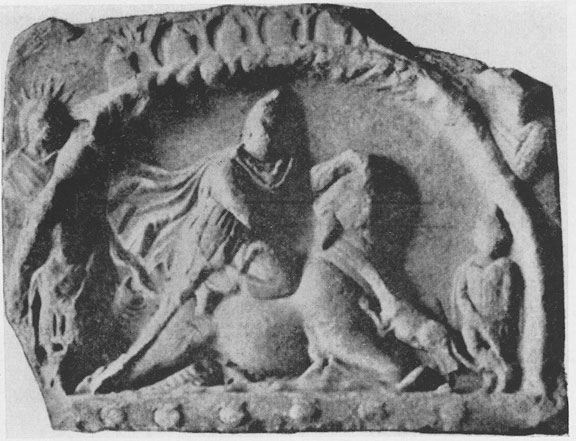
This finely carved marble tauroctony from Interamna features an unusual series of altars and ritual vases surrounding the scene.
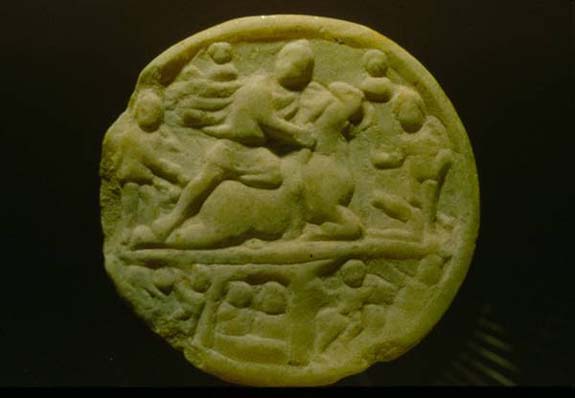
The small medallion depicts three scenes from the life of Mithras, including the Tauroctony. It may come from the Danube area.
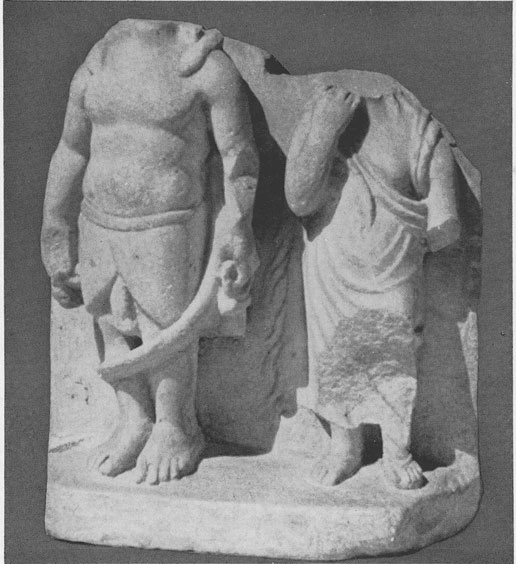
Marble relief, probably found in Rome during the construction of the Palazzo Primoli along the Via Zanardelli.
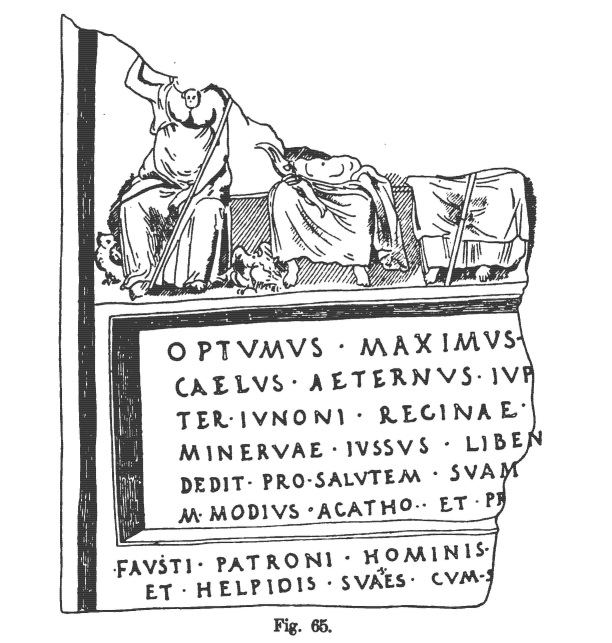
This marble relief bears an inscription by Marcus Modius Agatho, who dedicated several monuments to Mithras on the Caelian Hill in Rome.
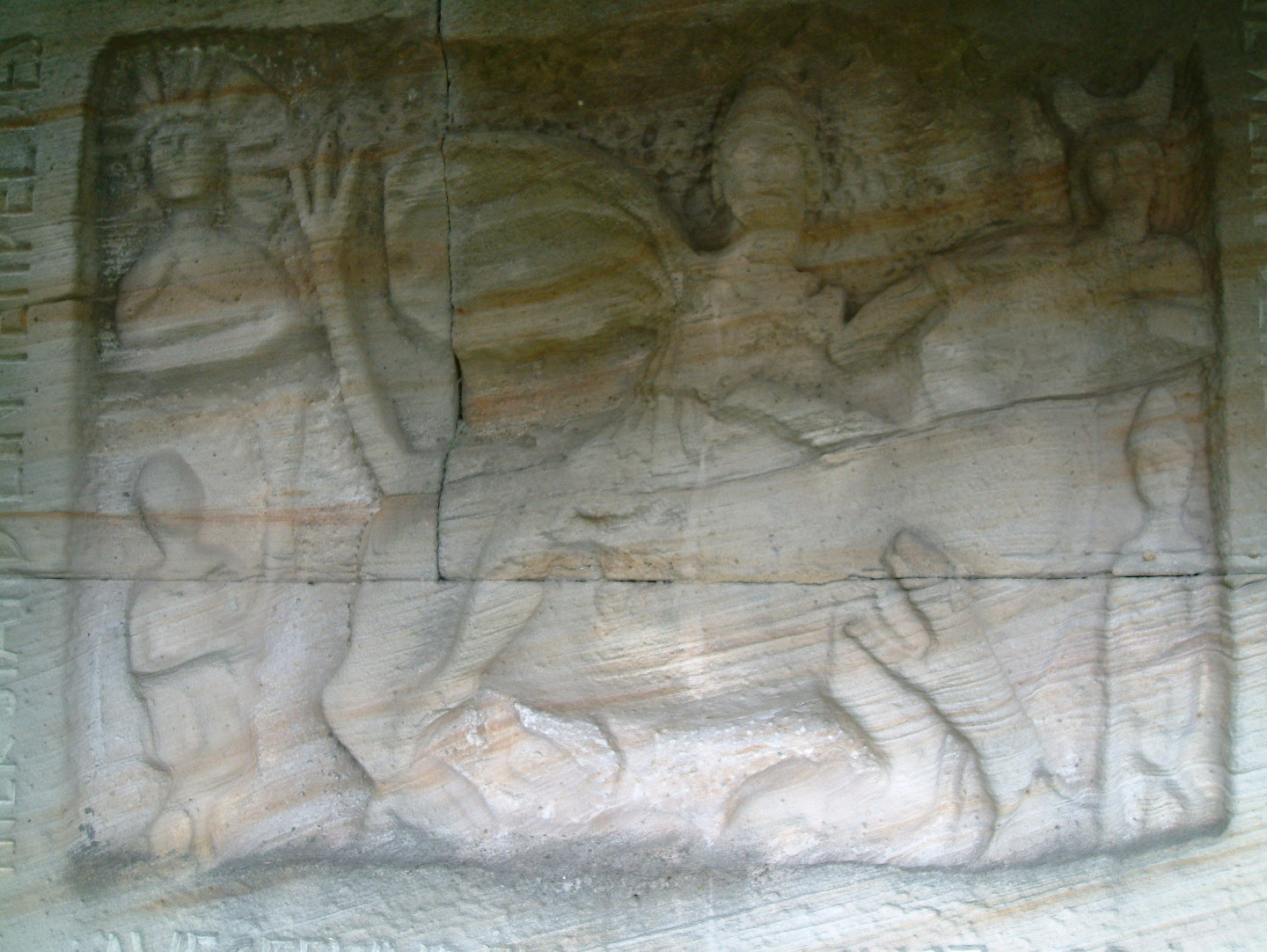
This relief of Mithras killing the bull found in Gimmeldingen, Germany, lacks the usual raven.
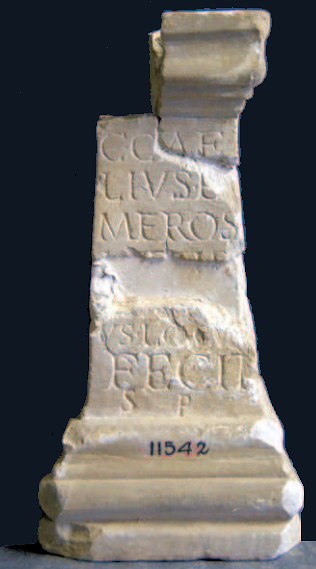
This small monument bears the inscriptions of a certain Caelius Ermeros, antistes at the Mithraeum of the Painted Walls.
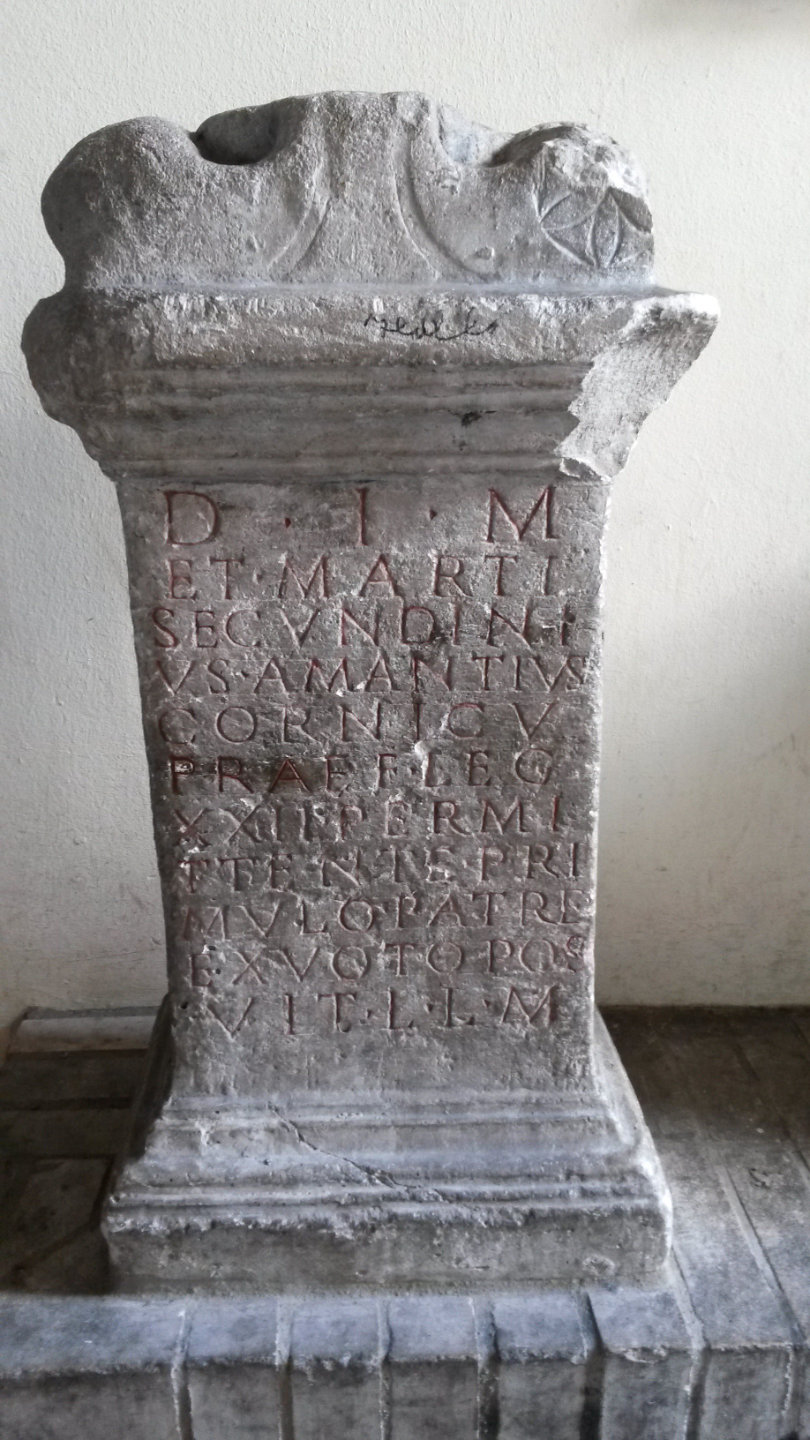
This altar has been unusually dedicated to both gods Mithras and Mars at Mogontiacum, present-day Mainz.
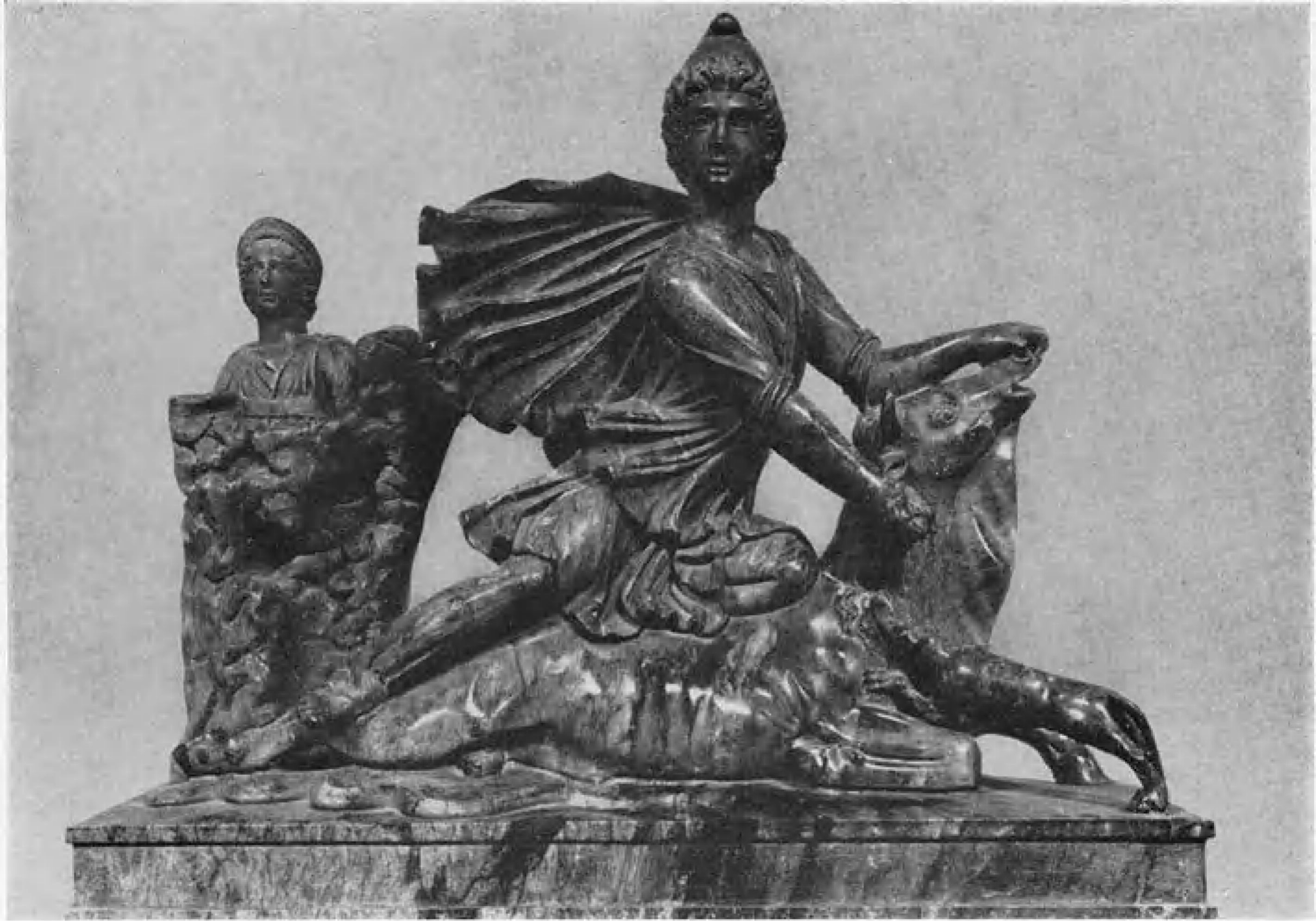
This black marble of Mithras killing the Bull has belonged to the sculptor Carlo Albacini.

White marble relief, found near Aix "a la Torse dans un enclos ayant appartenu à la famille de Colonia".
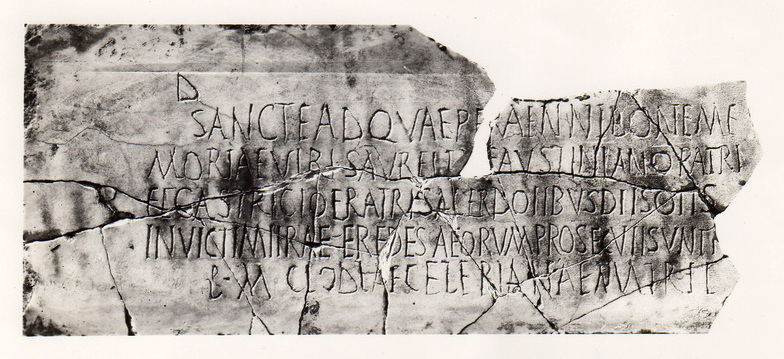
This inscription was commissioned by a family of priests of the invincible god Mithras.
