Your search San Valentino in Abruzzo Citeriore gave 587 results.

Architectural elements including marble plaques, mouldings, entablature sections, and acanthus friezes, found in a building about 30–40 metres south-west of the Mithraeum at Les Bolards (ancient Venetonimagus) in Lugdunensis, suggesting the possible existence of a second sanctuary…
A sandstone bowl and a large part of a stone laver or washing bowl from the Mithraeum at Walbrook in London, ritual vessels forming part of the sanctuary's furnishings.
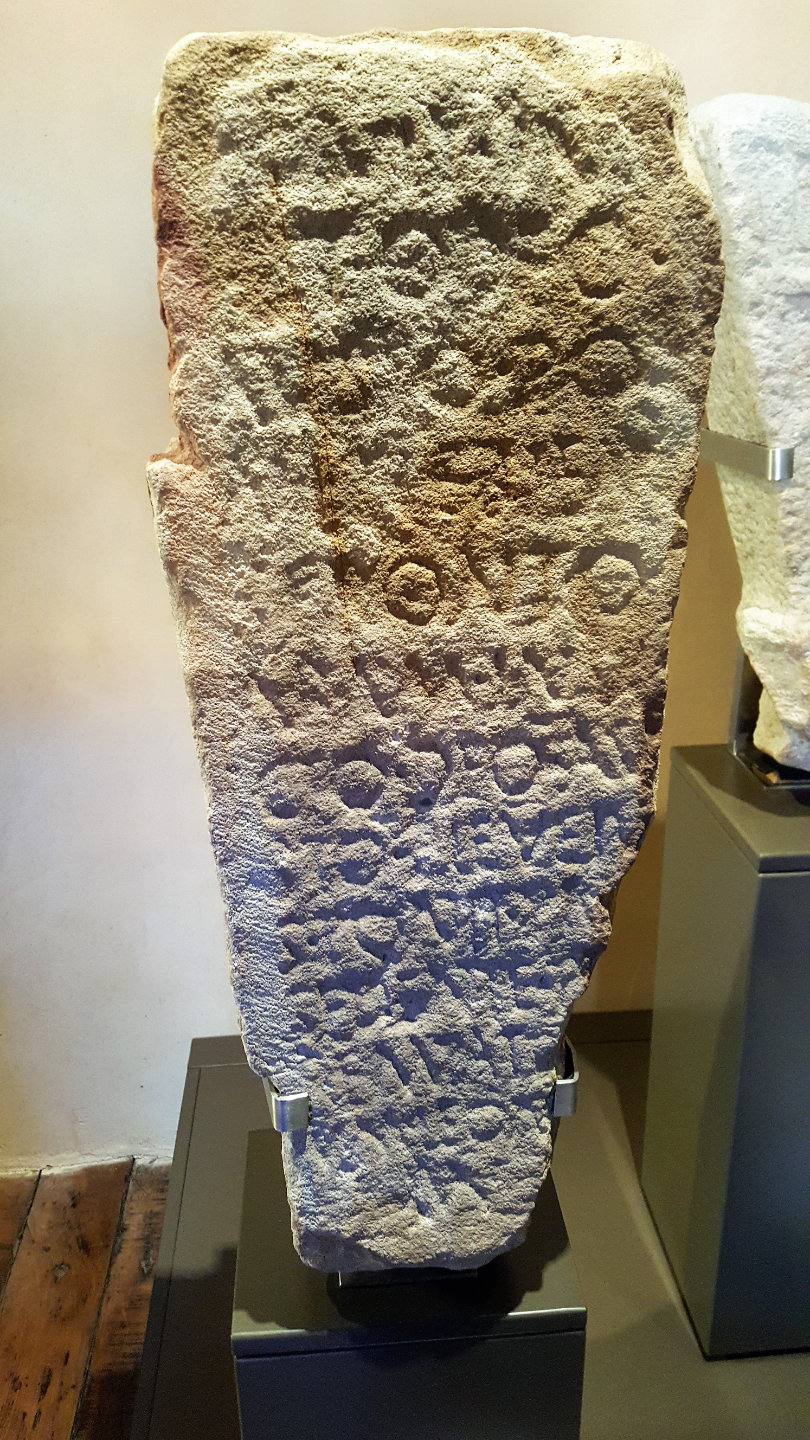
The monument of San Juan de la Isla (Asturias) devoted to Mithras was preserved in the portico of the main church until 1843.
A marble dedication tablet found in the Vigna Curtii Palloni outside the Porta Sant'Agnese near the Praetorian Camp in Rome, recording the construction of a sacrarium dedicated to Sol Invictus by Q. Pompeius Primigenius, pater and sacerdos, under Septimius Severus and Caracalla…
Preliminary readings of the painted Mithraic texts later revised after additional research and restoration.
Marble inscription found near the Church of S. Susanna on the Quirinal, with a dedication to Sol Invictus as a votive offering by Cornelius Maximus, centurion of the tenth praetorian cohort.
Fragmentary inscription from Dolni Vadin, Thracia, preserving only the word sancto — probably part of a dedication to Deo sancto invicto.
Stone slab still in front of the church in Kumanovo, ancient Lopata in Moesia Superior, bearing a dedication to Deo sancto Mithrae.
Inscription from Celei, ancient Sucidava in Dacia, dedicated to the sanctum of Solis invicti Mithrae.
Small red sandstone fragment from the Mithraeum at Konjic, Dalmatia, preserving an oblong object — possibly an arm — within a border.
Rocky pass about twenty minutes south of Prozor, Dalmatia, containing a rock niche with a carved Mithraic scene; probably a secondary cult place related to the Vitalj sanctuary.
Lost stone altar from the thermal baths at Baden, ancient Aquae Helveticae, dedicated to Deo invicto by Tiberius Cassius Sanctus and Tiberius Sancteius Valens following a vision.
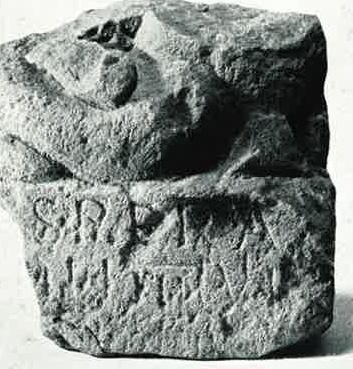
Fragment of a sandstone statue found during cellar excavations at Gross-Krotzenburg in 1848, possibly belonging to the Mithraeum
Two lost Mithraic monuments from Rome: one documented in a 1738 catalogue of the Palazzo Barberini as a tauroctony group with scorpion, snake and dog, and another mentioned by Pirro Ligorio as a Mithras panel in the Palazzo del Duca di Sanseverino.
Well with a drainage pipe and two oblong brick-built tombs in the room to the left of the entrance of the Mithraeum of San Clemente, one tomb filled with refuse and a large number of animal bones, particularly swine.
Marble statuette representing a bearded person as the Good Shepherd, found in the Dominicum Clementis opposite the Mithraeum of San Clemente; it definitively represents S. Peter, not a Mithraic father of the mysteries.
Sculptural fragments of two torchbearers from the Mithraeum of San Clemente, Rome.
Marble cippus of which only two sides are preserved, with a brief dedication to Cautes on the front face, from the Mithraeum of San Clemente, Rome.
Possible Mithras sanctuary at a grotto entrance in the Kavag-Dağ, Lycia; the identification remains purely hypothetical according to Cumont.
Two painted decorative phases from the Santa Prisca Mithraeum whose figures became clearer after later conservation work.
