Your search Sidi Ali Belkacem (سيدي علي بلقاسم) gave 1194 results.

The locality of Botoșești-Paia has yielded material connected with the Danubian provincial landscape.
The locality of Acbunar is associated with archaeological remains from the lower Danubian frontier zone.
Torrita di Siena is a comune in the Province of Siena in the Italian region of Tuscany, located about 80 kilometres southeast of Florence and about 40 km southeast of Siena.
Albano Laziale, sometimes known simply as Albano, is a comune in the Metropolitan City of Rome Capital, on the Alban Hills, in the Italian region of Lazio.
Palestrina is a modern Italian city and comune with a population of about 22,000, in Lazio, about 35 kilometres east of Rome.
Isernia is a town and comune in the southern Italian region of Molise, and the capital of the province of Isernia.

Scholar specializing in the history of ancient North Africa, with a particular interest in the Oriental cults (Anatolian, Egyptian, Syrian, and Iranian) that spread throughout this region.
San Zeno is a locality near Tuenno in the Val di Non, where Mithraic material attributed to Roman Raetia was discovered.

An altar found in 1822 at Borcovicium (modern Housesteads), recording a vow fulfilled by Valerianus, a soldier of the Sixth Victrix Legion, to Cocidius and the Genius of the garrison.

The last pagan emperor of Rome, closely associated with Mithras and Neoplatonic interpretations of the Sun God.
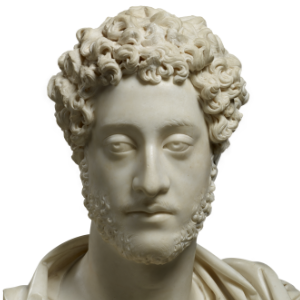
Roman emperor traditionally regarded as the first ruler initiated into the Mysteries of Mithras.
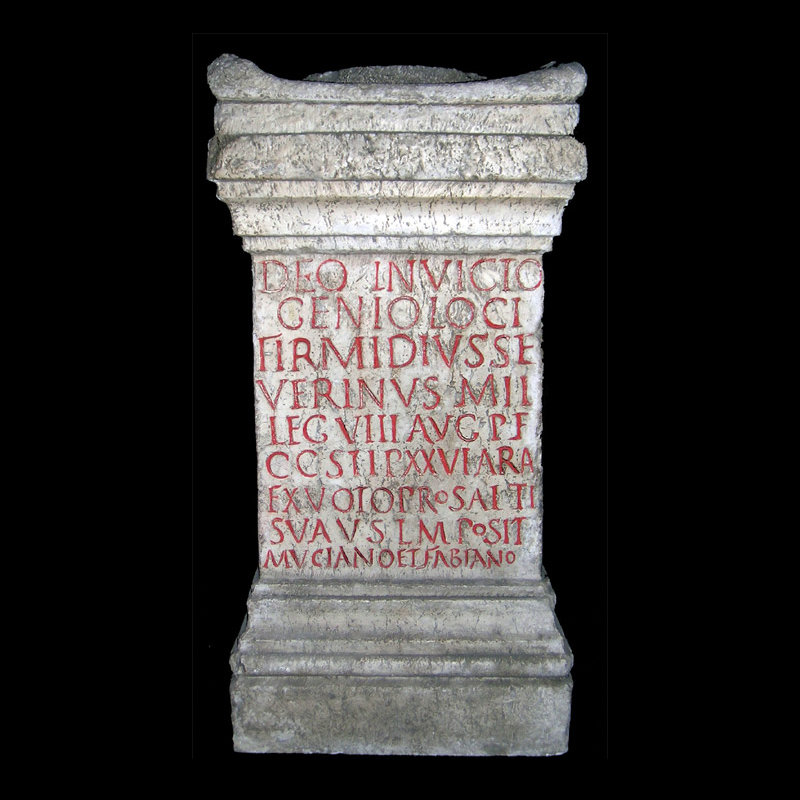
This limestone altar bears an inscription from its donor, Firmidius Severinus, in honour of Mithras after 26 years of service in the Legio VIII Augusta.
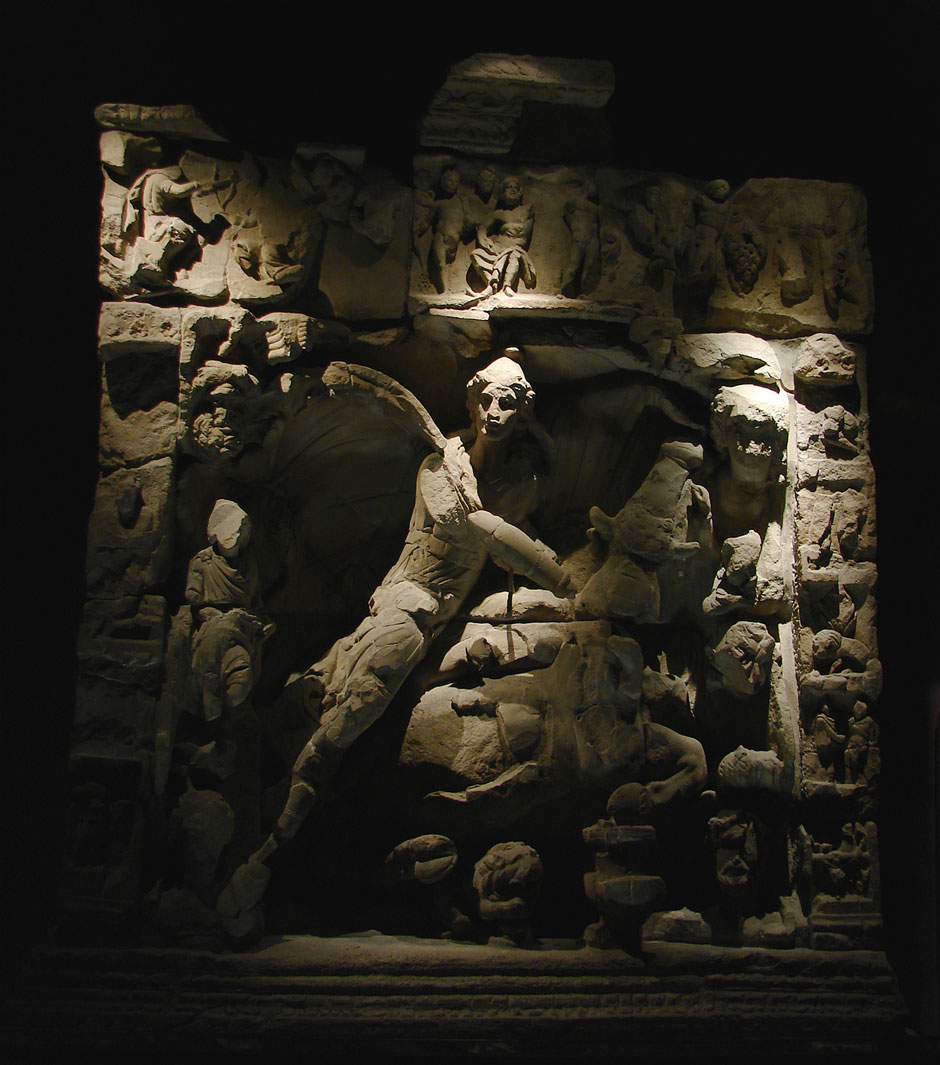
The Tauroctony of Saarbourg (Sarrebourg, ancient Pons Sarravi), France, contains most of Mithras deeds known in a single relief.
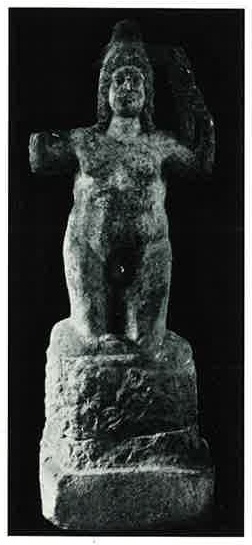
This white marble statue of the rock-birth from Cibinium in Roman Dacia is one of the largest known Mithraic sculptures from the Danubian provinces.
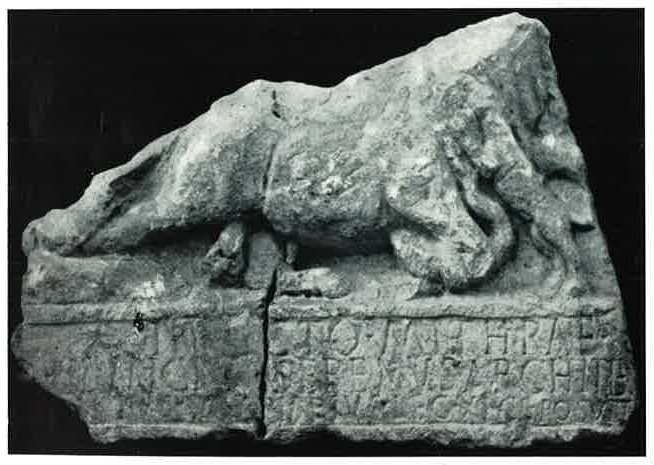
Sandstone tauroctony relief from Balcic, ancient Dionysopolis in Moesia Inferior, depicting the standard bull-slaying scene; the attribution to Dionysopolis rather than another site is disputed.
Limestone altar from Tropaeum Traiani, Moesia Inferior, dedicated in honour of the Domus Divina to Soli invicto sacrum by Quintus Lucilius Piscinus, centurion of Legio I Italica.
Inscription from Constanța, ancient Tomis in Moesia Inferior, recording a dedication to Deo Soli for the welfare and victory of Emperors Diocletian and Maximianus invicti Augusti; a significant tetrarchic dedication from this region.
White marble trapezium-shaped tauroctony relief probably from Constanța, ancient Tomis in Moesia Inferior, divided into three horizontal registers with the central tauroctony and subsidiary scenes.
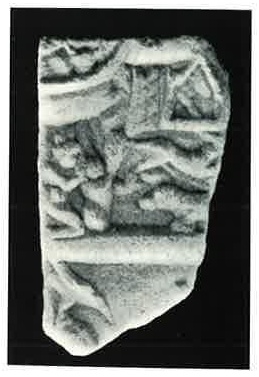
Two fragments of a yellowish marble tauroctony from Acbunar, Moesia Inferior, divided into three registers by two horizontal rims; the upper registers carry subsidiary Mithraic scenes.
