Your search Stein am Rhein gave 2070 results.
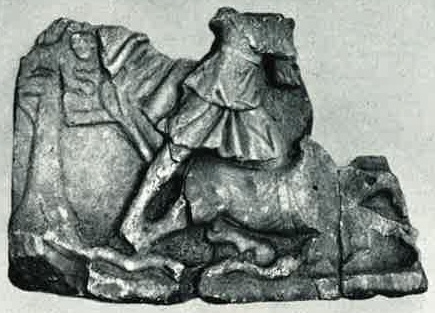
Three fragments of a large yellowish marble tauroctony from the Mithraeum at Sarmizegetusa, Dacia, depicting the damaged bull-slaying scene; at approximately 0.94 × 1.31 m one of the larger reliefs from the sanctuary.
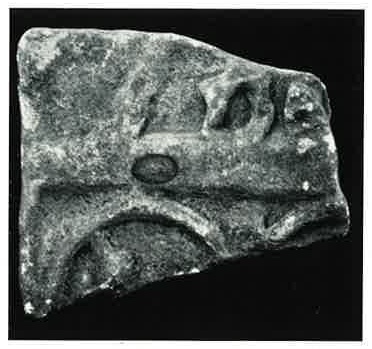
Fragment of a yellowish marble tauroctony from the Mithraeum at Sarmizegetusa, Dacia, preserving the left lower corner with the bull's hind hoof, the crossed legs of Cautopates, and the flame of his downward torch.
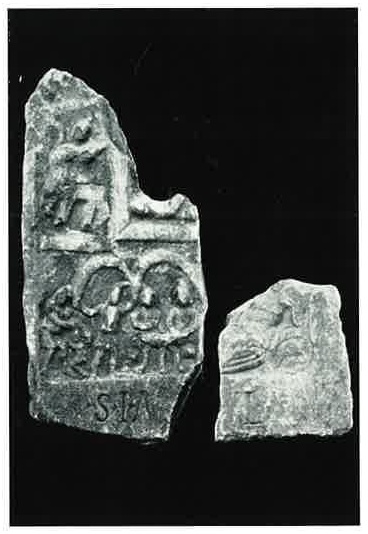
Eight fragments of a large white marble open-work tauroctony from the Mithraeum at Sarmizegetusa, Dacia, with the central bull-slaying carved in openwork within a framing border.
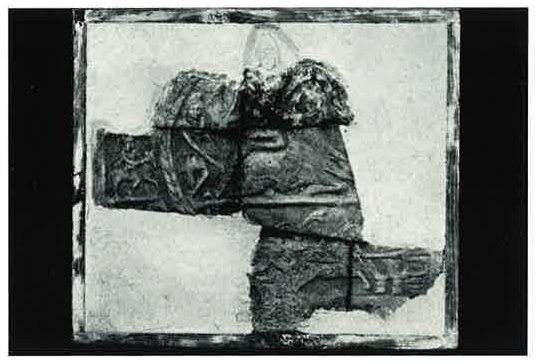
Seven fragments of a white marble tauroctony relief from the Mithraeum at Sarmizegetusa, Dacia, depicting the central bull-slaying with a rich programme of subsidiary Mithraic scenes.
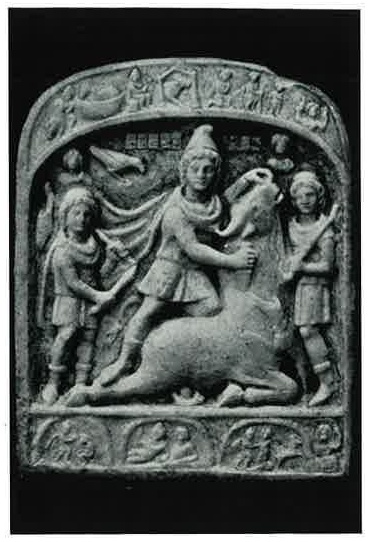
White marble tauroctony relief found in the river Mureș at Vintu de Jos near Apulum, Dacia, around 1859, depicting the bull-slaying with the full iconographic programme.

Marble altar from Apulum, Dacia, decorated with leaf ornaments at the top and rosettes between leaves on the sides, bearing an inscription.
Inscription from Apulum, Dacia, dedicated to Soli invicto Mithrae by Turranius Marcellinus and Antonius Senecio Iunior, conductores armamentarii — managers of the imperial arms depots.
Large marble base from near Kutyamál at Apulum, Dacia, dedicated ex iussu dei Apollinis and naming the Fons Aeternus — the eternal spring — by Ulpius Proculinus, speculator of Legio XIII Gemina.
Limestone base from near the Kutyamál vineyard south of the fortress at Apulum, Dacia, decorated with Bacchic vine scrolls and grapes at the top.
Statues of a man and a woman from the same Mithraic context at Apulum, Dacia; no further details are known.
Fragment of an open-work marble tauroctony from the Mithraeum at Apulum, Dacia, preserving Mithras's head with only the snout of the bull; the relief is framed by a border.
Lost white marble tauroctony relief from Turda, ancient Potaissa in Dacia, depicting the bull-slaying with dog, serpent, and scorpion; the inscription in the lower border named the dedicant Iulius Iulianus.
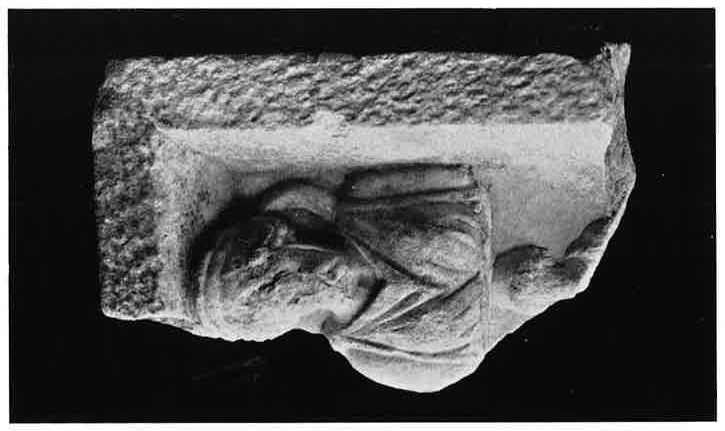
Right upper corner of a white marble bordered tauroctony relief from Salona or its surroundings, Dalmatia, with framing elements and part of the bull-slaying iconography.
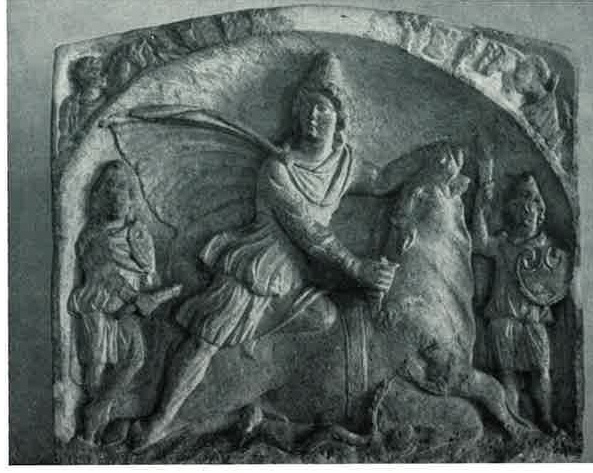
Two lamps — one bearing the stamp Fortis — and a bronze coin of Hadrian from the Mithraeum at Sárkeszi, Pannonia Inferior.
Third Mithraic sanctuary at Aquincum, Pannonia Inferior, between the Amphitheatre and the Krempelmühle, attested by five altars and a decorated mosaic; the building itself is not fully known.
Minor finds from Mithraeum III at Carnuntum, Pannonia Superior, including lamps, bricks, pottery, and serpent-vase fragments; a coin of Macrinus (AD 217) from the entrance may provide a terminus, and the sanctuary is attested as restored in AD 307.
Minor finds from Mithraeum I at Carnuntum, Pannonia Superior, comprising legionary brick stamps, burnt coal and wood, ash with ox, sheep, and goat bones, and fragments of serpent-vases; the coin evidence points to a terminus ante quem in the early third century…
Damaged marble relief from Mithraeum III at Ptuj, ancient Poetovio, preserving Cautopates with torch downward on the right and the outline of a standing Cautes on the other side, with a fragmentary inscription in the lower border.
Upper portion of a marble plate from Mithraeum II at Ptuj, ancient Poetovio, decorated with a central stem flanked by leaf motifs and a small twig — a purely decorative element from the sanctuary.
Marble torso from Mithraeum II at Ptuj, ancient Poetovio, probably representing a winged, reclining bull with two vertical attachment ligaments on the reverse.
