Your search Stein am Rhein gave 1059 results.

Sandstone slab from Kindenheim, Germania Superior, depicting a standing winged Aion with traces of a lion's mane on the breast and objects in both hands; the head and part of the body are damaged.
Fragmentary inscription from Fellbach, Germania Superior, preserving only the abbreviated name of Mithras.
Small bronze statuette recovered from the river Saale near Burg Giebichenstein in 1900, depicting Mithras as bull-slayer without a Phrygian cap; the left leg is lost.
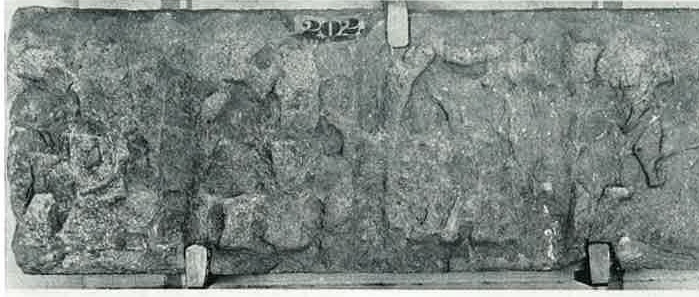
Badly damaged red sandstone relief from Hölzern, Germania Superior, depicting the standard bull-slaying scene; possibly forming part of the border zone of a larger composition.
Small yellow sandstone fragment from the Mithraeum at Dieburg showing the foremost part of an animal, probably a dog or ram, with head turned right
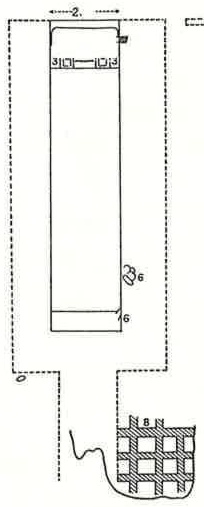
Mithraic sanctuary discovered behind the west part of a Roman cemetery near the camp at Gross-Krotzenburg in 1881, finds destroyed in World War II
Fragmentary ceramic mould preserving the lower part of a cross-legged Mithraic torchbearer.
Decorated ceramic vessel showing Mithras slaying the bull together with torchbearers, zodiacal motifs and figures of abundance.
Fragmentary inscription from Pola preserving a possible reading of the name Atticus.
Group of monuments from Lepcis Magna published among the principal Mithraic remains of Roman Tripolitania.
A marble statue fragment found at Sentinum (modern Sassoferrato) in ancient Umbria, walled in the atrium of the Palazzo Raccamadoro-Ramelli, showing Mithras tauroctone with dog, serpent and scorpion, one foot pointing towards a torchbearer; the bull's head, tail and Mithras'…
A white marble fragment from Ocrea in Umbria bearing the name "Mitrha" (sic), possibly related to Mithraic monuments from nearby sites.
Two Mithraic monuments received by the Museo Nazionale delle Terme in Rome in 1896, reportedly from Narni: a small head of Mithras tauroctone in Phrygian cap with traces of red and gilding, and a central relief fragment of Mithras slaying the bull.
A Sol statue headless and lacking arms and feet, mentioned by Martelli as existing at Nersae alongside a fragmentary inscription, with no further details obtainable by Vermaseren or Cumont.
A badly damaged marble torso from Rome, carved from Luna marble, possibly representing a Mithraic torchbearer dressed in tunic, long cloak and anaxyrides.
Marble base formerly in the Villa Negroni and then the Museo Borgia at Velletri, with bas-reliefs on three sides showing Sol in a quadriga, initiates in Oriental dress and other Mithraic scenes; the collection is now dispersed among museums in Naples and Rome…
Altar from an unknown location in Rome, with a dedication to Sol fulfilling a vow by P. Octavius Bassus, probably the same Bassus associated with the S. Prisca sanctuary.
Altar formerly in the house of the de Vellis family near the Carmelites in Rome and now in the Museo delle Terme, with a dedication to Silvanus on one side and on the reverse a record by M. Aurelius Bassus, priest of Sol, of having made a fountain flow.
Tiburtine stone altar from the gardens of the Perettiani family in Rome, with a dedication to Sol Invictus Mithras by Victor, farm bailiff of the Maeciani estates, through the priest M. Stlaccio Rufo, dated to 154 or 177 A.D.
Marble altar from the gardens of the Villa Giustiniani near Porta Flaminia, dedicated to Sol Invictus Mithras as a votive offering by Vestalis, servant of the Caesars, and C. Vettius Augustalis.
