Your search Sulz am Neckar gave 1036 results.

Lost altar from Zsámbék near Aquincum, Pannonia Inferior, dedicated to Soli invicto sacrum; found with the preceding piece.
Lost altar from Zsámbék near Aquincum, Pannonia Inferior, bearing a dedication to Invicto deo; found together with the following piece in a vineyard.
Fragments of censers (Räucherschalen), thirteen lamps, and bronze and iron fittings from Mithraeum II at Stockstadt
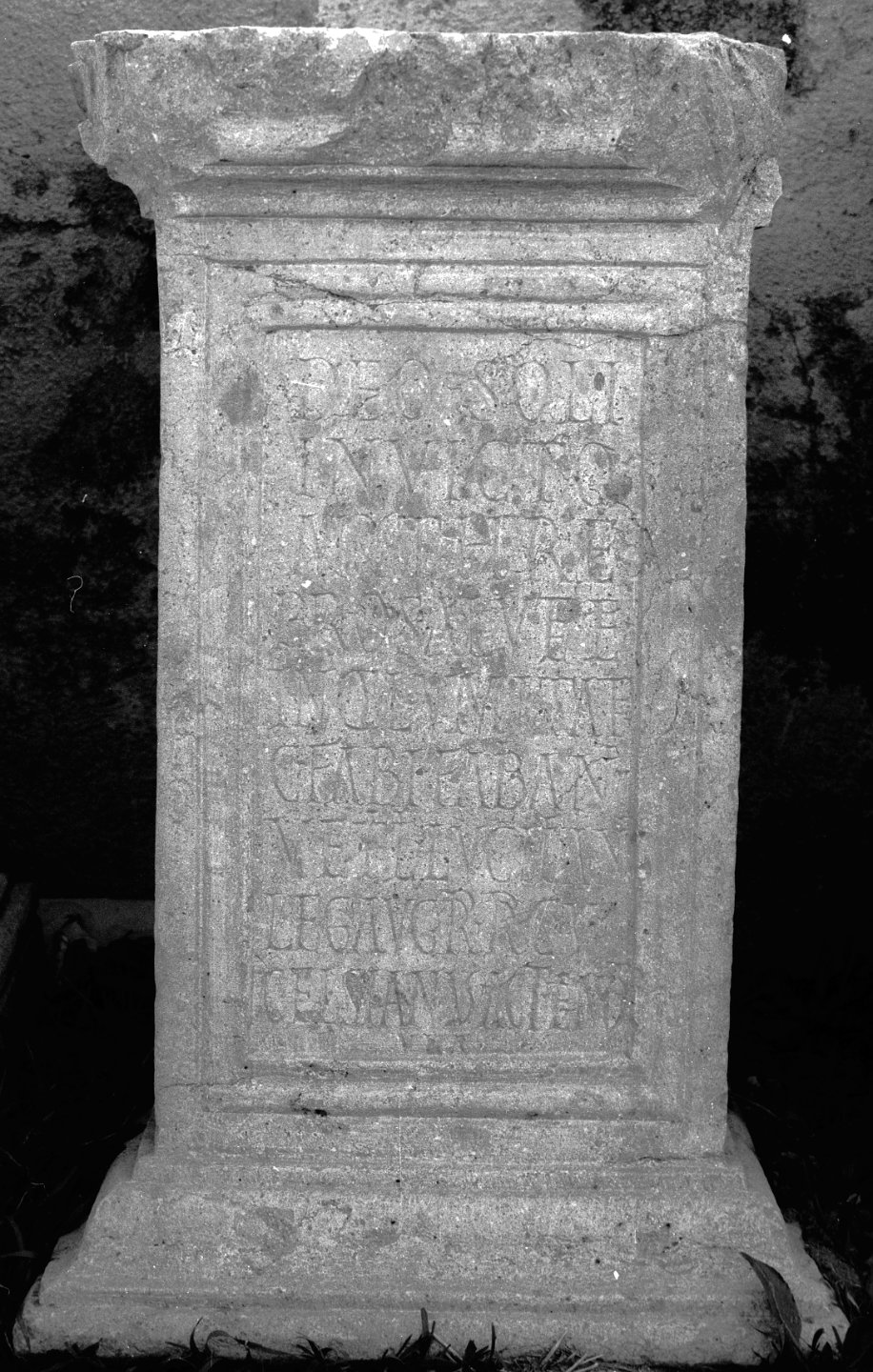
This altar found in Lambèse, now Tazoult, Algeria, bears the inscription of a certain Celsianus for the health of two men to the god Sol Unconquered Mithras.

Slab found at Tazoult-Lambèse dedicated to the Unconquered god Sol Mithras by the governor of Numidia Marcus Aurelius Decimus.

"The remaining figure on this monument, Herakles, was previously misidentified as Apollo on this remarkable black basalt tablet from Samsat, known in Roman times as Samosata.

The Mithraeum of Pamphylia was cut back into the rock to form a cave, with a separate relief of Mithras killing the bull.
This inscription by Luccius Crispus was found near the entrance of the Mithraeum at Pamphylia.
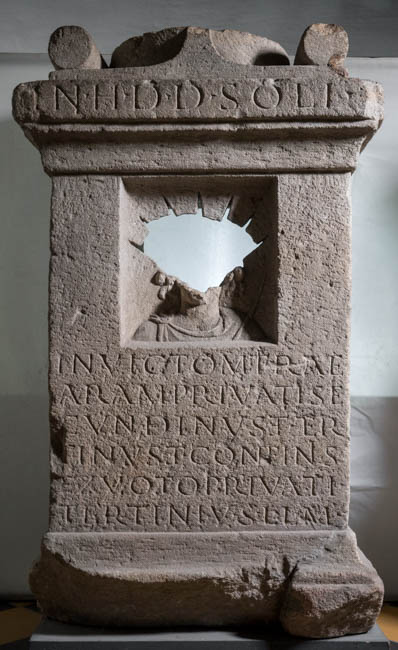
The altar of the Sun god belongs to the typology of the openwork altar to be illuminated from behind.
Pergamon or Pergamum, also referred to by its modern Greek form Pergamos, was a rich and powerful ancient Greek city in Aeolis.
Late Roman funerary inscription from Antium commemorating the senator, governor of Numidia and Mithraic pater Alfenius Ceionius Iulianus Kamenius.
Samsat, formerly Samosata is a small town in the Adıyaman Province of Turkey, situated on the upper Euphrates river.
Founded on the east bank of the Tigris, Sumere is mentioned in Roman sources as a fortified settlement during the Persian campaign of Julian in 363 CE, notably by Ammianus Marcellinus.
Burham is a village and civil parish in the borough of Tonbridge and Malling in Kent, England.
Samnium occupied a mountainous region of central Italy linked to Rome through military movement and regional urban networks.
Campania preserved a vibrant urban and maritime environment closely connected to the commercial life of Roman Italy.
Mesopotamia formed part of the eastern frontier zone where Roman military expansion encountered long-established Mesopotamian traditions.
