Your search Sulz am Neckar gave 1039 results.

Epigraphic testimony catalogued in the Année Épigraphique and Lugli’s Fontes for ancient Rome.
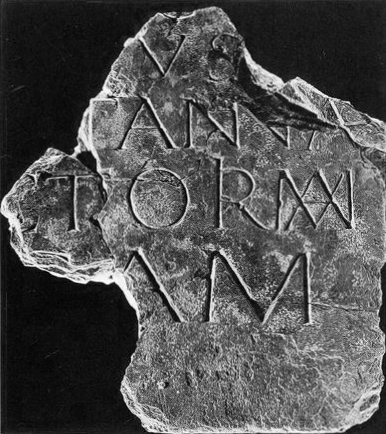
Large marble slab found in 1648 near S. Silvestro in Capite, inscribed with a Latin dedicatory poem forming a cypher-acrostic for TAMESIUS and AUGENTIUS, with records of leontica and chrysos initiations, dated to 362 A.D.
Small semi-round base found on the Monte Quirinale in Via Mazzarini, from a small Mithraeum, with a dedication to Mithras by T. Camurenus Philadelfus through Nonius Firmus pater.
Archaeological material from the Mithraeum of Londinium discussed in Hill’s study of Roman London.
Lower part of a white marble cinerary casket decorated with a relief of Mithras killing the bull, from the necropolis area near the amphitheatre of Sabratha.
Rock inscription of Sagarios, strategus of Ariaramneia, recording a Mithraic ceremony near Farasha (ancient Ariaramneia), Cappadocia, likely 1st century A.D.
Stone from Durrës, ancient Dyrrachium in Macedonia, dedicated to Soli aeterno by Marcus Laelius Aquila, sacerdos; the name Aquila may correspond to a Mithraic grade.
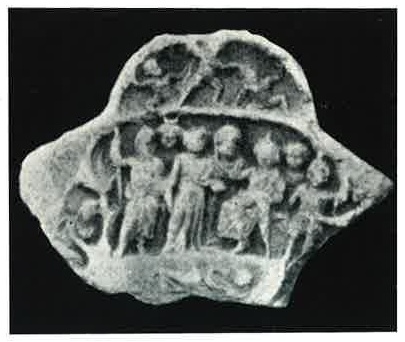
White marble tauroctony relief from Veles, ancient Bylazora in Macedonia; the merchant reported that other fragments of the same monument were walled into a fountain in Veles.
Small weathered arched tauroctony relief from the ruins of ancient Kabyle near Yambol, Thracia, depicting the standard bull-slaying scene.
Fragmentary Greek inscription from Sinitovo, Thracia, preserving only the epithet epekooi — the listening one — and a partially legible name beginning with Audios.
Fragment of a marble tauroctony relief found between Sinitovo and Tatar-Bazardjik, Thracia, preserving only the upper portion with the busts of Sol and Luna; the Greek inscription in the border names the dedicant.
Two marble relief fragments from Dolni Vadin, Thracia, one showing Sol's chariot and the other the right lower corner of a bull-slaying scene; the two fragments may not belong to the same relief.
Small Mithraic sanctuary discovered in 1958 in the grotto called Adam near Tirgușor, Moesia Inferior, about 30 km from Constanța; the monuments are remarkable for their Greek inscriptions.
Archaeological context at Acbunar (Mircea Vodă) near Troesmis, Moesia Inferior, where twelve marble pieces, pottery, lamps, and a coin were found 30 metres from a Roman building, suggesting the presence of a Mithraeum.
Marble tauroctony relief fragment from the Byzantine camp at Pontelimonul de sus, ancient Ulmetum in Moesia Inferior, found reused in the masonry; the subject is partly identifiable.
Damaged limestone tauroctony relief fragment from near Utum, Moesia Inferior, of disputed exact provenance — either Utum or Chemlievo — depicting part of the standard bull-slaying scene.
Circular Mithraic relief from Oescus, Moesia Inferior, mentioned by LeRoy Campbell; no further details are available to the author.
Upper portion of a limestone altar from Kule-Mahata, ancient Almus in Moesia Superior, dedicated to the invictus — possibly but not certainly Mithras — by Caius Plotius Maro for himself and his family.
Damaged white marble tauroctony relief from Timočka Krajina, Moesia Superior, depicting the bull-slaying with corn-ear tail, dog, serpent, scorpion, and torchbearers.
Inscription from Lopata, Moesia Superior, recording that Apollonides, imperial slave and scrutator of the statio Lamud, restored a Mithraic temple that had collapsed through age at his own expense; dated to the consulship of Gentianus and Bassus, AD 211.
