Your search Sulz am Neckar gave 1039 results.
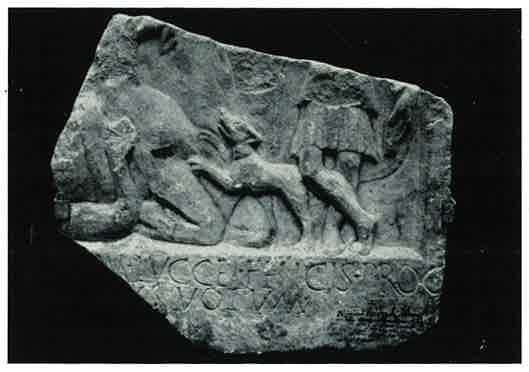
Marble tauroctony relief from Sarmizegetusa, Dacia, found at Zám and subsequently in various private collections; depicting the standard bull-slaying.

Marble relief fragment from the Mithraeum at Sarmizegetusa, Dacia, preserving a very fine head of Mithras in Phrygian cap — described by Kiraly as among the best-executed heads from the sanctuary.
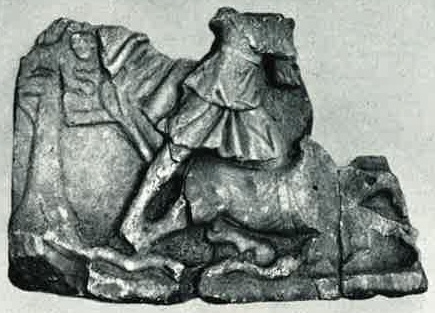
Three fragments of a large yellowish marble tauroctony from the Mithraeum at Sarmizegetusa, Dacia, depicting the damaged bull-slaying scene; at approximately 0.94 × 1.31 m one of the larger reliefs from the sanctuary.
Fragmentary inscription from the Mithraeum at Sarmizegetusa, Dacia, preserving only the name Terentianus.
Fragmentary inscription from the Mithraeum at Sarmizegetusa, Dacia, preserving only the end of a name (-nus) and the abbreviated votive formula.
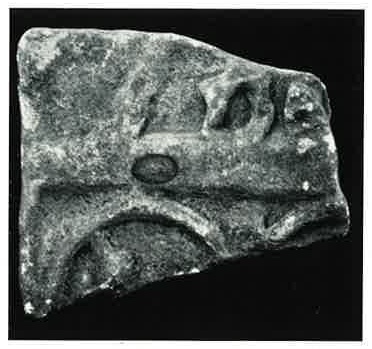
Fragment of a yellowish marble tauroctony from the Mithraeum at Sarmizegetusa, Dacia, preserving the left lower corner with the bull's hind hoof, the crossed legs of Cautopates, and the flame of his downward torch.
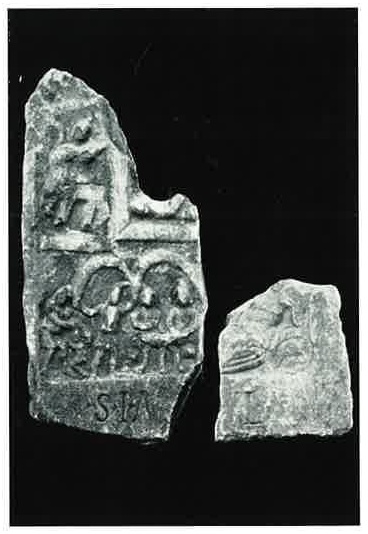
Eight fragments of a large white marble open-work tauroctony from the Mithraeum at Sarmizegetusa, Dacia, with the central bull-slaying carved in openwork within a framing border.
Fragmentary inscription from the Mithraeum at Sarmizegetusa, Dacia, preserving only the name Gaius and a votive formula.
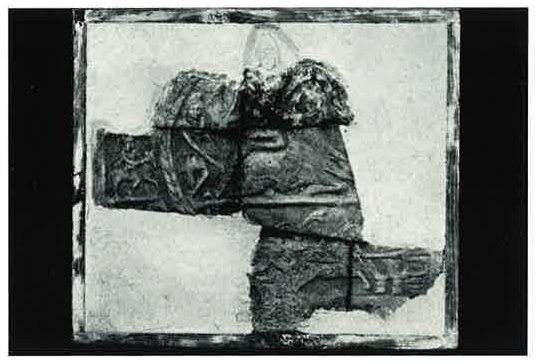
Seven fragments of a white marble tauroctony relief from the Mithraeum at Sarmizegetusa, Dacia, depicting the central bull-slaying with a rich programme of subsidiary Mithraic scenes.
Fragmentary inscription from the Mithraeum at Sarmizegetusa, Dacia, preserving only De- and the name Iulius m-.
Fragmentary inscription from the Mithraeum at Sarmizegetusa, Dacia, preserving only the name Priscus.
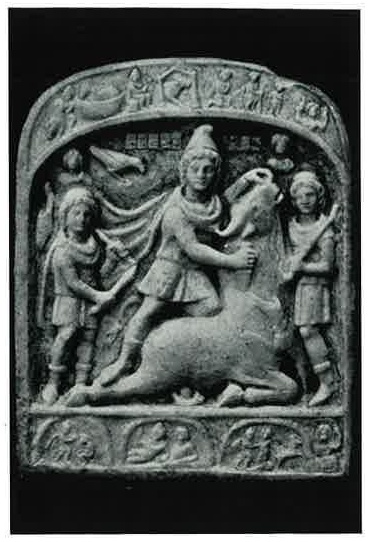
White marble tauroctony relief found in the river Mureș at Vintu de Jos near Apulum, Dacia, around 1859, depicting the bull-slaying with the full iconographic programme.
Marble altar from Apulum, Dacia, decorated with leaf ornaments at the top and rosettes between leaves on the sides, bearing an inscription.
Inscription from Apulum, Dacia, dedicated to Soli invicto Mithrae by Turranius Marcellinus and Antonius Senecio Iunior, conductores armamentarii — managers of the imperial arms depots.
Inscription from Apulum, Dacia, dedicated to Mithrae sacrum by a dedicant whose name begins with M.
Large marble base from near Kutyamál at Apulum, Dacia, dedicated ex iussu dei Apollinis and naming the Fons Aeternus — the eternal spring — by Ulpius Proculinus, speculator of Legio XIII Gemina.
Limestone base from near the Kutyamál vineyard south of the fortress at Apulum, Dacia, decorated with Bacchic vine scrolls and grapes at the top.
Statues of a man and a woman from the same Mithraic context at Apulum, Dacia; no further details are known.
Altar from Apulum, Dacia, dedicated to Iovi optimo maximo by Claudius Niger; included in the Mithraic corpus by proximity to other monuments from the same context.
Top of a limestone altar from Apulum, Dacia, with a rosette in the pediment and palmettes on the sides, recording a dedication to the Numen invicti by a dedicant whose name may be Vallerius.
