Your search Tal hal Hariri / Es-Sâlihiyeh / As Salhiyah gave 3730 results.

Small Mithraic sanctuary (8 × 8 m) excavated in 1950–52 on a slope west of Schloss Moosham, Noricum, on the left bank of the river Mur; the finds include a marble epistylium, a Mithras head, and fragmentary altars.
Small red limestone altar from Nyon, ancient Colonia Iulia Equestris, dedicated to Invicto by Atius ex voto; one of the few Mithraic monuments from this site.
Altar from Vidy near Lausanne, ancient Leusonna, dedicated to Soli Genio Lunae sacrum by Publius Clodius Primus, curator of the vici Lousonnenses, sevir Augustalis, and curator of the Roman citizens of the Helvetian conventus; not earlier than AD 161–169…
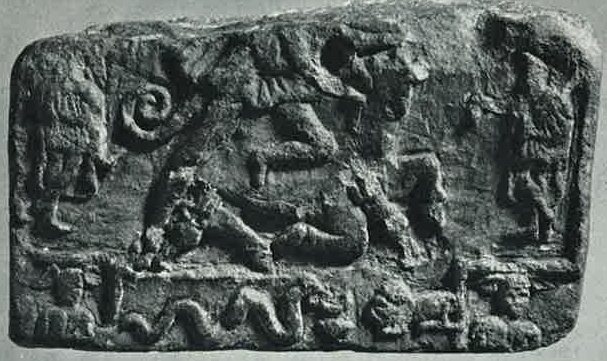
Small limestone tauroctony relief from Augst, ancient Augusta Rauricorum, depicting the bull-slaying with dog and scorpion, flanked by cross-legged torchbearers in Oriental dress; Cautes holds a pedum alongside the upraised torch.
Round perforated bronze plaque from Augst, ancient Augusta Rauricorum, bearing a dedication of an aurichalcum image of Sol to Deo invicto; interpreted by Cumont as evidence for identifying the dedicatee as Mithras.
Deposit of 1,200 coins spanning Augustus to Constantine and a small bronze bell from Thun-Allmendingen, representing the longest chronological range of any coin assemblage from a Mithraic context in Germania.
Limestone left hand holding a caduceus from Thun-Allmendingen, belonging to a statue of Mercury associated with the possible Mithraeum.
Fragmentary limestone relief from Thun-Allmendingen of the same dimensions as the bull relief, depicting a swine; both may have formed part of the sanctuary's ritual décor.
Two fragments of a sandstone inscription from Gran in the Vosges, dated to the late second century, recording a dedication to Soli deo invicto by a servant of the dedicant, with possible mention of a portico and columns.
Assemblage of cult objects from the Mithraeum at Königshoffen including painted lamps, glass and terra-sigillata fragments with potters' stamps and graffiti (including Deo invicto Mithrae), two iron bells, an iron shield-knob, and stone fragments.
Miscellaneous sandstone altar fragments from the Mithraeum at Königshoffen, including uninscribed pieces and one bearing a solar disc with two heart-shaped figures on the upper front face.
Upper left corner of a sandstone altar from the Mithraeum at Königshoffen, preserving the beginning of a dedication to Deo invicto by Caius Iulius; the rest is lost.
Yellow sandstone altar from the Mithraeum at Königshoffen decorated with volutes enclosing small globes and a patera holding two iron rings; traces of fire or smoke are visible on the surface.
Two-fragment limestone altar from the Mithraeum at Königshoffen, dedicated in honour of the Domus Divina to Deo Atti by Cantinius Capella; one of the rare Mithraic dedications to Attis from Germania.
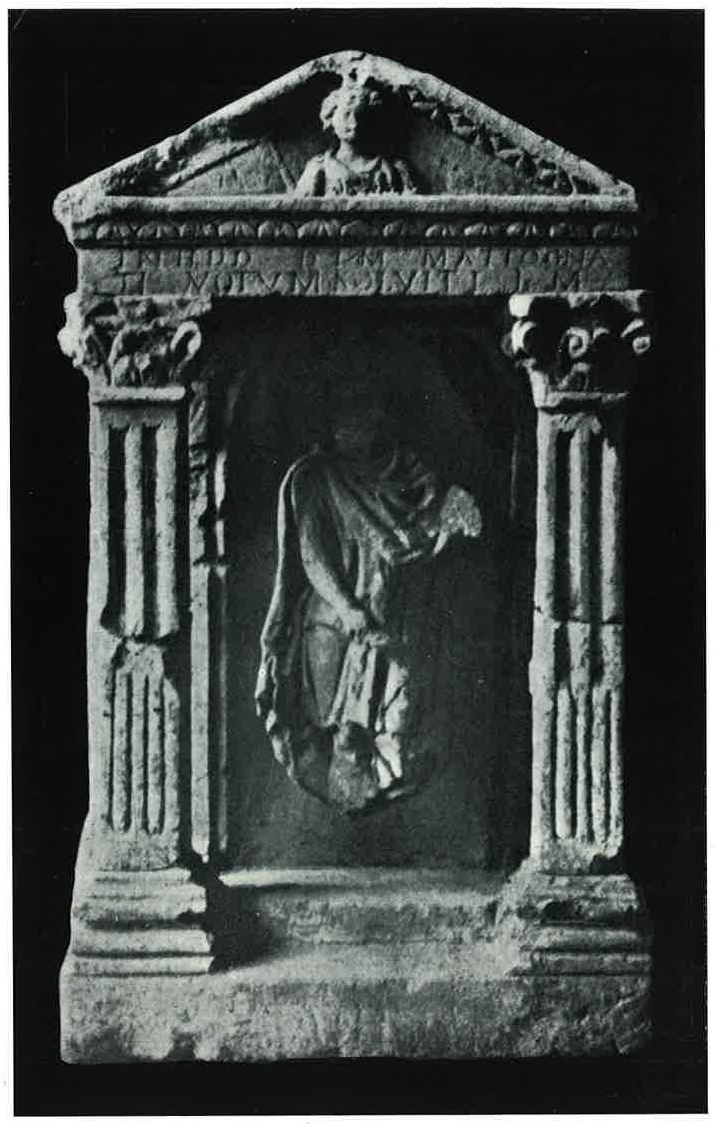
Sandstone monument in the form of a temple façade from the Mithraeum at Königshoffen, accessible by a step and framed by two Corinthian columns; the pediment is decorated with the bust of Luna, and the architrave carries an inscription.
Small sandstone relief fragment from the Mithraeum at Königshoffen preserving a naked male figure from the thighs to the head, possibly part of a rock-birth scene.
Fragmentary inscription from the Mithraeum at Königshoffen recording a dedication in honour of the Domus Divina to Deo invicto Mithrae; only the opening formula is preserved.
Grey sandstone hand holding a globe from the Mithraeum at Königshoffen, with a lead bar indicating attachment to a larger statue; a second globe with a partial hand was found at the same spot.
Fragmentary altar from the Mithraeum at Königshoffen preserving only the opening of a dedication to Deo invicto Mithrae and a partially legible dedicant's name beginning with C.
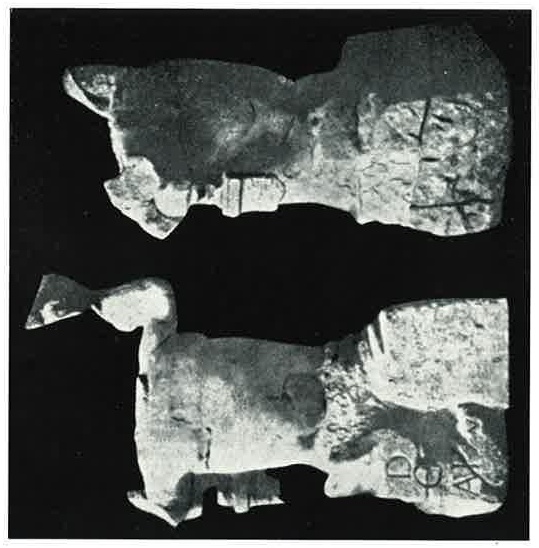
Sandstone statue from the entrance area of the Mithraeum at Königshoffen depicting the youthful naked Mithras emerging from the rock, with the sheath of a dagger still visible at his hip; head, right arm, and left hand are lost.
