Your search Tal hal Hariri / Es-Sâlihiyeh / As Salhiyah gave 3730 results.

Marble inscription fragment from the Mithraeum at Sopron, ancient Scarabantia, preserving only the closing votive formula.
Marble altar fragment from the Mithraeum at Sopron, ancient Scarabantia, dedicated to Deo invicto Mithrae by a dedicant whose name includes Secundinus.
Fragment of a marble inscription from the Mithraeum at Modrič, Pannonia Superior, preserving only the opening of a dedication to Deo invicto Mithrae.
Marble tauroctony relief from the Mithraeum at Modrič, Pannonia Superior, with Cautopates and Cautes flanking the bull-slaying scene and a dedication inscribed in the lower border.
Upper portion of a marble relief from the Mithraeum at Modrič, Pannonia Superior, preserving a torchbearer's head in Phrygian cap with torch.
Fragmentary inscription from Pregrade, Pannonia Superior, preserving only the end of a dedicant's name (-rentianus) and the closing formula.
Inscription from Wieden, ancient Neviodunum in Pannonia Superior, dedicated to Invicto deo by Charito, of the Neviodunenses — possibly a slave or freedman of the community.
Sandstone altar with akroteria from the Mithraeum at Pohanica, Noricum, dedicated to Deo invicto Mithrae by Marcianus; the frame bears two outward-pointing darts as a decorative motif.
Small marble head from Saifnitz, Noricum, wearing a Phrygian cap; possibly representing Attis or a Mithraic torchbearer.
Two fragments of a larger circular marble relief from the Mithraeum at Linz, ancient Lentia, preserving only the legs of the torchbearers and the outer border, with subsidiary scenes including the rock-birth and an ibex.
Fragments of an altar and an inscription from the Mithraeum at Moosham, Noricum, preserving only the opening of a pro salute dedication; traces of fire are visible.
Altar from the Mithraeum at Moosham, Noricum, dedicated to Deo invicto Mithrae for the welfare of Lucius Albius Atticus; the dedicant's name has been deliberately abraded.
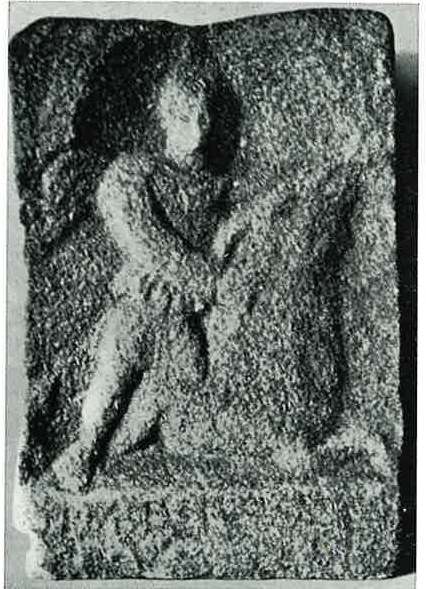
Life-sized sandstone head with long curly hair and Phrygian cap, found at the foot of the Hohenklingen near Stein am Rhein, Raetia; probably belonging to a statue of Cautes or Cautopates.
Square altar from Zwiefalten near Ulm, Raetia, found reused in the apse of a church; local tradition places the original sanctuary on a hilltop between Zell and Zwiefalten, or alternatively near Reichenstein.
The six divine names inscribed on the bronze hatchets from Thun-Allmendingen — Iovi, Neptuni, Minervae, Mercurio, Matribus, Matroni — reflecting the polytheistic religious landscape of the Mithraic community at this site.
Large limestone relief from Thun-Allmendingen depicting a bull walking to the left; the head is lost. At approximately 2.91 × 2.43 m one of the largest single-animal reliefs from a Mithraic context.
Two small limestone heads in Phrygian caps from the Stockhorn Mountains near Thun-Allmendingen, each approximately fist-sized, probably belonging to statues of the torchbearers.
Site excavated by C. F. L. Lohner in 1824–25 at the Renzenbühl near Thun-Allmendingen, Germania Superior, where the outline of five rooms was identified, one or more of which may have served as a Mithraic sanctuary.
Large sandstone altar from the Mithraeum at Königshoffen, hollowed out at the back with a circular opening in the top, which stood before the great tauroctony relief; the front bears a dedication to Deo invicto Mithrae.
Grey sandstone slab from the Mithraeum at Königshoffen, a companion piece to the preceding, recording the same act of repainting a cult image by Caius Celsinius Matutinus, veteran of Legio VIII Augusta Alexandriana.
