Your search Tal hal Hariri / Es-Sâlihiyeh / As Salhiyah gave 3731 results.
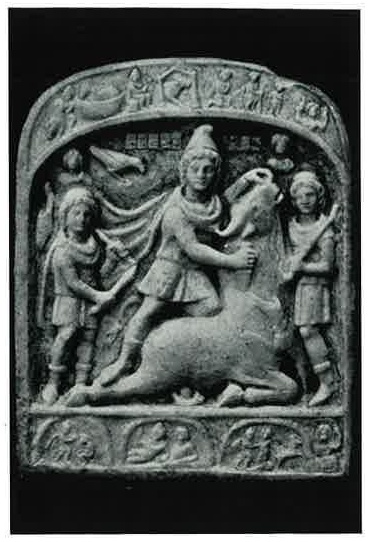
White marble tauroctony relief found in the river Mureș at Vintu de Jos near Apulum, Dacia, around 1859, depicting the bull-slaying with the full iconographic programme.

Inscription from Apulum, Dacia, dedicated to Deo bono puero Phosphoro — the Good Boy who Brings Light — a Mithraic epithet attested in several inscriptions from Apulum.
Marble altar from Apulum, Dacia, decorated with leaf ornaments at the top and rosettes between leaves on the sides, bearing an inscription.
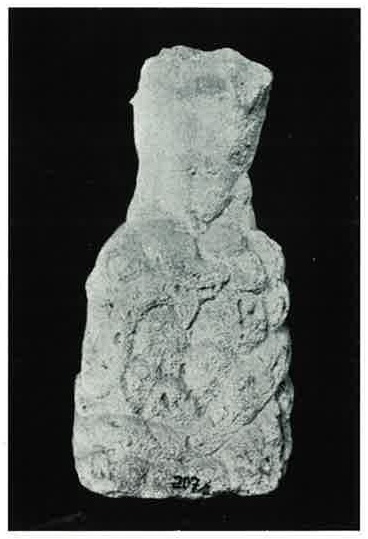
Sandstone rock-birth statue from Apulum, Dacia, depicting the naked Mithras emerging from a rock encircled by a snake; head and arms are lost.
Inscription from Apulum, Dacia, dedicated to Soli invicto Mithrae by Turranius Marcellinus and Antonius Senecio Iunior, conductores armamentarii — managers of the imperial arms depots.
Lost tauroctony relief from Apulum, Dacia, formerly at the Palace of the Prince at Alba Julia, recorded only in early modern sources.
Lost limestone altar from Apulum, Dacia, decorated on the sides with a rose and serpent, on the reverse with a bull's head; the front bears a Mithraic inscription.
Inscription from Apulum, Dacia, preserving the end of a dedication by a beneficiarius consularis.
Top of a limestone altar from Apulum, Dacia, with a rosette in the pediment and palmettes on the sides, recording a dedication to the Numen invicti by a dedicant whose name may be Vallerius.
Limestone altar from Apulum, Dacia, dedicated to Soli invicto Mithrae by Caius Iulius Marcianus, signifer of Legio XIII Gemina.
Top of a limestone votive altar from Apulum, Dacia, preserving only the dedication to Invicto deo.
Limestone altar found in Partoș, Dacia, dedicated to Deo Soli by Lucius Valerius Felix.
Inscription from Turda, ancient Potaissa in Dacia, dedicated to Invicto by Aurelius Montanus, miles of Legio V Macedonica.
Inscription from Turda, ancient Potaissa in Dacia, recording a dedication by Aurelius Dolens, miles of a legion, ex voto.
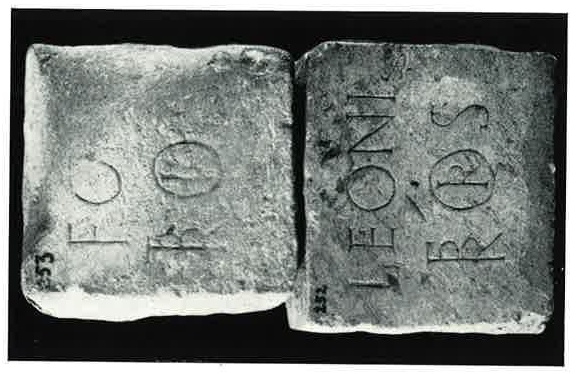
Two white limestone blocks from Golubić near Bihać, Dalmatia, depicting the standard Mithraic tauroctony scene.
Foundations of a rectangular building (10 × 6 m) and a front-stone fragment at Golubić near Bihać, Dalmatia, suggesting the existence of a Mithraic sanctuary.
Altar from Salona, Dalmatia, found in 1884, dedicated by Sextus Cornelius Antiochus to Soli deo, who donated both a star and a fructifera — interpreted as Sol and Luna — following a vision.
Altar found at Salona, Dalmatia, in 1884, dedicated simply to Petrae genetrici — the rock that gives birth to the god.
Oval relief fragment from the outskirts of Split near ancient Salona, Dalmatia, preserving two zodiacal signs — probably from a border decoration of a Mithraic monument.
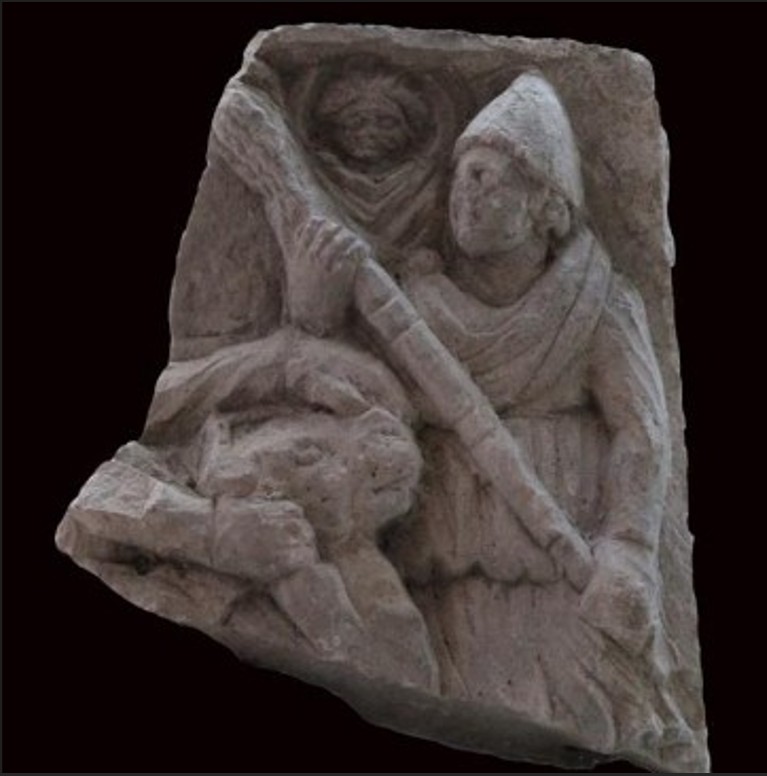
Right upper portion of a limestone relief from Salona or its surroundings, Dalmatia, depicting a standing figure — probably a torchbearer or divine attendant.
