Your search Tal hal Hariri / Es-Sâlihiyeh / As Salhiyah gave 3730 results.

Marble altar from near Osmakovo, Moesia Superior, now in the Niš museum, dedicated to Soli invicto by Valerius Iucundus.
Stone slab still in front of the church in Kumanovo, ancient Lopata in Moesia Superior, bearing a dedication to Deo sancto Mithrae.
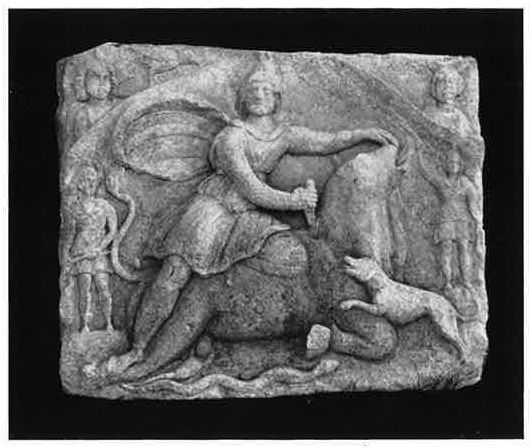
Sandstone tauroctony relief from Pritok near Bihać, Dalmatia, lost during World War II, depicting Mithras in Oriental dress killing the bull in a grotto with the bull's tail ending in corn-ears.
Rocky pass about twenty minutes south of Prozor, Dalmatia, containing a rock niche with a carved Mithraic scene; probably a secondary cult place related to the Vitalj sanctuary.
Altar from Intercisa, Pannonia Inferior, dedicated to Deo Soli invicto by Antonius Veranus, pater sacrorum — one of the clearest attestations of the Mithraic grade pater from Pannonia Inferior.
Fragment of a Mithras relief from Zsámbék near Aquincum, Pannonia Inferior, showing seven altars alternated with trees — a processional or decorative border rather than a main tauroctony scene.
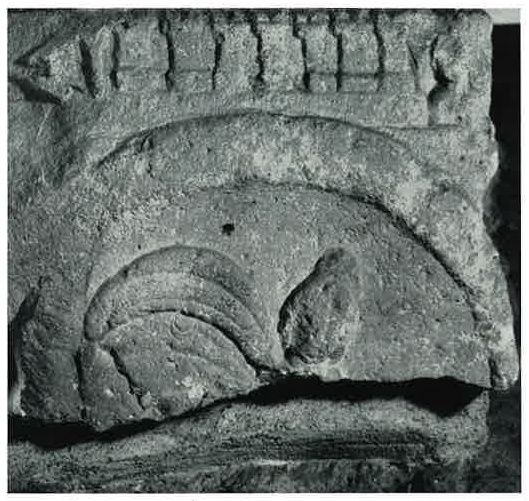
Limestone slab from the Mithraeum at Pohanica, Noricum, elaborately carved on both faces; a metal plate originally attached by pins to its interior was removed, probably by the Mithraists themselves — paralleled at Poetovio.
Altar from the Drave valley between Teurnia and Virunum, Noricum, now reused as a pedestal for a cross, dedicated to Invicto deo Mithrae for the welfare of Marcus Publius Potens by his freedman Ursulus.
Limestone statue fragment from Nyon, ancient Colonia Iulia Equestris, depicting a lion encircled by a serpent with schematic scorpions engraved in small triangles on each flank; a composition associated with Mithraic lion symbolism.
Animal bones from the refuse pit of the Mithraeum at Königshoffen, comprising goat, hen, ox, and deer remains, attesting to ritual feasting within the sanctuary.
Altar from the Mithraeum at Königshoffen, dedicated in honour of the Domus Divina to Deo invicto Mithrae by a dedicant whose name is partially preserved and may be read as Secundus or Secundinus.
Red sandstone altar fragments from the Mithraeum at Königshoffen, reused as a step or threshold in the sanctuary's third building phase, preserving only the opening of a dedication to Deo invicto Mithrae.
Upper portion of a sandstone altar from the Mithraeum at Königshoffen, later reused as building material, bearing a dedication by Ianussa on both the front and reverse faces.
Grey sandstone tauroctony relief from the Mithraeum at Königshoffen, heavily restored, depicting Mithras killing the bull with Cautes and Cautopates and the busts of Sol and Luna; only the lower part of Cautopates and the crossed legs are original.
Fragment of a dark red sandstone altar from the Mithraeum at Königshoffen preserving a dedication to Deo Soli invicto Augusto; found in the eastern part of the sanctuary.
Stone torso of a naked winged figure from the Mithraeum at Königshoffen, identified as Aion; the head is lost, but remnants of a wing survive at the right shoulder, and the statue likely stood on a preserved base with traces of two feet.
Circular marble relief preserving part of the bull, a serpent and zodiacal signs associated with Mithraic iconography.
A marble statue fragment found at Sentinum (modern Sassoferrato) in ancient Umbria, walled in the atrium of the Palazzo Raccamadoro-Ramelli, showing Mithras tauroctone with dog, serpent and scorpion, one foot pointing towards a torchbearer; the bull's head, tail and Mithras'…
A terracotta arm found near the cone-shaped stone in the Mithraeum at Spoleto, the hand holding a broken object possibly from a representation of Mithras's rock-birth.
A cone-shaped piece of stone with a square hole found to the left of the altar in the Mithraeum at Spoleto, unlikely to have supported a representation of Mithras's rock-birth despite earlier suggestions, given that the stone tapers slightly.
