Your search Tal hal Hariri / Es-Sâlihiyeh / As Salhiyah gave 3730 results.

Cyrene linked North Africa to the Greek East through long-standing urban traditions and eastern Mediterranean maritime exchange.
Aemilia connected northern and central Italy through prosperous urban centres and major communication routes of the Roman Peninsula.
Persia occupied a central place in ancient and modern interpretations concerning the origins and eastern background of Mithraic traditions.
Along the northern frontier of Roman Britain, Britannia inferior preserves important evidence linked to military and frontier communities.
Britannia superior preserves a substantial body of Mithraic evidence associated with military sites and urban centres of Roman Britain.
Etruria formed part of the cultural and religious heartland of central Italy closely connected to Rome and the Tyrrhenian world.
Samnium occupied a mountainous region of central Italy linked to Rome through military movement and regional urban networks.
Lucania connected inland southern Italy to the Tyrrhenian and Ionian maritime worlds through regional communication networks.
Campania preserved a vibrant urban and maritime environment closely connected to the commercial life of Roman Italy.
Galatia occupied the central Anatolian crossroads through which military movement and eastern provincial networks intersected.
Bithynia et Pontus connected northwestern Anatolia to the Black Sea through major maritime, urban and provincial networks.
Macedonia formed a major crossroads between the Greek world, the Balkans and the communication routes of the eastern Roman empire.
Pannonia superior preserves one of the richest frontier corpora of Mithraic evidence along the middle Danube.
Narbonensis connected Roman Gaul to the Mediterranean world through some of the oldest urban and maritime networks of the western empire.
Mauretania preserves western North African evidence linked to urban and maritime networks of the Roman empire.
The Bosporan Kingdom preserves evidence from one of the northernmost horizons of Mithraic diffusion in the ancient world.
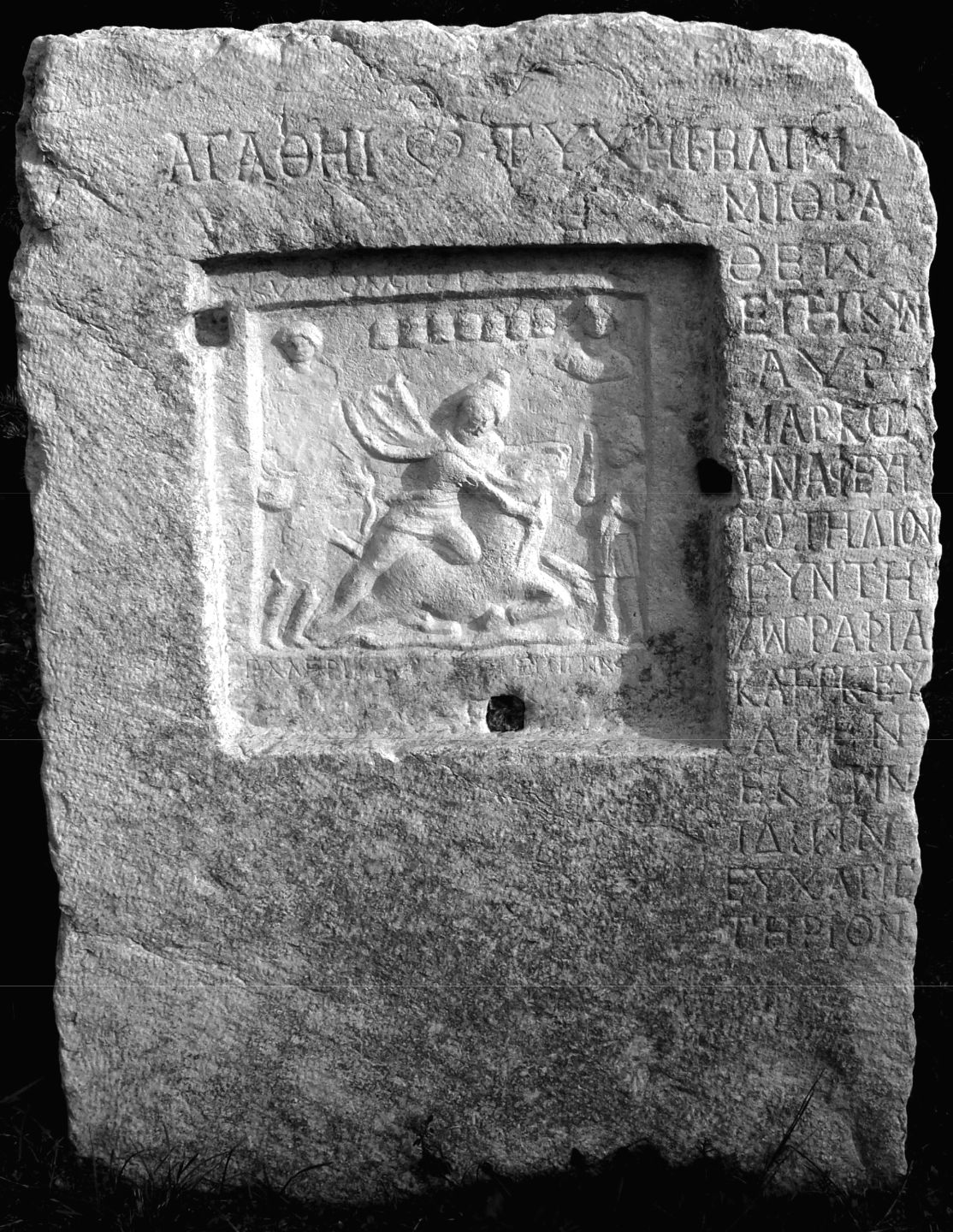
The Tauroctony of Nicopolis ad Istrum is unique as it is the only Mithraic stele befitting a Greek donor.
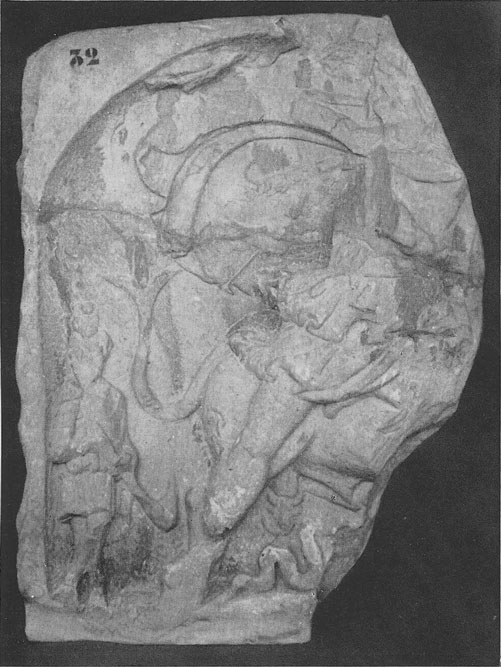
This fragmentary tauroctony relief from Timziouin near Saïda depicts Mithras slaying the bull within a cave-like frame, accompanied by the raven, serpent, scorpion, and Cautopates.
The evidence from Roman Africa reflects the implantation of Mithraic cults within prosperous urban centres of the western Mediterranean.
,_found_in_Rome,_2nd_century_AD,_British_Museum_(15545876047).jpg)
The sculpture of Mithras slaying the bull was transported from Rome to London by Charles Standish in 1815.
