Your search Tirowite (Old town of Plovdiv) gave 279 results.

A white marble statue from the Mithraeum at Walbrook in London, depicting Bonus Eventus standing in a long hanging cloak, leaning on a ship's stem, holding a cornucopia against his shoulder and a patera above a burning altar from the back of which a…
An altar from Baetulo (modern Badalona) in Hispania Citerior, carved in a rock on a hill facing east opposite the town, recording a dedication to Sol Deus by A. Pompeius Abascantus.
A fragmentary inscription from Aquileia, probably dedicated to Cautopates, recording a soldier named Marcianus, optio of the Second Adiutrix Legion, who fulfilled his vow for the welfare of himself and his family.
A military inscription from Aquileia, dedicated to the Invincible Mithras by Flavius Exuperatus and several soldiers from the Third Italic and Thirteenth Gemina legions, acting as lustration agents for their commanders Flavius Sabinus and Aurelius Zeno, dated to around 244 A.D…
An inscription from the vicus Vicciomitum in Milan (ancient Mediolanum), recording a votive dedication to the Invincible Mithras by L. Atilius Pupinius on a site granted by decree of the town council.
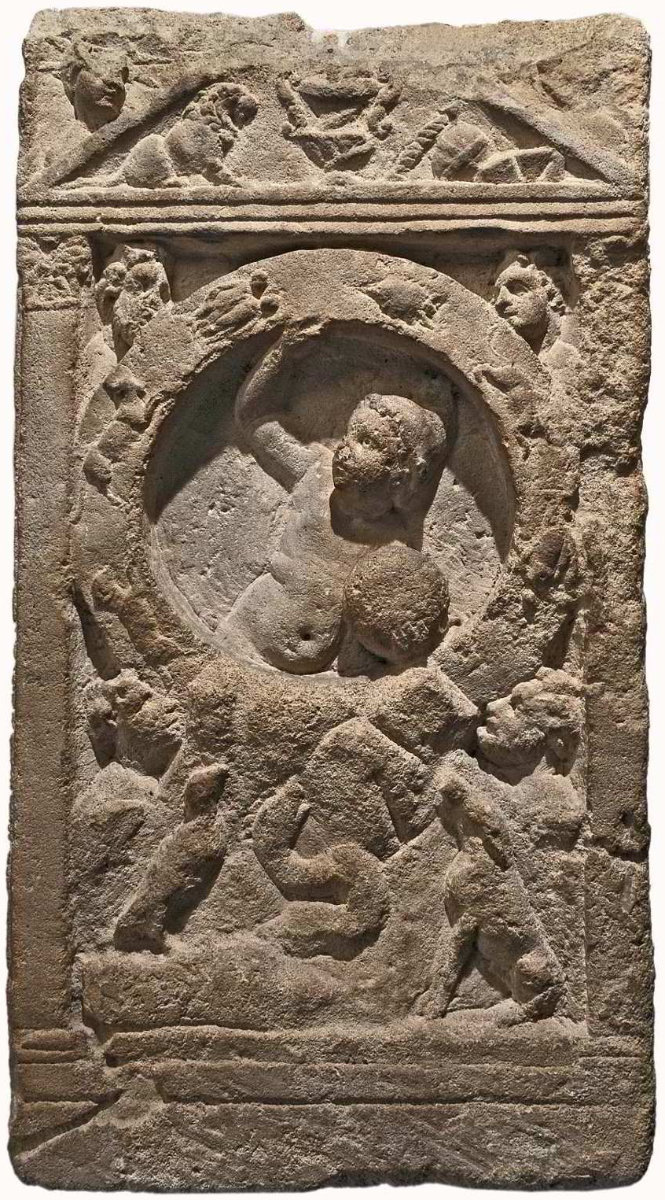
The relief depicts the birth of Mithras, holding a globe, surrounded by the zodiac.
A badly damaged tauroctony relief carved in peperino, fixed high into a wall of the old farm known as Le Capanacce on the Via Cassia near Vicus Matrini in Etruria, showing Mithras as a bullkiller in a vaulted cave with serpent, the head and left arm of the god lost…
Bronze lamella probably from Rome, found in 1729, bearing a dedication to Sol Sanctissimus by C. Veratius Faustinus, a soldier of the third praetorian cohort.
Rough-hewn statuette found at Emir Ghasi in Lycaonia, once thought to represent a Mithraic soldier; according to Cumont, a modern forgery.
Marble funerary stele dedicated to the soldier Aurelius Lucanus, a devotee of Mithras, found at Amasya (ancient Amasia), Pontus.
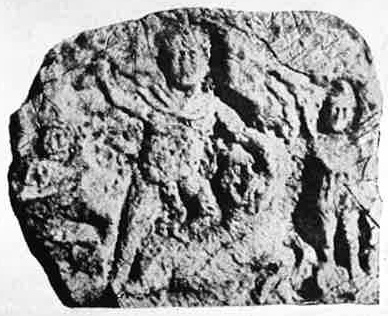
Rough relief from Gaganica, Thracia, depicting Mithras as bull-slayer in an unusual frontal attitude, wearing only a shoulder-cape and holding the dagger upwards; with dog, serpent, scorpion, and a non-cross-legged Cautes.
Marble relief fragment from near Debeli-Lak, Thracia, depicting Cautopates in Oriental dress holding the torch downwards with both hands, not cross-legged; head, shoulder, and feet are lost.

Sandstone tauroctony relief with pediment from the Mithraeum at Tirgușor, Moesia Inferior, depicting the bull-slaying with two cross-legged torchbearers both holding their torches upraised and Sol and Luna busts in the upper corners; no dog or scorpion.
Marble tauroctony fragment from Constanța, ancient Tomis in Moesia Inferior, depicting the bull-slaying with dog, serpent, and scorpion; Cautes holds both an upraised torch and a pedum.
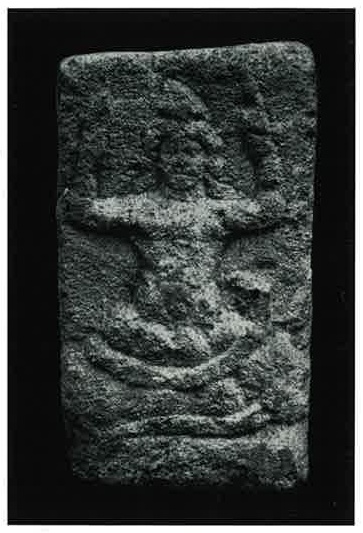
White sandstone altar from Decea Mureșului near Aiud, ancient Bruckla in Dacia, depicting on its front the naked Mithras being born from the rock, holding a torch in his right hand and a dagger in his left, with a coiled serpent below.
Marble statuette of Cautopates from the Mithraeum at Sopron, ancient Scarabantia, in Phrygian cap and Oriental dress, holding the torch downwards; the head is lost.
Marble statuette of Cautes from the Mithraeum at Sopron, ancient Scarabantia, in Phrygian cap and Oriental dress, holding the upraised torch with both hands; the head is lost.
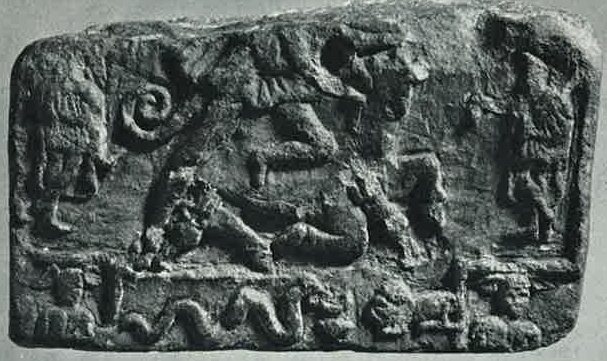
Small limestone tauroctony relief from Augst, ancient Augusta Rauricorum, depicting the bull-slaying with dog and scorpion, flanked by cross-legged torchbearers in Oriental dress; Cautes holds a pedum alongside the upraised torch.
Limestone left hand holding a caduceus from Thun-Allmendingen, belonging to a statue of Mercury associated with the possible Mithraeum.
Red sandstone altar fragments from the Mithraeum at Königshoffen, reused as a step or threshold in the sanctuary's third building phase, preserving only the opening of a dedication to Deo invicto Mithrae.
