Your search Tirowite (Old town of Plovdiv) gave 279 results.
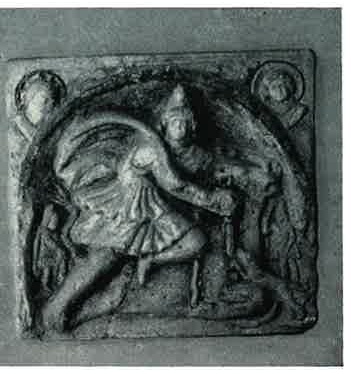
Marble tauroctony relief from Petronell, ancient Carnuntum in Pannonia Superior, with the bull's tail ending in corn-ears; no scorpion is depicted, and Cautes holds the upraised torch.

Large sandstone altar from Mithraeum I at Carnuntum, Pannonia Superior, with Cautopates cross-legged carved on the left side and Cautes walking on the right, both holding their torches with two hands; the front bears an inscription.
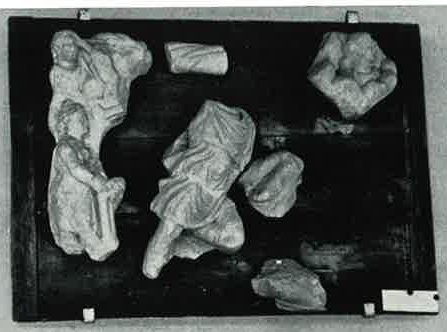
Marble tauroctony relief from Mithraeum III at Ptuj, ancient Poetovio, preserving Mithras killing the bull — head and most of the flying cloak lost — flanked by Cautopates holding the torch downward.
Marble stele from Mithraeum III at Ptuj, ancient Poetovio, tapering towards the top and bearing a square hollow with five nail-holes designed to hold a small silver plaque — the plaque was removed, perhaps taken by the Mithraists themselves.
Small votive altar from Mithraeum III at Ptuj, ancient Poetovio, with an oblong hollow in the top, probably designed to hold a libation or ritual object.
Marble left hand holding a torch from Mithraeum II at Ptuj, ancient Poetovio, belonging to a statue of Cautes.
Marble right hand holding a dagger from Mithraeum II at Ptuj, ancient Poetovio — a fragment of a tauroctony statue or relief.
Marble right hand holding a patera from Mithraeum II at Ptuj, ancient Poetovio — a fragment of a cult statue performing a libation.
Marble relief fragment from Mithraeum II at Ptuj, ancient Poetovio, depicting a standing woman holding her right hand above an altar and a palm branch in her left; the lower body and base are lost.
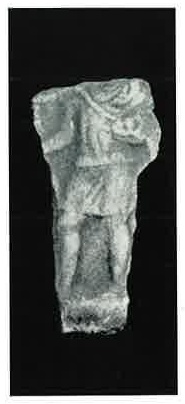
Marble relief fragment from Mithraeum II at Ptuj, ancient Poetovio, depicting a person in Oriental dress with outstretched right arm holding a small fruit basket in his left hand — probably a fragment of the sacred repast scene.
Marble lion from Mithraeum II at Ptuj, ancient Poetovio, holding a swine's head under its left fore-leg — a sacrificial animal pairing associated with the Mithraic lion grade.
Right lower corner of a marble relief from Mithraeum II at Ptuj, ancient Poetovio, preserving the border of the grotto and, outside it, Luna in a two-horse chariot holding a whip; only the horses' heads are shown.
Right portion of a marble relief from Mithraeum II at Ptuj, ancient Poetovio, preserving Cautes holding the upraised torch with both hands; not cross-legged; head, feet, right hand, and torch top are lost.
Left portion of a primitive marble relief from Mithraeum II at Ptuj, ancient Poetovio, preserving the upper part of a figure in Oriental dress holding a downward torch and the bust of Sol in the upper corner.
Inscription from Mithraeum I at Ptuj, ancient Poetovio, dedicated to Petrae genetrici ex viso by Felix, vicarius of Prudens, slave of Antonius Rufus, vilicus of the publicum portorium Illyricum — one of several Mithraic dedications by this household.
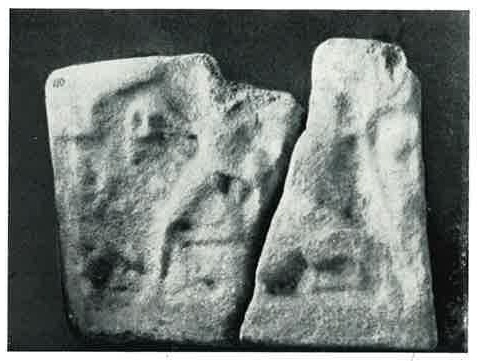
Weathered marble tauroctony relief in two fragments from Ruše, Noricum, depicting the bull-slaying with only the dog visible, flanked by two torchbearers both holding their torches upraised; no Sol or Luna.
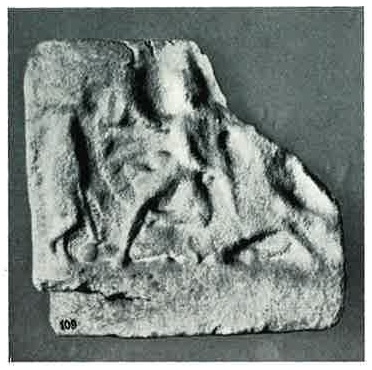
Marble tauroctony relief from Ruše, Noricum, showing a grotto scene in which Cautopates holds the torch downward against the rocky ground and supports his head with his left hand in a pensive attitude; the upper left corner preserves a bust of Sol.
Altar found in the Zollfeld at Virunum in March 1837, together with a statue of a bearded man holding a modius, dedicated to Invicto patrio by Ulbius Gaianus, praefectus vehiculorum — a rare reference to Mithras as a paternal deity.
Statue of Cautopates from Neuenheim, holding a downward torch with both hands, now in the Kurpfälzisches Museum at Heidelberg
Sandstone relief from Wiesbaden, ancient Aquae Mattiacae, found in a subterranean room in 1858, depicting Cautopates in Oriental dress holding a downward torch
