Your search Val di Non gave 2329 results.

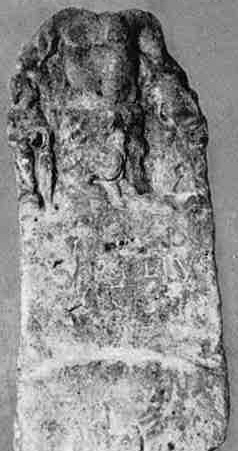
Mithraic dedicant associated with the rock-cut sanctuary of Rožanec in Pannonia Superior.
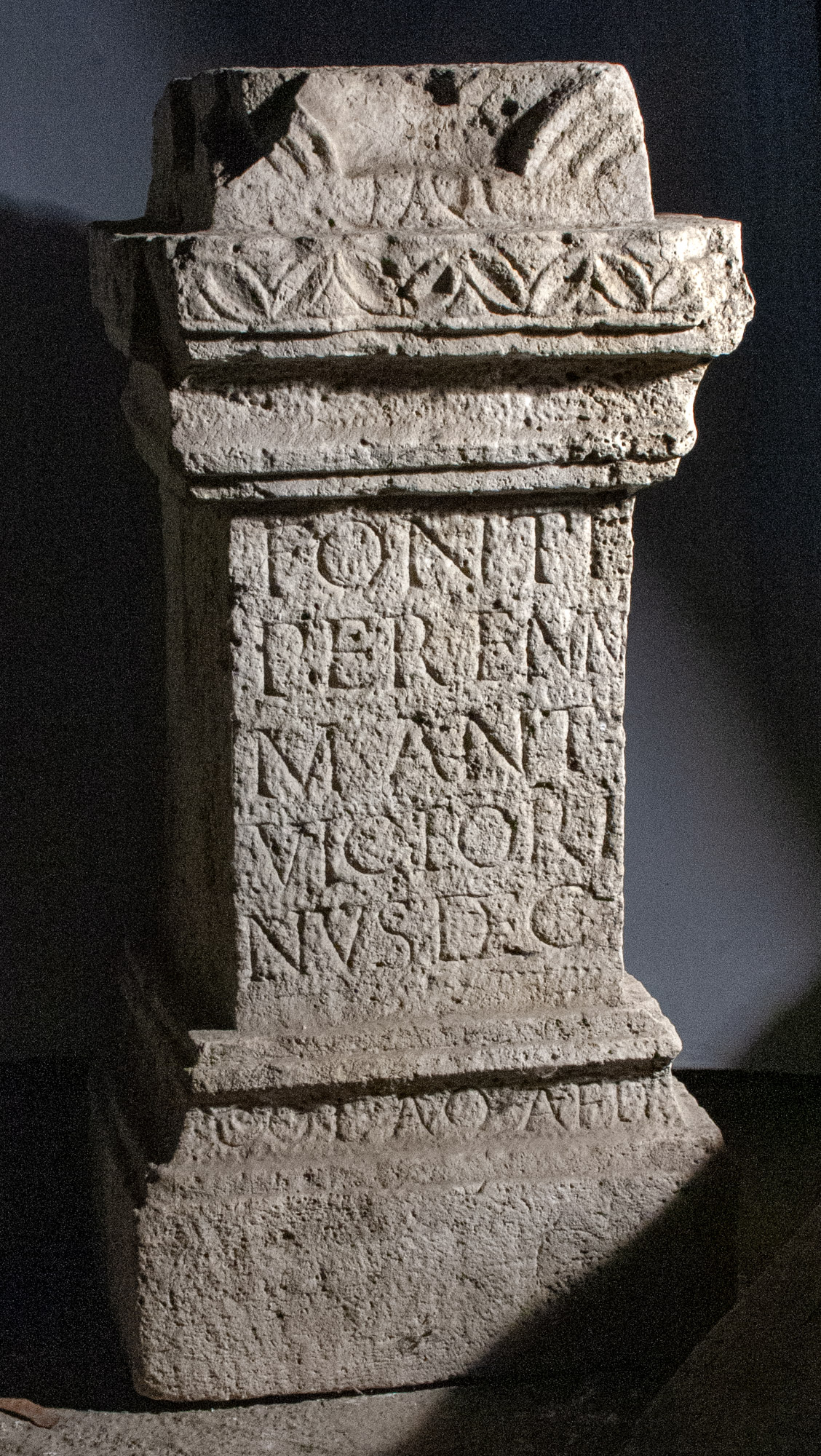
One of several dedications commissioned by the duumvir Marcus Antonius Victorinus in his Mithraeum of Aquincum, modern Budapest.

Two limestone statue fragments from Mithraeum II at Aquincum, Pannonia Inferior, representing Mercury in a shoulder-pinned garment with wings in his hair; probably stood in room A on base y.
The base of a statuette, preserving only one foot of Cautes, found at Luguvallium (modern Carlisle), bearing a dedication to Deus Cautes by Iulius, the archietus.
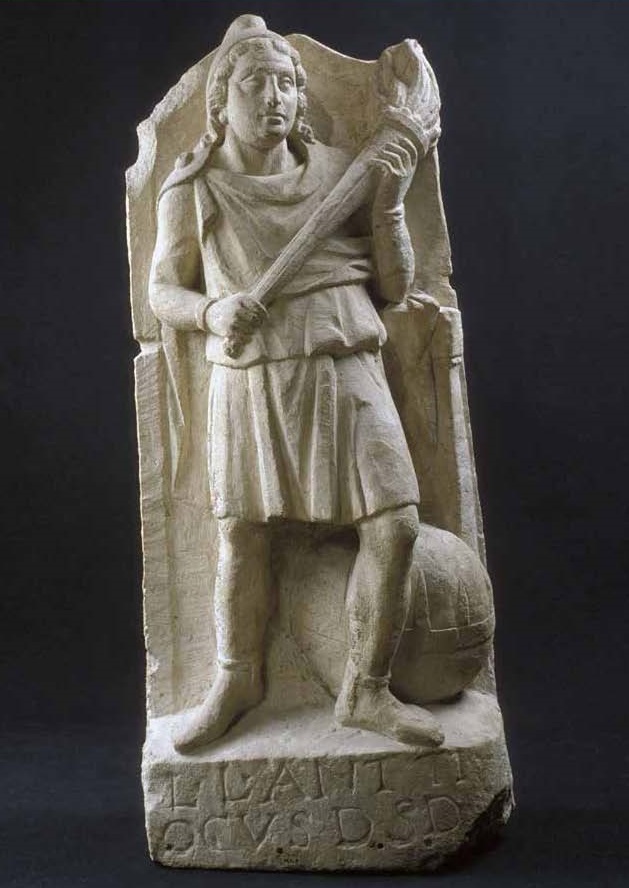
This monument representing Cautes with uncrossed legs was consecrated by a certain Anttiocus.
Altar from Osijek, ancient Mursa, found when the fortress was demolished in 1922, dedicated to Deo Aeterno — the Eternal God — a title sometimes associated with Mithraic worship.
Fragment of a marble tauroctony relief from Surduk, ancient Rittium in Pannonia Inferior, preserving only Mithras's right foot and leg with the bull below.
Trapezium-shaped limestone tauroctony relief from Nagytétény, ancient Campona in Pannonia Inferior, depicting Mithras killing the bull in an arched niche with scorpion, serpent, and torchbearers.
Limestone tauroctony relief found in a quarry at Békásmegyer, ancient Vicus Vindonianus in Pannonia Inferior, together with the upper portion of a sacrificial altar; the standard bull-slaying scene with torchbearers.
Fragment of a Mithras relief from Zsámbék near Aquincum, Pannonia Inferior, showing seven altars alternated with trees — a processional or decorative border rather than a main tauroctony scene.
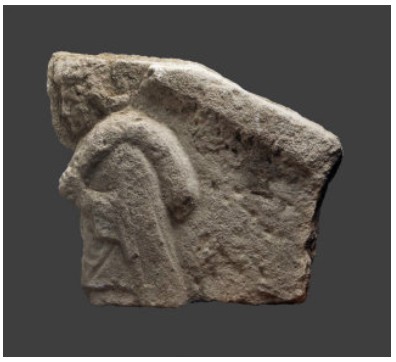
Fragment of a relief from Potz Neusiedl near Stix-Neusiedl, Pannonia Superior, brought to Eisenstadt in 1926, depicting part of a Mithraic bull-slaying scene.
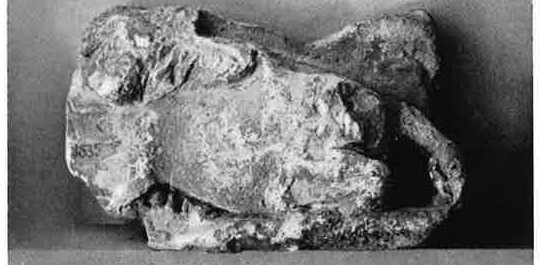
Fragment of a sandstone tauroctony relief from Schwadorf area, ancient Aequinoctium in Pannonia Superior, depicting Mithras killing the bull; the upper part of Mithras's body, the head, and parts of the bull are lost.
Limestone relief from Schwadorf, ancient Aequinoctium in Pannonia Superior, depicting the naked Mithras being born from the rock with a serpent encircling it, flanked by torchbearers; one of the finest examples of this iconographic type from the Danubian region…
Marble statuette of Cautopates from the Mithraeum at Sopron, ancient Scarabantia, in Phrygian cap and Oriental dress, holding the torch downwards; the head is lost.
Marble statuette of Cautes from the Mithraeum at Sopron, ancient Scarabantia, in Phrygian cap and Oriental dress, holding the upraised torch with both hands; the head is lost.
Marble inscription fragment from the Mithraeum at Sopron, ancient Scarabantia, recording a dedication to Deo invicto Mithrae by an Augustalis.
Lower portion of a marble relief from the Mithraeum at Modrič, Pannonia Superior, preserving the legs and downward torch of a Cautopates.
Upper portion of a marble relief from the Mithraeum at Modrič, Pannonia Superior, preserving a torchbearer's head in Phrygian cap with torch.
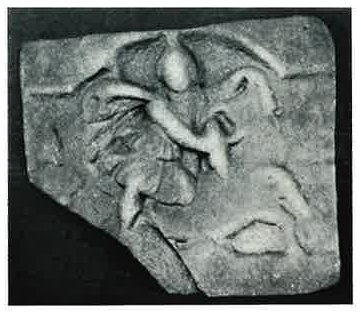
Marble tauroctony relief from the Mithraeum at Modrič, Pannonia Superior, depicting the standard bull-slaying with raven, dog, scorpion, and cross-legged torchbearers.
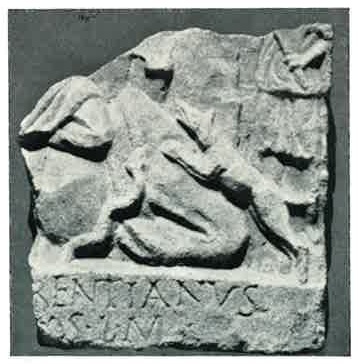
Right portion of a marble tauroctony relief from near Pregrade, Pannonia Superior, preserving Mithras killing the bull with dog, serpent, and scorpion; the greater part of the god and the bull's head are lost.
