Your search Villa dei Quintili gave 359 results.

Marble base in poor lettering found in the church of S. Maria de Cacabariis in Rome, recording the dedication by M. Aurelius Victor, vir clarissimus and prefect of the Feriae Latinae, to his patron Iovinus Callidianus, priest of Sol.
White marble statue of the lion-headed Aion standing on a cone decorated with a crescent, entwined in seven coils of a serpent and pressing claw-like hands against his body, each grasping a key; formerly in the Museo Torlonia, Rome.
Tauroctony relief in the Museo Torlonia, Rome, remarkable for having a large ant grasping the testicles in place of the scorpion, with the raven on Mithras' flying cloak, the dog and serpent near the wound, and the busts of Sol and Luna in the upper corners; no torchbearers represented…
Marble altar from the gardens of the Villa Giustiniani near Porta Flaminia, dedicated to Sol Invictus Mithras as a votive offering by Vestalis, servant of the Caesars, and C. Vettius Augustalis.
Marble cippus from the Villa Giustiniani near Porta Flaminia with a dedication to Sol Invictus Mithras by M. Aurelius Euprepes, erected after a vision through the presidents Bictorinus pater and Ianuarius, dated to 184 A.D.
Altar with a Greek dedication to Magna Mater and Attis and a Latin inscription recording the dedication by Petronius Apollodorus, vir clarissimus and pater sacrorum of Invictus Mithras, following his taurobolium and criobolium with his wife, dated to 370 A.D…
Marble base from the gardens of Julius III dedicated to Iunius Postumianus, vir clarissimus and pater patrum of Sol Invictus Mithras, pontifex of the sacerdotal order of the Sun, placed under the care of Flavius Herculus.
Large marble altar found near S. Giovanni in Laterano, dedicated by Sextilius Agesilaus Aedesius, pater patrum of Sol Invictus Mithras, to the Great Mother and Attis following his taurobolium and criobolium, dated to 376 A.D.
Marble slab from the Palazzo dei Musei Mithraeum bearing a pierced star in the centre and a dedication to the Invictus by L. Reminius Fortunatus.
Marble altar found near S. Lorenzo in Piscibus in 1949, dedicated to the Great Mother, Attis, and the Invincible Mithras by Sextus Rusticus, vir clarissimus, pater patrum, proconsul of Africa between 371 and 373 A.D.
Mosaic-paved floor of the central aisle of the Mitreo delle Sette Porte at Ostia, with a krater flanked by serpent and eagle, standing Jupiter and Saturn, torchbearers at the podia, and planetary gods Mars, Luna, Venus, and Mercury.
Great royal inscription of Antiochus I of Commagene carved on the thrones at Nemrud Dağı, invoking Apollo-Mithras-Helios among the guardian deities of the kingdom, 69–34 B.C.
Limestone base bearing a dedication to Helios Mithras by Midon son of Solon, with a bust of Mithras in Phrygian cap, found at Savçilar on the border of Phrygia and Mysia, 78/77 A.D.
Gold coin of the Scythian king Hooerkes, reverse showing Mithras (MIIPO) in tunic with lance and sword, north-west India, c. 87–129 A.D.

Fragment of a silvered bronze plate from Mithraeum II at Stockstadt depicting Mithras grasping the bull for the kill
Fragment of a sandstone relief from Mithraeum I at Stockstadt depicting a beardless figure in a velum, identified as a wind or winter deity
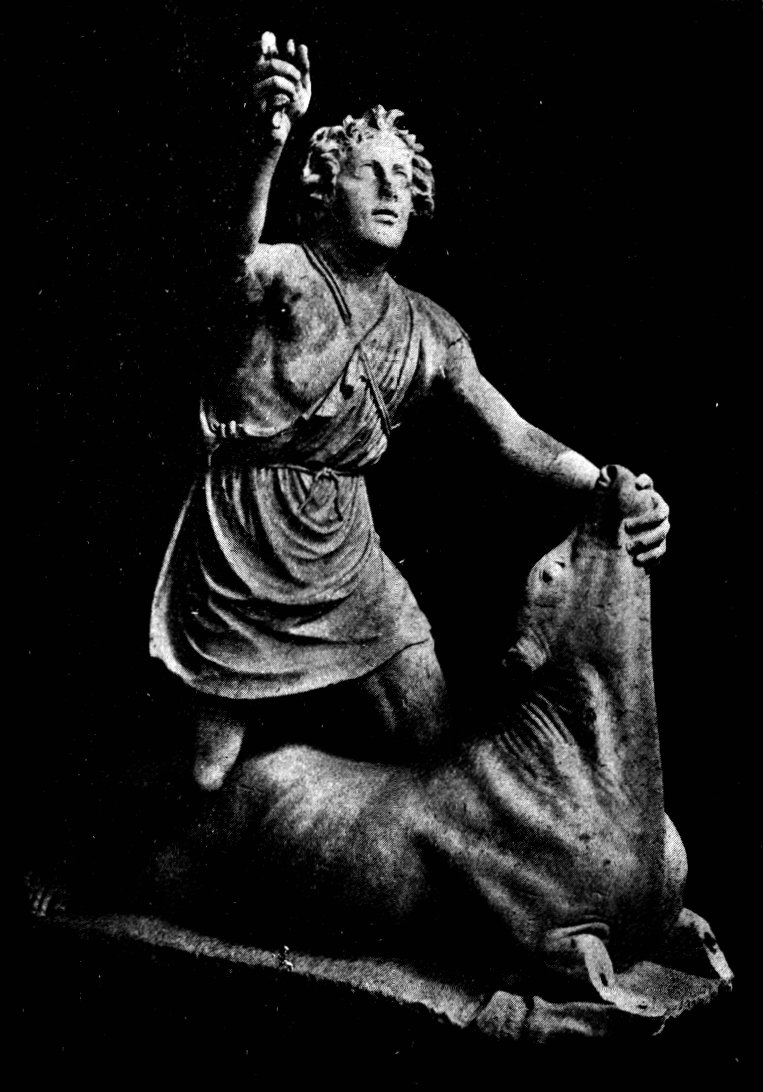
The person who commanded the sculpture may have been M. Umbilius Criton, documented in the Mitreo della Planta Pedis.
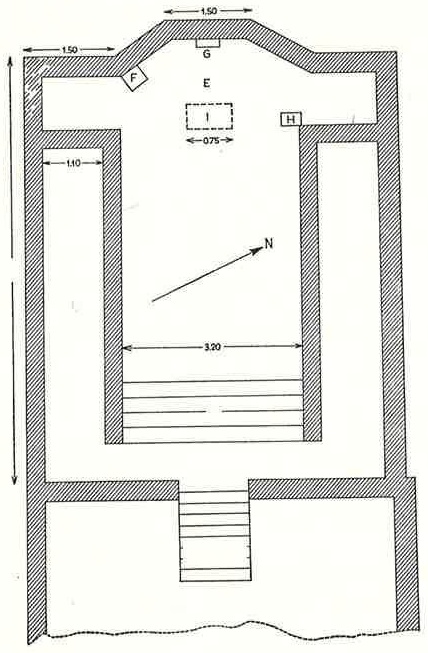
Mithraic sanctuary found at Biljanovac north-east of Kumanovo, Moesia Superior, with a pronaos and inner sanctuary, yielding marble reliefs, an altar, and associated cult objects.
Marble altar from the Mithraeum at Biljanovac, Moesia Superior, with its shaft hollowed out at the sides; the inscription is fragmentary and the dedicatee — either Natura or Transitus — cannot be determined.
Group of Mithraic and other cult remains possibly originating from several neighbouring sanctuaries destroyed or abandoned in Late Antiquity.
