Your search Villa of Domitian at the Castel Gandolfo gave 3663 results.

Lower part of a torchbearer statue, cross-legged in anaxyrides and short tunic, from one of the bases at the beginnings of the podia in the Mitreo delle Sette Porte at Ostia.
Fragments of a green-glazed maiolica krater with silver sheen, probably decorated with a dodekatheon showing Minerva, Jupiter, Dionysus, and Hercules, from the Mitreo delle Sette Porte at Ostia.
Small marble cippus dedicated by C. Atilius Bassus, freedman and apparator of a priest of the Great Mother, to Silvanus dendrophoris, from the Mitreo degli Animali at Ostia.
The Sacello delle Tre Navate near the Therms of the Sette Sapienti at Ostia, whose identification as a Mithraeum remains uncertain, with a decorated cult-niche but lacking typical Mithraic iconography.
Two marble fragments of a statue of Mithras as bull-killer, preserving the head in Phrygian cap and right hand with dagger, with traces of red paint, from the Mitreo del Palazzo Imperiale at Ostia.
Two small tuff altars walled into the corners of the benches, each bearing a representation of a jug, from the Mitreo delle Sette Sfere at Ostia.
Fragment of a white marble statue of Mithras tauroktonos with dog, serpent and scorpion, upper body and right leg missing, found at Praeneste (modern Palestrina).
Damaged statue of Mithras as bull-killer on a rectangular base, found in the piazza of the Fountain of Apollo at Cyrene.
The inscription is carved into two pieces of marble cornice.
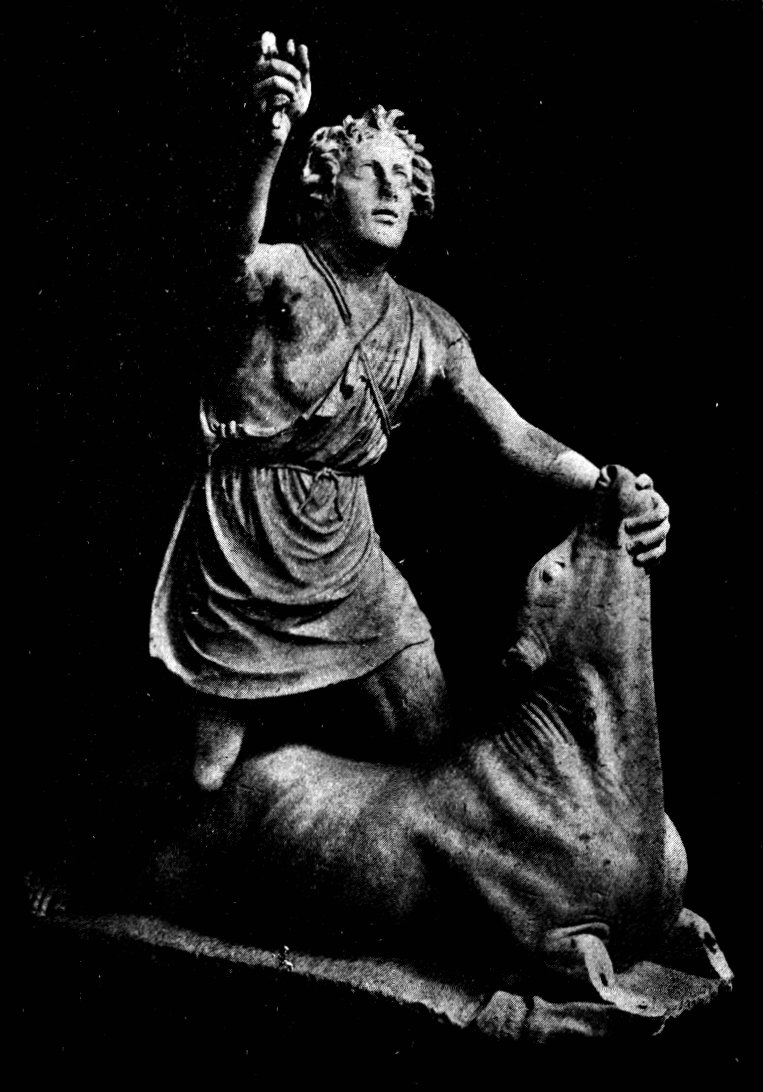
The person who commanded the sculpture may have been M. Umbilius Criton, documented in the Mitreo della Planta Pedis.
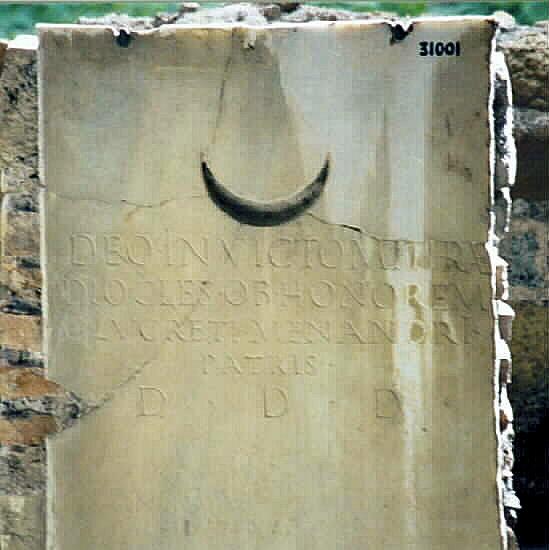
The brick altar of the Mithraeum Menander was covered with marble slabs bearing a crescent and an inscription.
Gold lamina from Ciciliano showing a nude, serpent-entwined Aion-Kronos holding a key and surrounded by Greek voces magicae (2nd c. CE).
Group of Mithraic and other cult remains possibly originating from several neighbouring sanctuaries destroyed or abandoned in Late Antiquity.
Inscription from the Mithraeum at Sarmizegetusa, Dacia, recording a dedication by Severus, imperial freedman, to Cautopates.
Marble fragment from the Mithraeum at Sarmizegetusa, Dacia, preserving the middle part of Cautopates holding a downward torch in his left hand.
Marble fragment from the Mithraeum at Sarmizegetusa, Dacia, preserving the sheath and part of Mithras's tunic with traces of red colour.
Fragment of a white marble tauroctony from the Mithraeum at Sarmizegetusa, Dacia, in the Lugoj collection; the figures of Mithras and the torchbearers are only partially visible on the weathered surface.
Fragment of a bluish marble tauroctony from the Mithraeum at Sarmizegetusa, Dacia, preserving the border of Mithras's tunic, the sheath of the dagger, and his right foot.
Fragment of a bluish marble tauroctony from the Mithraeum at Sarmizegetusa, Dacia, preserving the lower part of Cautopates with crossed legs, downward torch, and embroidered girdle.
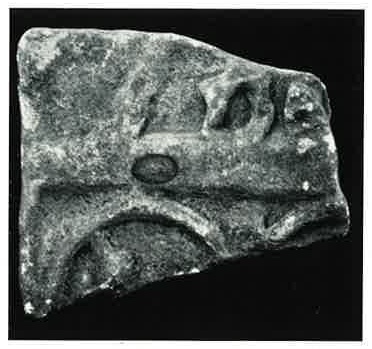
Fragment of a yellowish marble tauroctony from the Mithraeum at Sarmizegetusa, Dacia, preserving the left lower corner with the bull's hind hoof, the crossed legs of Cautopates, and the flame of his downward torch.
