Your search Villa of Domitian at the Castel Gandolfo gave 3663 results.

Large red sandstone tauroctony relief from Mithraeum I at Stockstadt, mostly thrown into the river Main when the sanctuary was destroyed
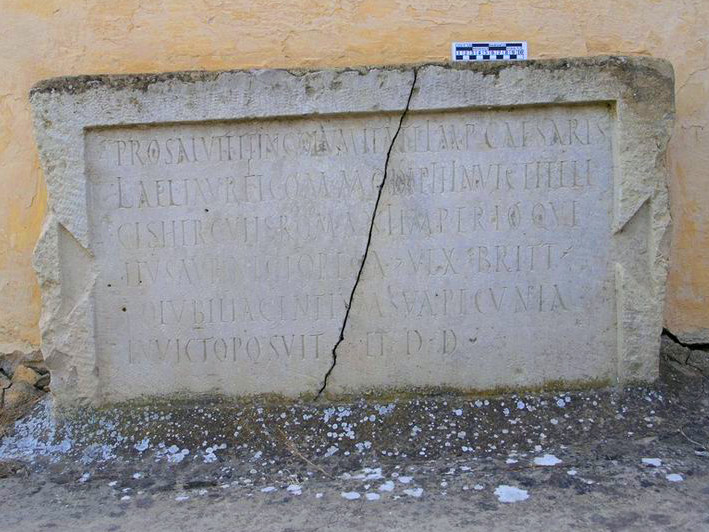
One of the two inscriptions by Aurelius Nectoreca, a follower of Mithras, found in Meknès, Morocco.
Marble altar from the Mithraeum at Biljanovac, Moesia Superior, with its shaft hollowed out at the sides; the inscription is fragmentary and the dedicatee — either Natura or Transitus — cannot be determined.
Mithraic statue from Vindobala discovered in 1844 and subsequently broken up.
Oolitic stone statuette of the torchbearer Cautopates discovered in Drury Lane, Londinium.
Reworked limestone altar dedicated by the governor of Numidia during the period of the Diocletianic persecutions.
Marble plate from the Mithraeum at Serdica, Thracia, bearing a cryptic inscription whose letter sequence has not been satisfactorily explained.
Sandstone altar with patera from the rock sanctuary at Kreta, Moesia Inferior, bearing a Greek inscription of uncertain reading, possibly a thanksgiving to Mithras.
Eight small, badly weathered marble fragments from Cinçsor, Dacia, belonging to at least three different reliefs.
Inscription copied at Vintu de Jos near Apulum, Dacia, in the 16th century, probably from Apulum, dedicated to Invicto Mithrae by Lucius Octavius Gratus.
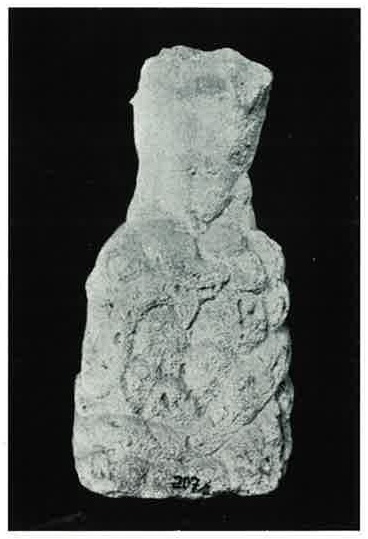
Sandstone rock-birth statue from Apulum, Dacia, depicting the naked Mithras emerging from a rock encircled by a snake; head and arms are lost.
Limestone altar from Apulum, Dacia, decorated on one side with Medusa, on another with a vase, flowers, a bull's head, and a serpent; the front bears an inscription.
Slab from near the Cathedral at Alba Julia, Apulum in Dacia, found in 1725, dedicated to Deo invicto Mithrae by a legionary legate.
Statues of a man and a woman from the same Mithraic context at Apulum, Dacia; no further details are known.
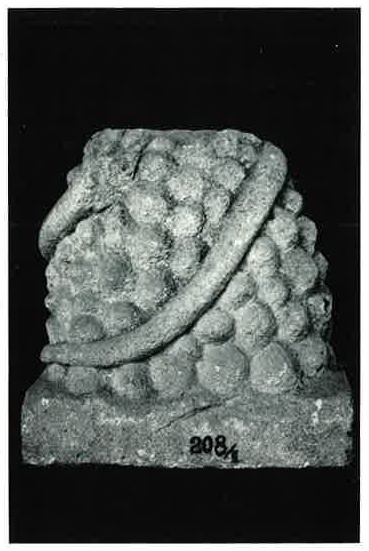
Dark sandstone statue from Mureș Port, Dacia, depicting Mithras's rock-birth with the rock encircled by a serpent; the statue's attribution to Mureș Port rather than Apulum is uncertain.
Reference to a Cautopates statuette with inscription from Rácálmas near Intercisa, Pannonia Inferior, preserved at Székesfehérvár; the publication cited was inaccessible to the author.
Small altar bearing only the dedication Cautopati, from near Intercisa, Pannonia Inferior, found in the bed of the Danube.
Plate from Intercisa, Pannonia Inferior, with traces of red painting and an ivy-leaf in the middle line; bearing an inscription recording a Mithraic dedication.
Marble statue from Intercisa, Pannonia Inferior, depicting Cautopates in Oriental dress and a high Phrygian cap, walking.
Rectangular plate from Intercisa, Pannonia Inferior, bearing a dedication to Deo invicto Mithrae.
