Your selection in monuments gave 458 results.

Two marble fragments of a statue of Mithras as bull-killer, preserving the head in Phrygian cap and right hand with dagger, with traces of red paint, from the Mitreo del Palazzo Imperiale at Ostia.
A small hollow edicola of simple square structure near altar K, with an opening for lamp offerings, from the Mitreo del Palazzo Imperiale at Ostia.
Two small tuff altars walled into the corners of the benches, each bearing a representation of a jug, from the Mitreo delle Sette Sfere at Ostia.
A group of small finds from an Ostia Mithraeum, including three tuff altars, two trapezophores, a column fragment, lamps, vases, and a marble Silen.
Inscription dedicated to Sol pro salute et reditu et victoria, with Tato as pater sacrorum, from the Ager Albanus.
Fragmentary marble tablet inscription mentioning Sol Invictus Mithras and a priest, from Tivoli (ancient Tibur), possibly of urban origin.
Fragment of a relief showing Mithras as bull-killer with unusual eagle-headed dagger handle and Sol in a quadriga, from Tivoli (ancient Tibur), known only through an inaccurate engraving by Barbault.
Fragment of a white marble statue of Mithras tauroktonos with dog, serpent and scorpion, upper body and right leg missing, found at Praeneste (modern Palestrina).
Altar inscription dedicated to Deus Invictus by Verus, an antistes, from Aesernia (modern Isernia).
Two marble busts of youthful figures with Phrygian caps, probably representing the torchbearers Cautes and Cautopates, from the Villa Borghese collection, found at Formiae.
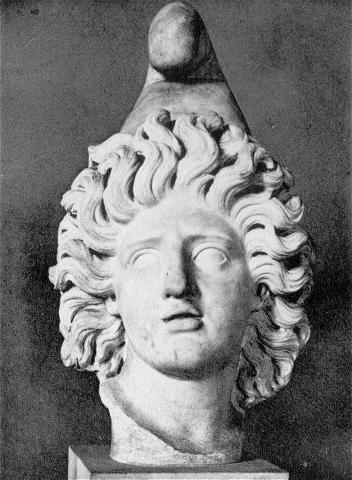
The head of Mithras had seven holes made for fastening rays.
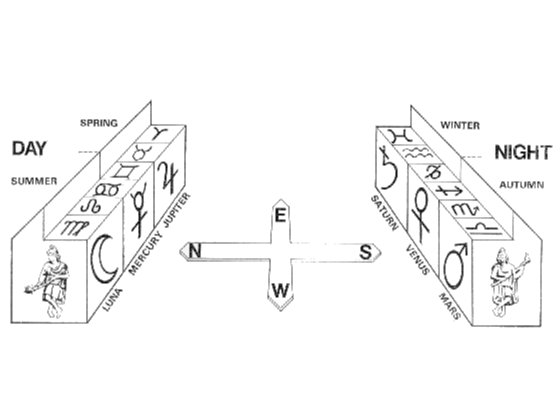
The rich mosaics of the Mithraeum of the Seven Spheres include the the signs of the Zodiac.
The inscription is carved into two pieces of marble cornice.
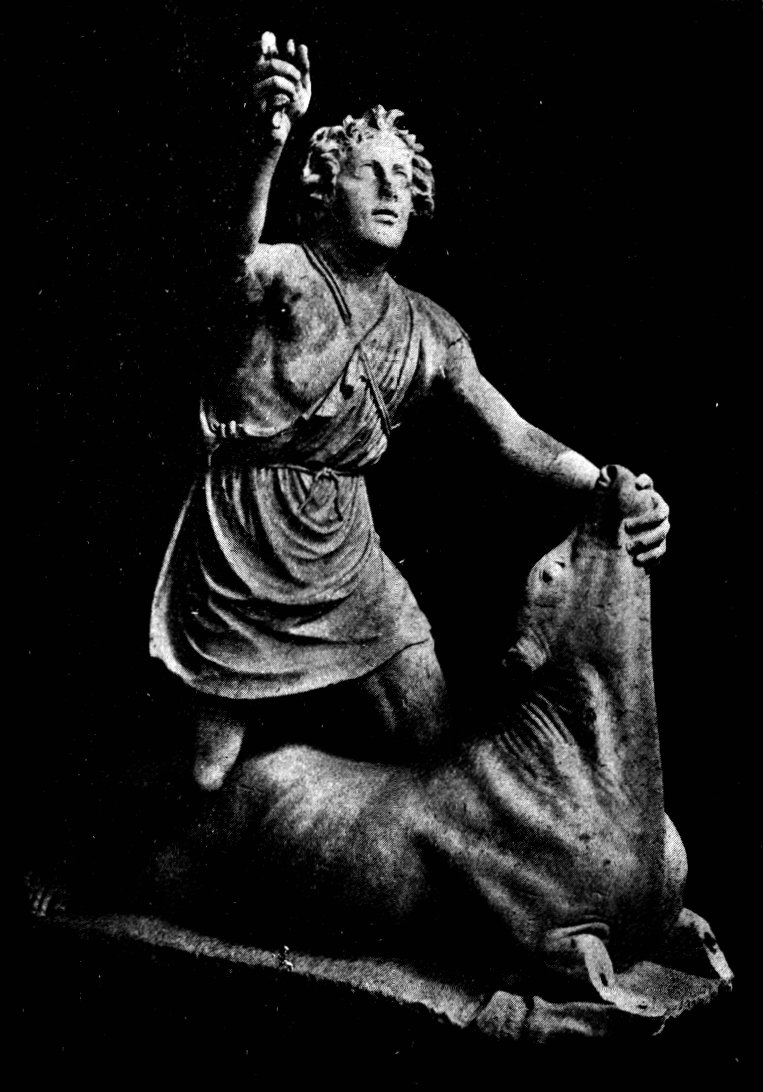
The person who commanded the sculpture may have been M. Umbilius Criton, documented in the Mitreo della Planta Pedis.
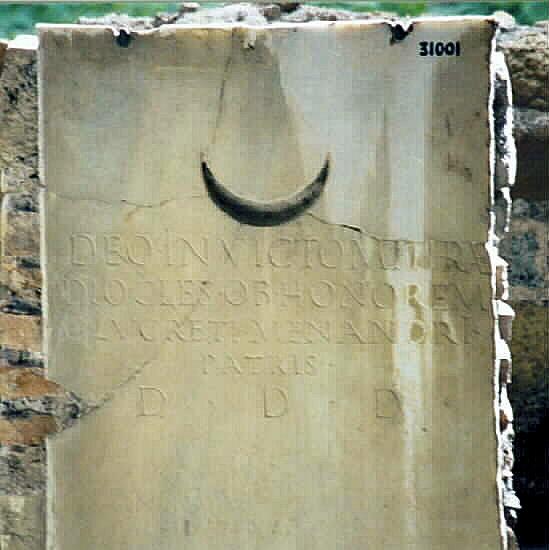
The brick altar of the Mithraeum Menander was covered with marble slabs bearing a crescent and an inscription.
Late Roman funerary inscription from Antium commemorating the senator, governor of Numidia and Mithraic pater Alfenius Ceionius Iulianus Kamenius.
Gold lamina from Ciciliano showing a nude, serpent-entwined Aion-Kronos holding a key and surrounded by Greek voces magicae (2nd c. CE).
Group of Mithraic and other cult remains possibly originating from several neighbouring sanctuaries destroyed or abandoned in Late Antiquity.
Mithraic monuments associated with Ceionius Iulianus Kamenius and linked with the inscriptions discussed in entries 395A–B.
Mithraic material whose correct archaeological attribution belongs to Regio XII of ancient Rome.
