Filtering by Province: Pannonia superior in monuments gave 268 results.
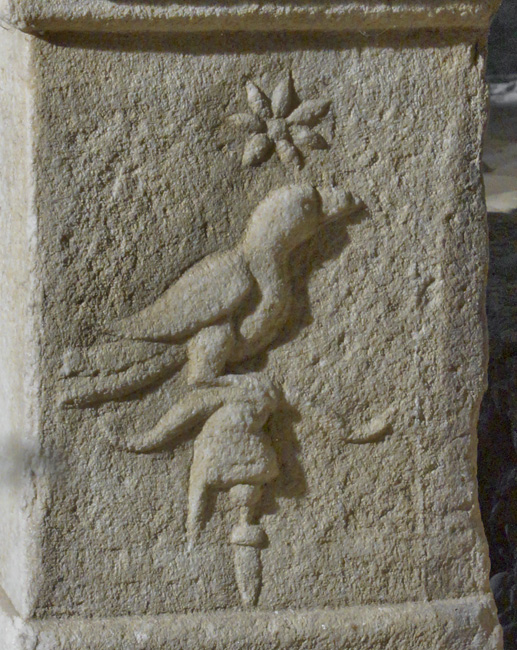
This altar from Ptuj, present-day Poetovio, is decorated with various Mithraic animals such as a tortoise, a cock and a crow and other objects.
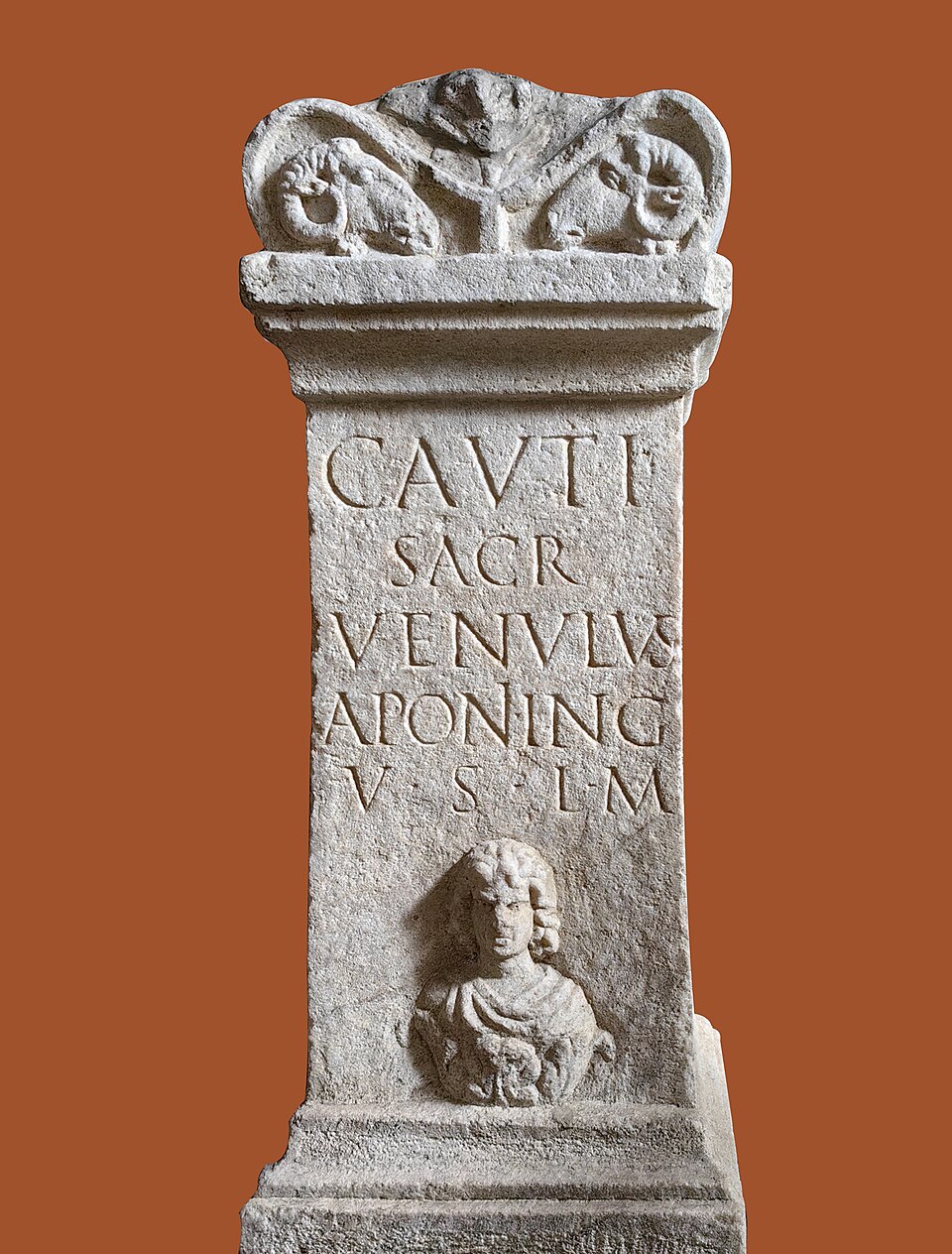
White marble altar from Mithraeum I at Ptuj, dedicated to Cautes by Venulus and decorated with a bust of the god emerging from foliage.
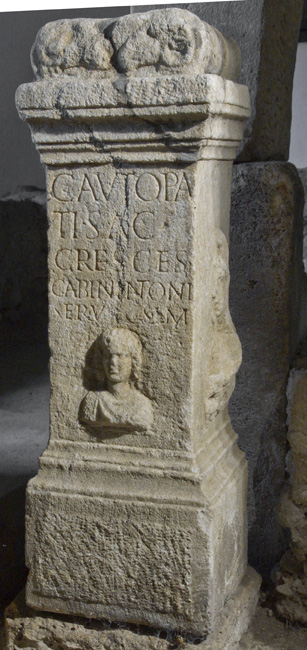
White marble altar from Mithraeum I at Ptuj, ancient Poetovio, decorated with a bust of Cautopates, two ram heads flanking a palm, and lateral representations of Mithras’ rock-birth.

White marble base from Mithraeum I at Ptuj, ancient Poetovio, with an inscription and the preserved legs, garment, and torch of a Cautopates statue.
White marble base from Mithraeum I at Ptuj, ancient Poetovio, with an inscription and the preserved foot and lower garment of a Cautes statue.

Found in Illmitz, Austria, in 1959, this altar was dedicated to the unconquered god Mithras by a certain Aelius Valerianus.
Limestone altar from ancient Brigetio, dedicated to the invincible god Mithras by Masuinnius Amicus, an Augustalis of the municipium Brigetionis Antoninianum.
Limestone altar dedicated to Cautopates by N. Masica Maternianus at Brigetio.
On this slab, Gaius Iulius Propinquus indicates that he made a wall of the Mithraeum at his own expense.
Painted sandstone plaque recording the construction of a wall ex voto by Gaius Iulius Propinquus in Carnuntum Mithraeum III.
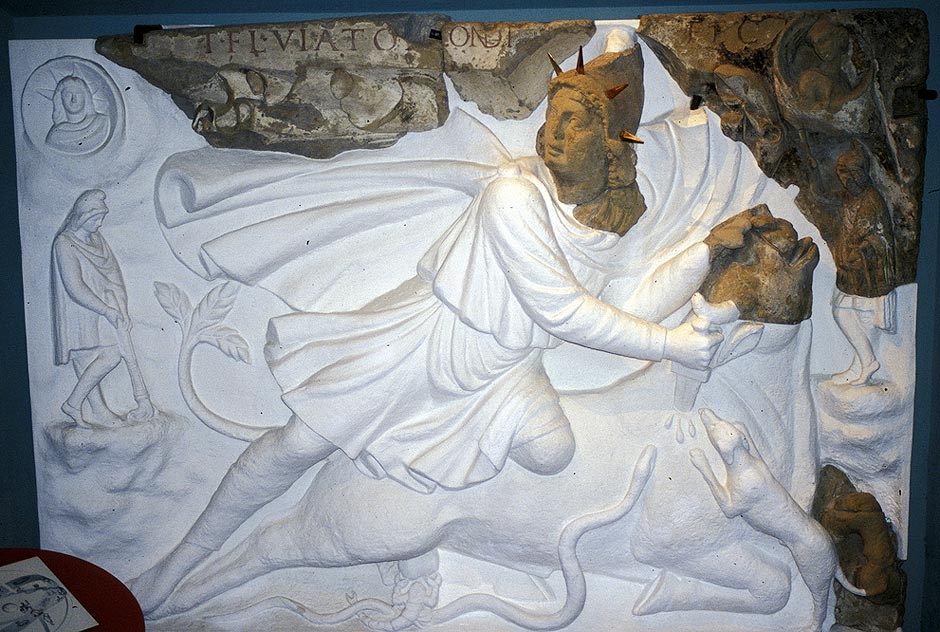
Monumental painted tauroctony dedicated by Titus Flavius Viator, with traces of its original polychromy and fittings for metal rays on Mithras’ Phrygian cap.
Altar dedicated to Mithras by the imperial slave Iucundus, recording his construction of a portico and apparatorium for the Mithraeum at Siscia.
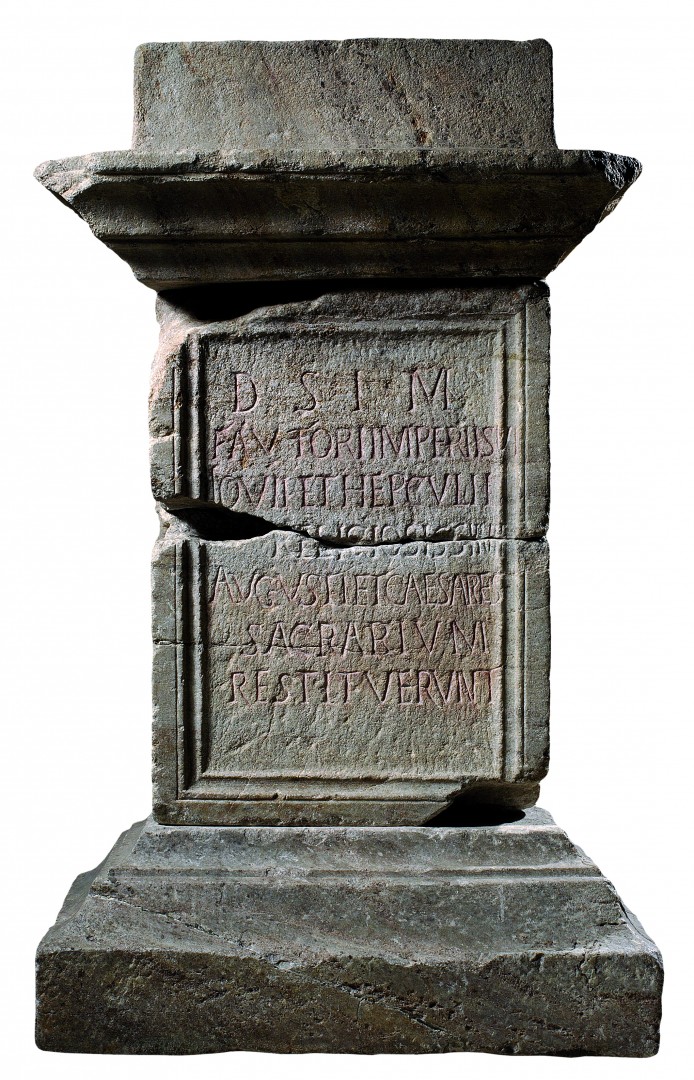
Altar with Cautes and Cautopates dedicated to Sol Invictus Mithras as protector of the Tetrarchy in 3rd-century Carnuntum.
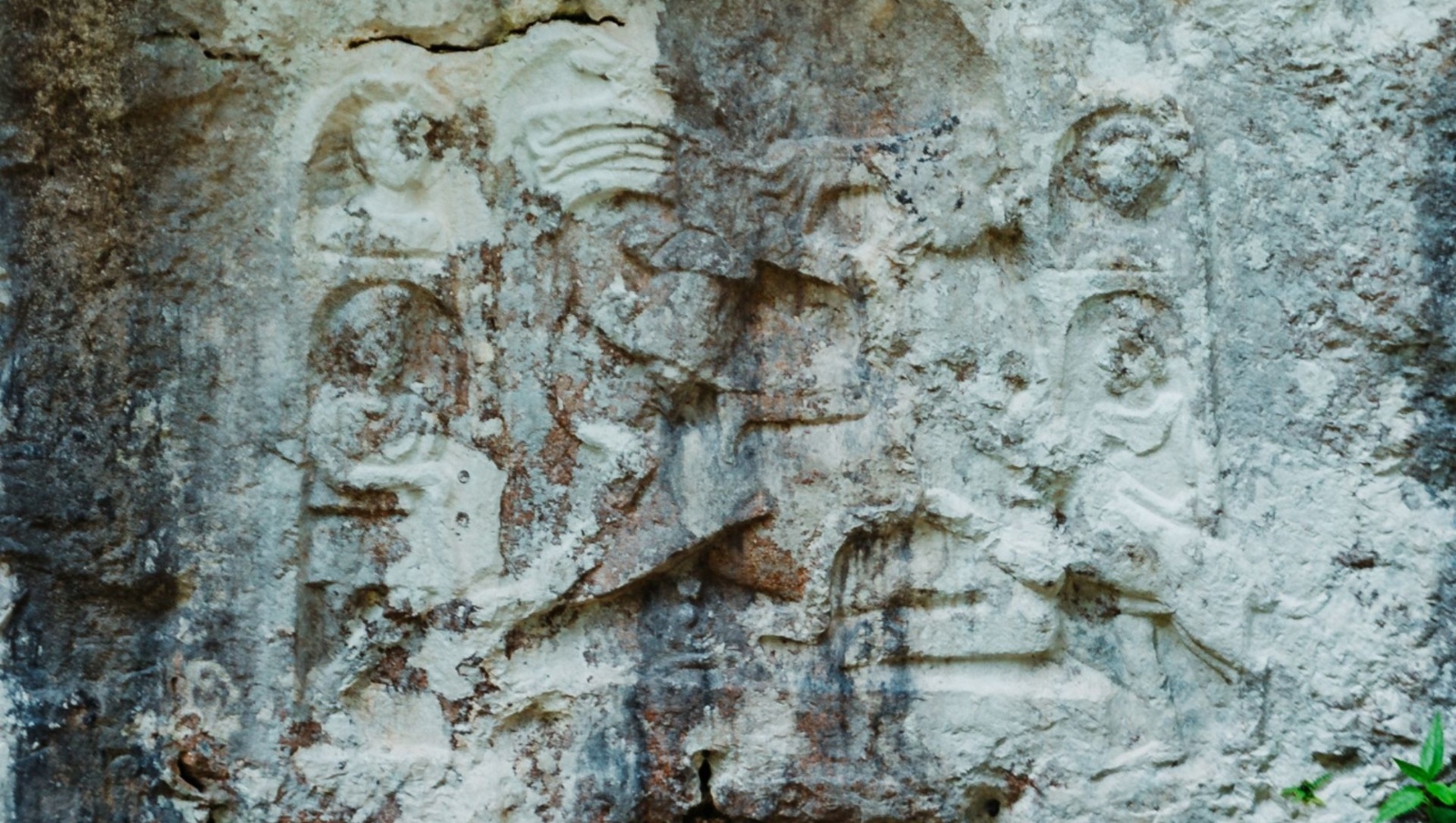
Carved directly into the rock of the Rožanec sanctuary, this tauroctony relief preserves an unusually complete composition.
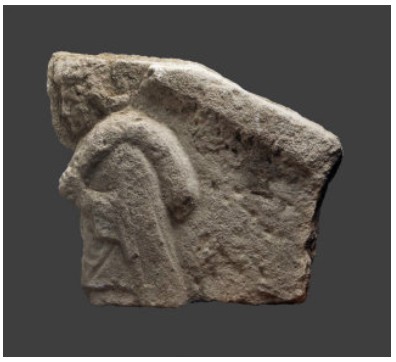
Fragment of a relief from Potz Neusiedl near Stix-Neusiedl, Pannonia Superior, brought to Eisenstadt in 1926, depicting part of a Mithraic bull-slaying scene.
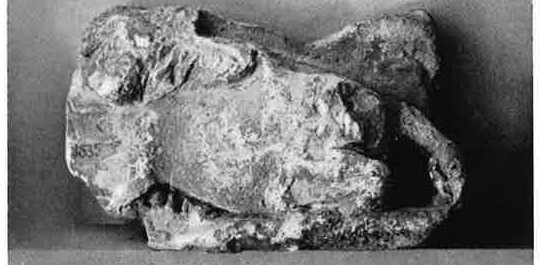
Fragment of a sandstone tauroctony relief from Schwadorf area, ancient Aequinoctium in Pannonia Superior, depicting Mithras killing the bull; the upper part of Mithras's body, the head, and parts of the bull are lost.
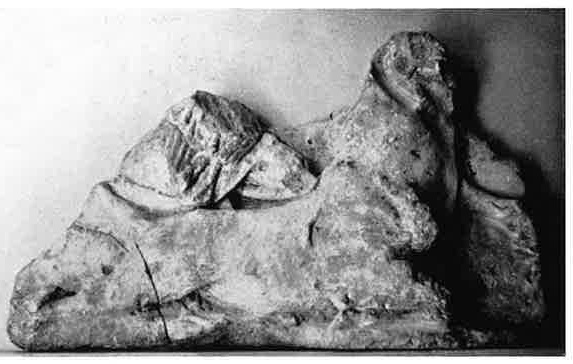
Fragment of a large sandstone tauroctony relief from Schwadorf, ancient Aequinoctium, depicting Mithras killing the bull; the upper part of the god's body, his head, the end of the tail, and the scorpion are lost.
Inscription from Schwadorf, ancient Aequinoctium in Pannonia Superior, dedicated to Petrae genetrici dei — the rock that gives birth to the god — by Aurelius Statorius.
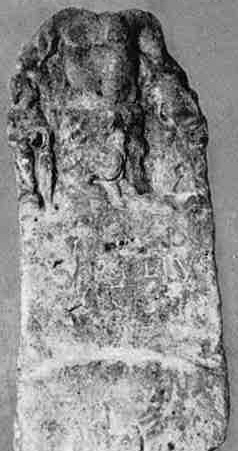
Limestone relief from Schwadorf, ancient Aequinoctium in Pannonia Superior, depicting the naked Mithras being born from the rock with a serpent encircling it, flanked by torchbearers; one of the finest examples of this iconographic type from the Danubian region…
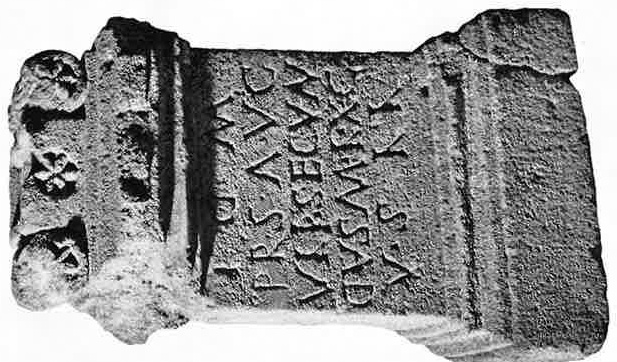
Limestone altar from Vienna, ancient Vindobona in Pannonia Superior, found in 1896 together with two terracotta lamps; the dedicant and full text are not known from the summary description.
