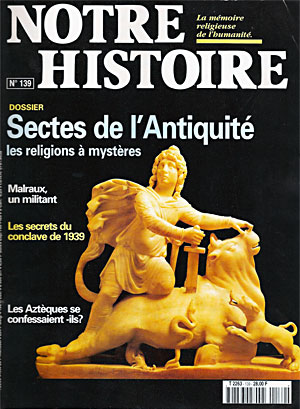
Filtering by Genre / Topic: esotericism in books gave 196 results.
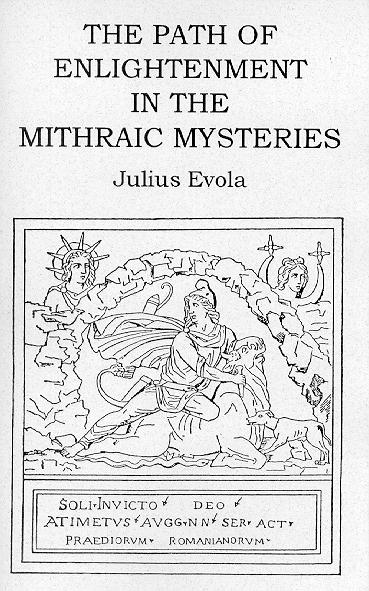
The first and the third of the following essays written by Julius Evola are dedicated to the mysteries of Mithras, while the second essay concerns itself with the Roman Emperor, Julian.

Revue d'archéologie française, avec notamment un article sur le Mithraum bordelais du site de Parunis.
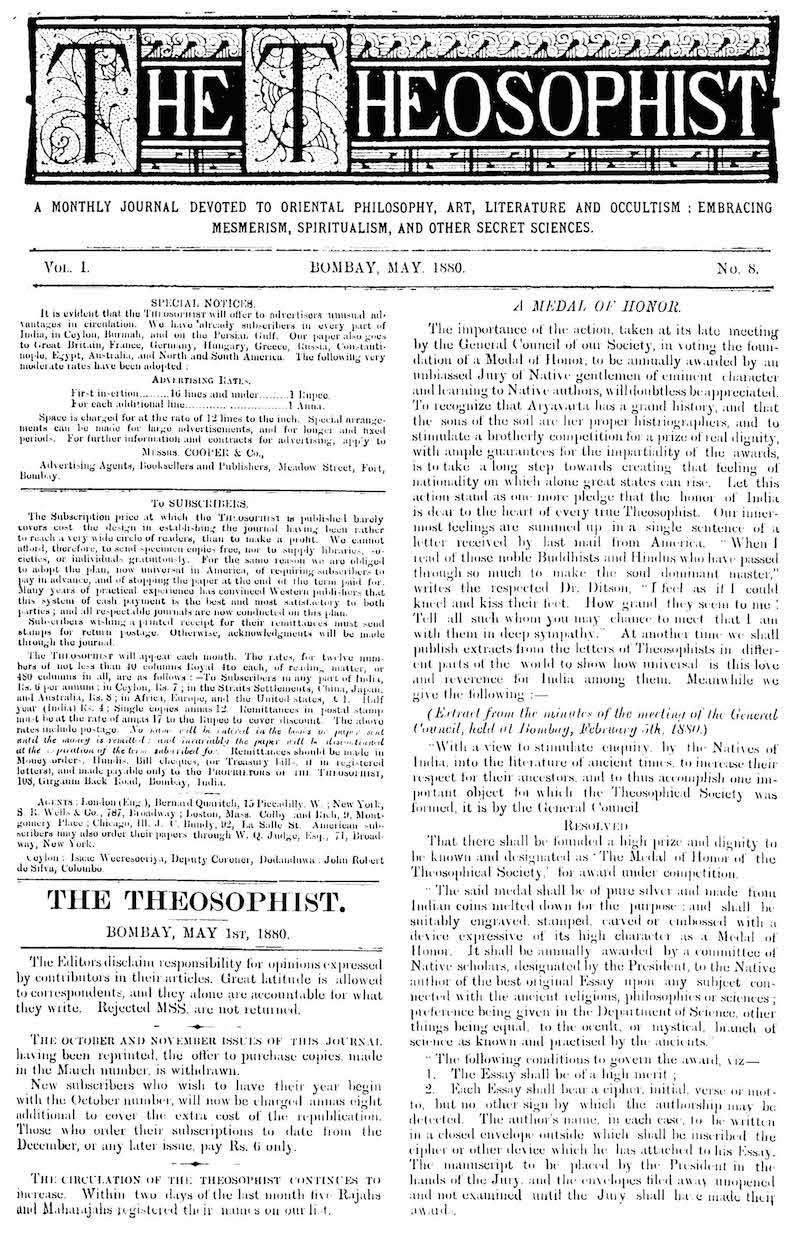
Founded by H. P. Blavatsky in Bombay in 1879, the journal of the Theosophical Society became a major forum for Theosophy, comparative religion, occultism and the study of ancient spiritual traditions.

A conversation between Peter Mark Adams and Christophe Poncet on the esoteric tarot, in relation to the elite and Saturnian Sola-Busca tarocchi and the popular and luminous Tarot de Marseille.
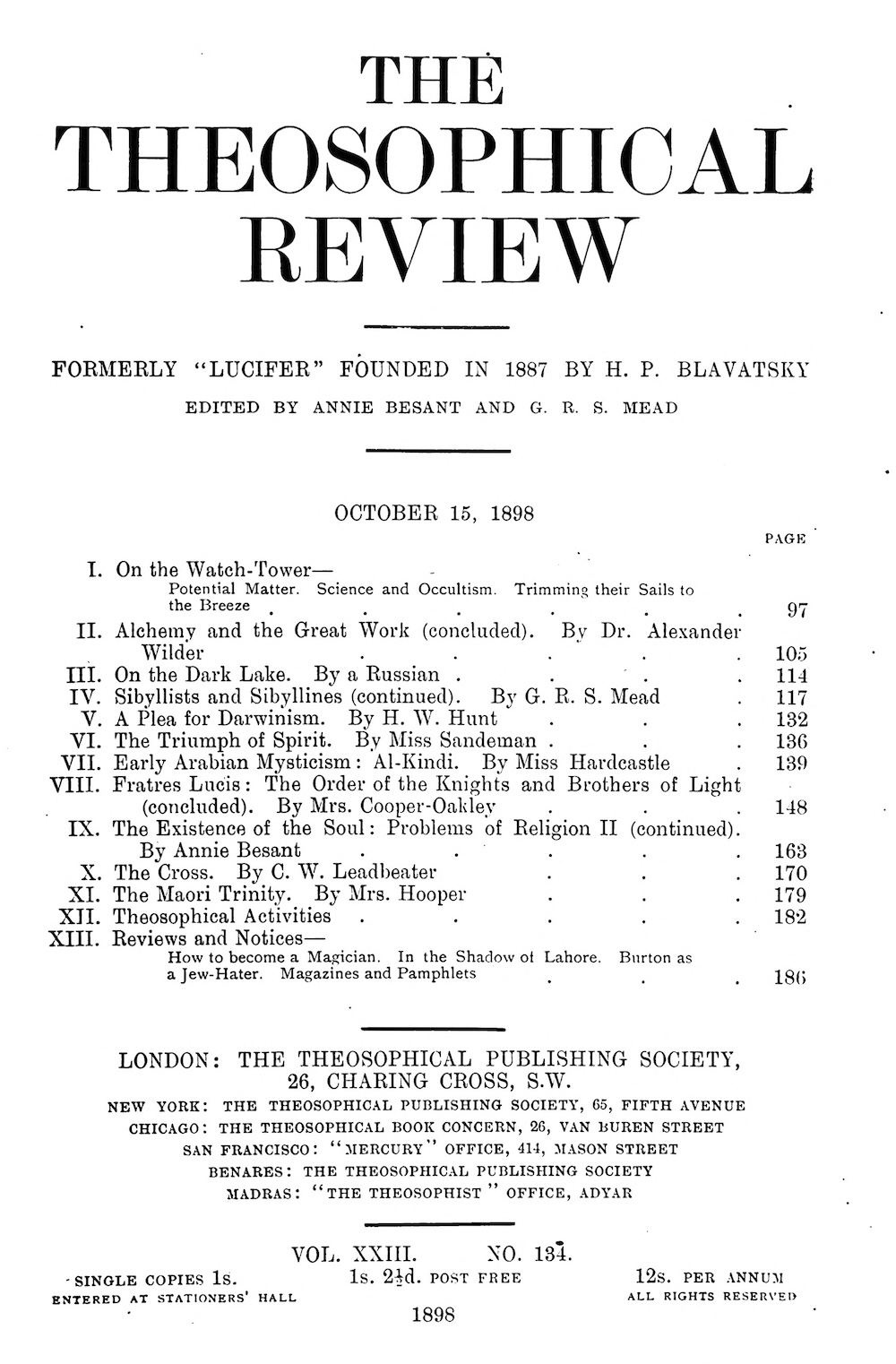
The London Theosophical monthly that succeeded H. P. Blavatsky’s Lucifer in 1897, edited by Annie Besant and G. R. S. Mead and devoted to comparative religion, occultism and ancient spiritual traditions.
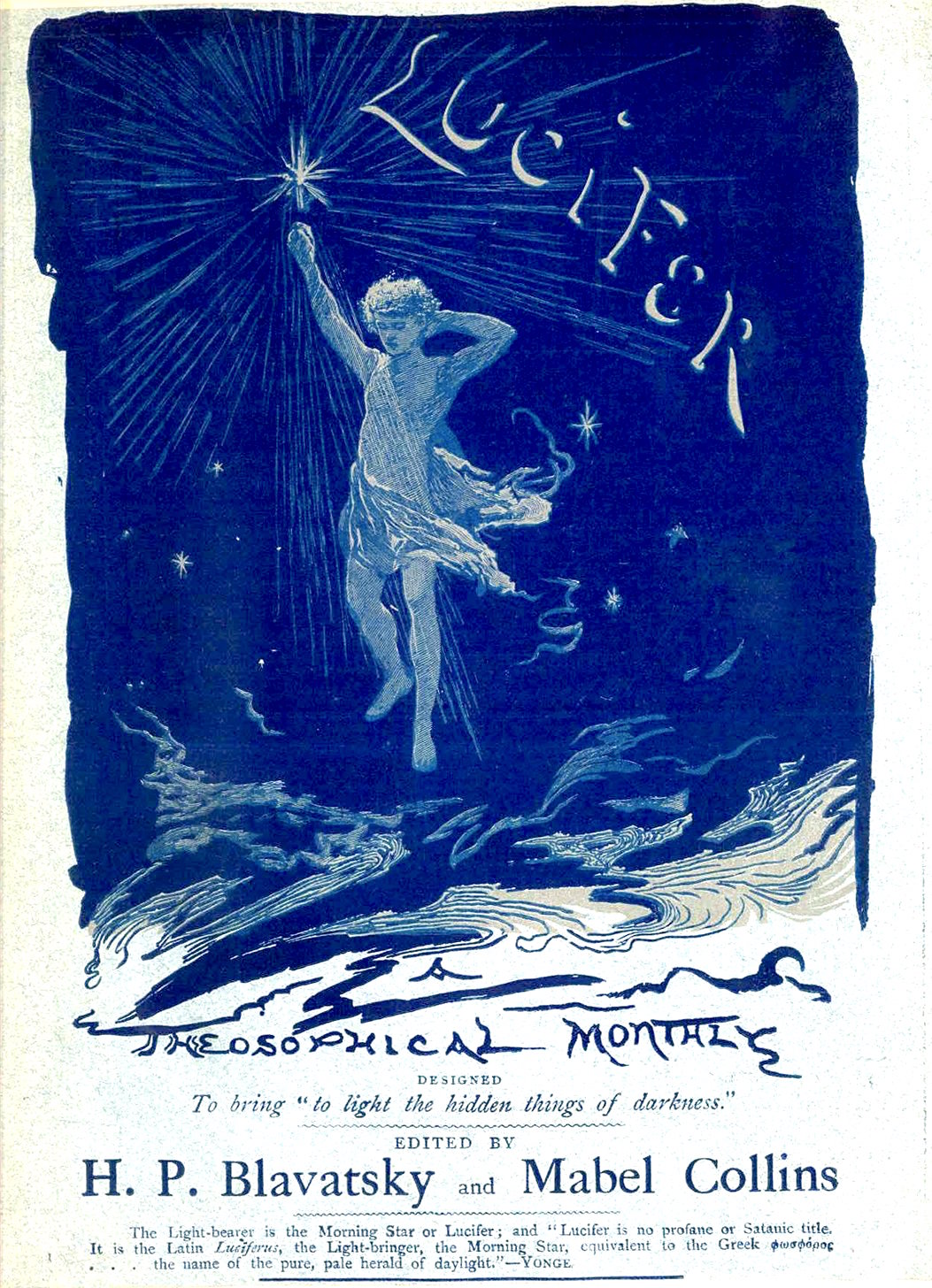
A London monthly founded by H. P. Blavatsky in 1887, Lucifer became an important forum for Theosophical writing on religion, esotericism, symbolism and the ancient Mysteries.

A key Neoplatonic text, The Cave of the Nymphs reads Homer’s cave as an allegory of the soul’s descent into matter and return to the divine, with echoes of the mysteries of Mithras.
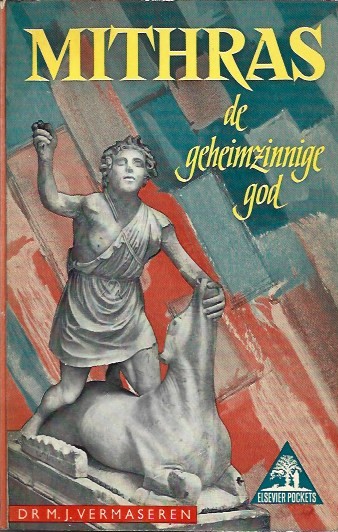
De oorspronkelijke Nederlandse uitgave van 1959 introduceerde het werk van Vermaseren, dat als klassiek geldt in de populaire studie van het mithraïsme en dat de belangstelling voor deze cultus blijvend heeft gevormd.

Robert Turcan présente les dévotions immigrées dans le monde romain, sans négliger les cultes marginaux ou sporadiques, traitant également des courants gnostiques, occultistes et théosophiques.