This site uses cookies to offer you a better browsing experience.
Find out more on how we use cookies in our privacy policy.

 
Monumentum

CIMRM 1665

Sandstone relief of Mithras killing the bull, broken in two parts and partly restored, with dog, serpent and scorpion preserved; formerly in Vienna, now on loan to the Museum Carnuntinum.
 
The New Mithraeum
21 Dec 2024
Updated on Jan 2026

The full article is reserved for our members.

Log in or create a free account to access the entire site.

Relief in sandstone, broken in two parts (H. 1.20 Br. 1.60 D. 0.20). Vienna (Wien), Kunsthistorisches Museum, Inv. No. I, 17/18. Now in loan in the Museum Carnuntinum in Deutsch-Altenburg.MMM II 330j and fig. 203; v. Arneth, o.c., 341; LeRoy Campbell in Berytus XI, 1954, 48 No. 154. See fig. 424.The relief has been restored very well and it is possible to distinguish the original from the restored fragments. Mithras kills the bull, the tail of which ends in three parts. Of the bull’s head one ear, a horn and the foremost part of the muzzle are lost; of the dog only the r…

Related monuments

Mithraeum I of Carnuntum

According to the scarcely detailed design of von Sacken, the lay-out of the temple must have been nearly semi-circular.

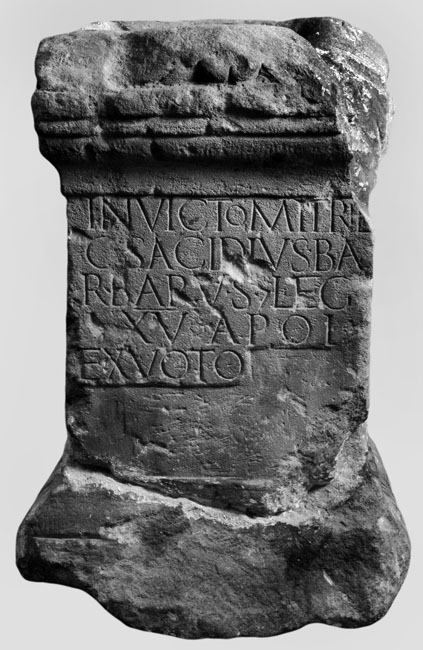
Altar of Carnuntum by Sacidius Barbarus

This altar bears the oldest known Latin inscription to the god Mithras, written Mitrhe.

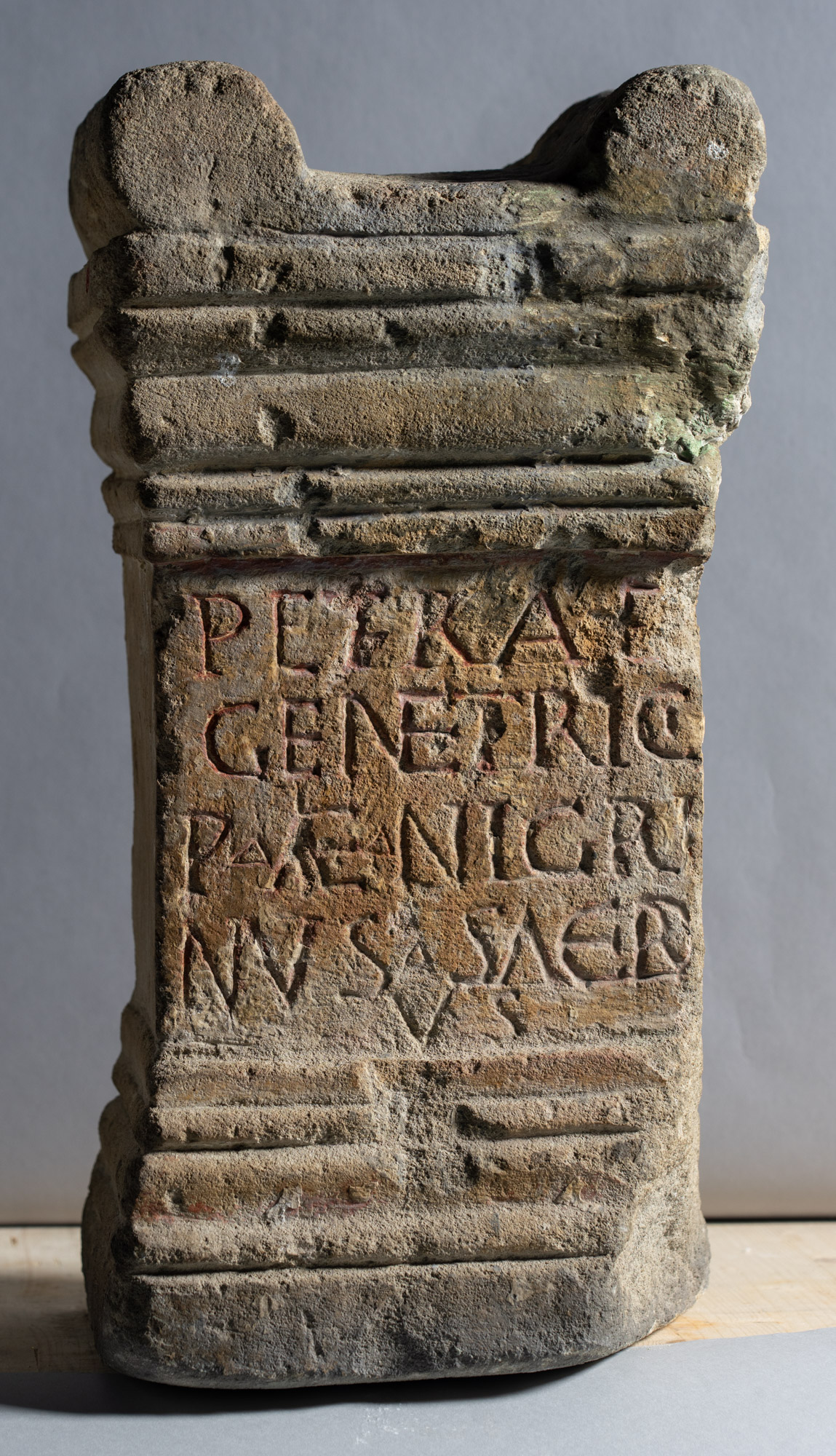
Altar to Petra Genetrix from Carnuntum

Aelius Nigrinus dedicated this small altar in Carnuntum to the rock from which Mithras was born.

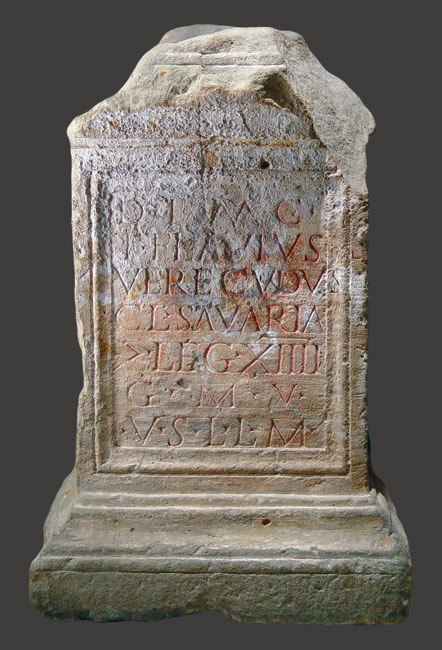
Altar of Flavius Verecundus from Carnuntum

This monument to Mithras and Cautes (or Cautopates) was erected in Carnuntum by the centurion Flavius Verecundus of Savaria.


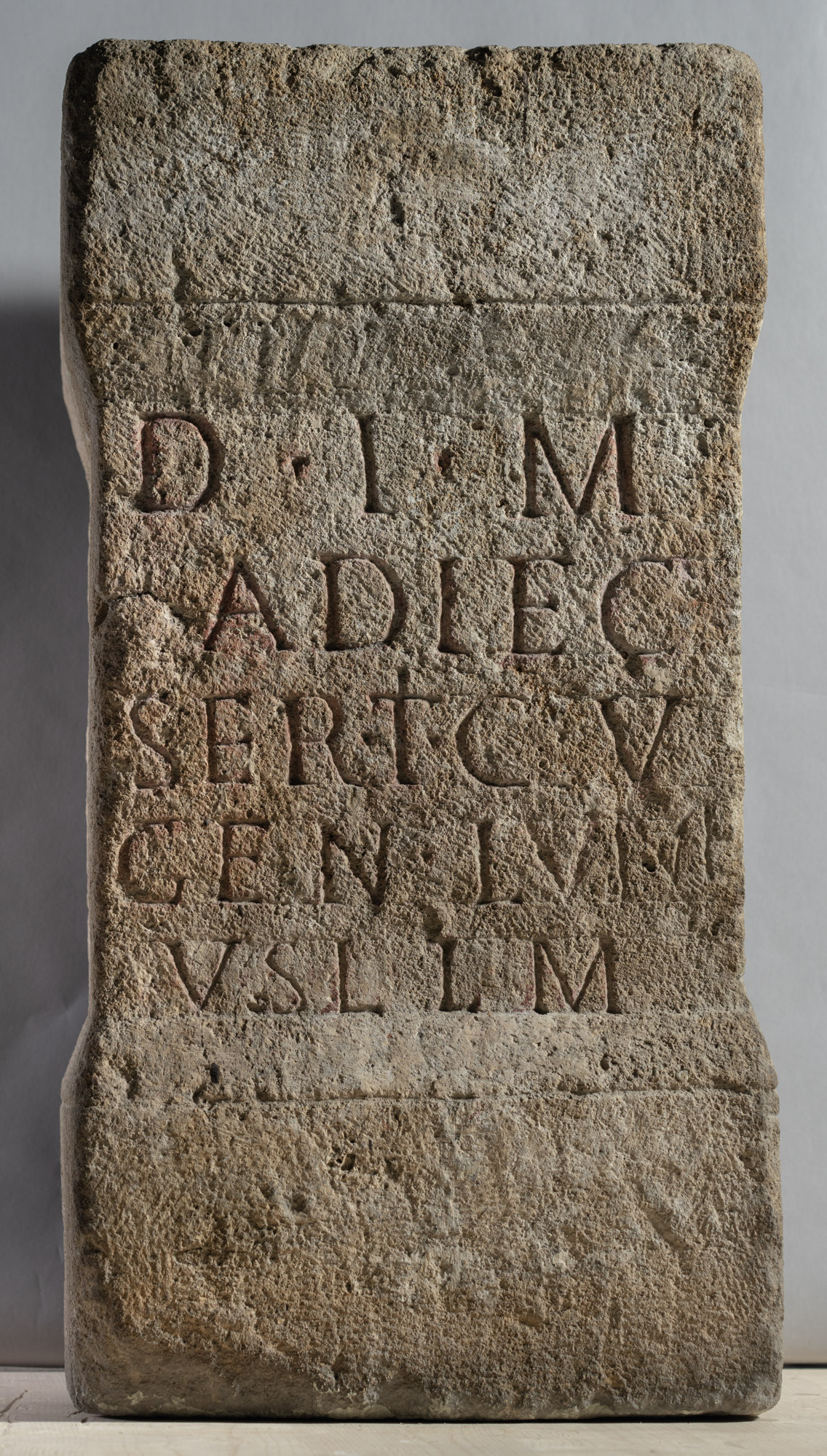
Altar of Adiectus from Carnuntum

There is no consensus as to whether the altar of the slave Adiectus from Carnuntum is dedicated to a Mithras genitor of light.

 
Back to Top