Mithraeum I of Ptuj
TNMM 185 ↔ CIMRM 1487
In Ptuj, in Spodnja Hajdina (formerly Pettau, Unter Haidin) on the right bank of the Drave (Drau) Mithraeum I was discovered by W. Gurlitt in 1898-1899.
I am greatly obliged to the Director of the Archaeological Museum in Ptuj, Mr. Dr Fr. Gumilar and to the Keeper Miss Bernardina Perc for the great hospitality they offered me. They gave me an opportunity to study all the Mithraic monuments and to take photographs of them. In this way I have been enabled to publish many hitherto unknown monuments as well.
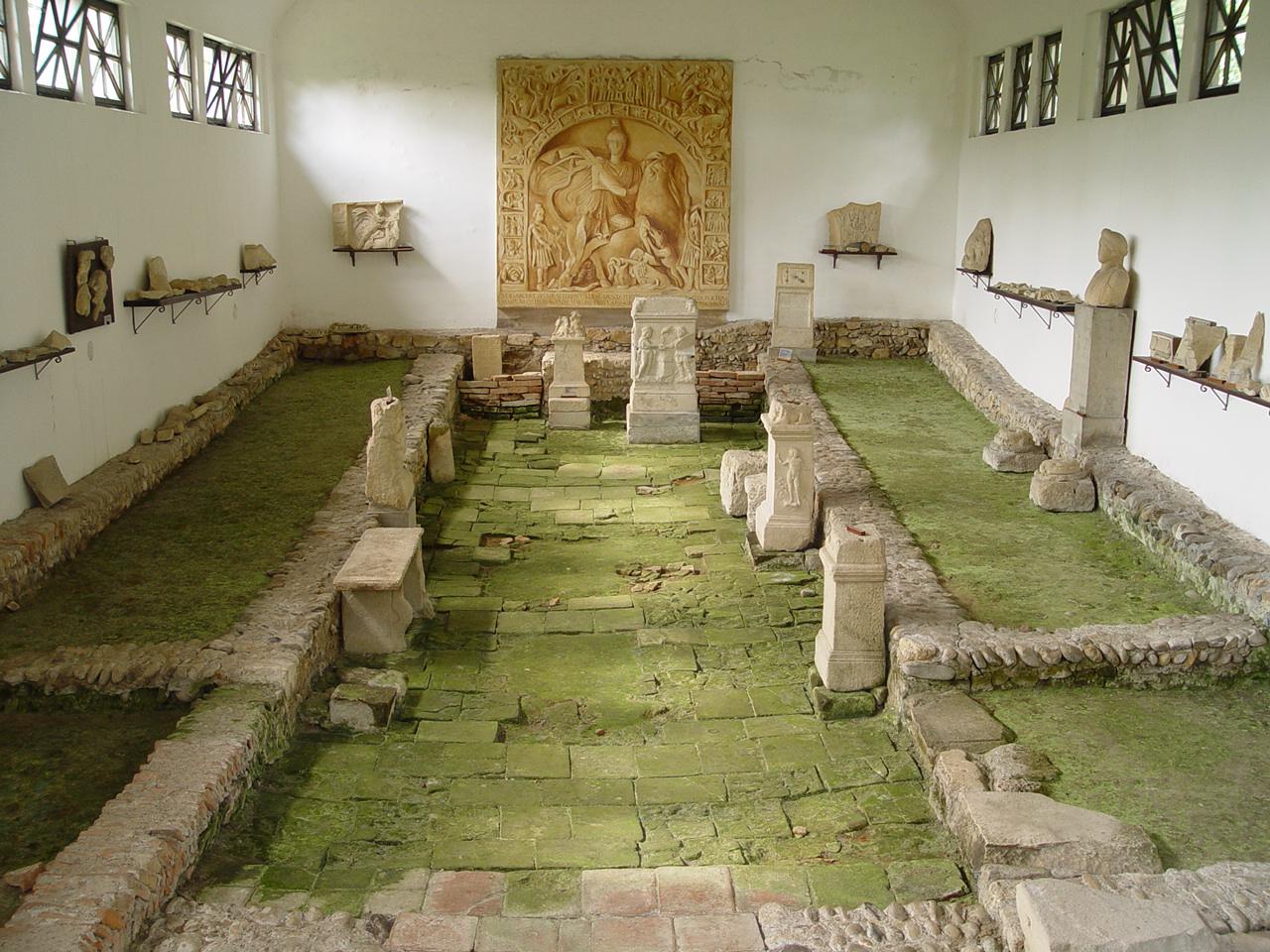
The entrance to the sanctuary is situated on the east side. Behind a vestibulum (L. 180) is the sanctuary (L. 5.70 Br. 5.70) which had been given a grotto-like appearance by means of entwined branches and lime. The greater part of the vestibulum must have been of wood. The sanctuary had the normal division into a corridor (Br. 2.30-2.50) and the benches (H. 0.50-0.58 Br. 1.70). The cult-niche has been almost entirely destroyed. The large relief (now lost) rested against the backwall upon a projecting border which on its frontside was decorated with stucco (there are yet traces of blue painting). The floor consists of a layer of hard loam and near the altar and in the vestibulum of pebble. All finds are in the Mithraeum.
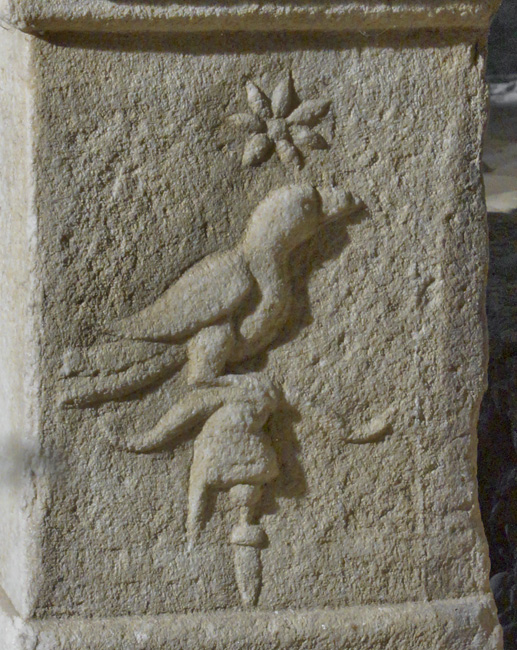
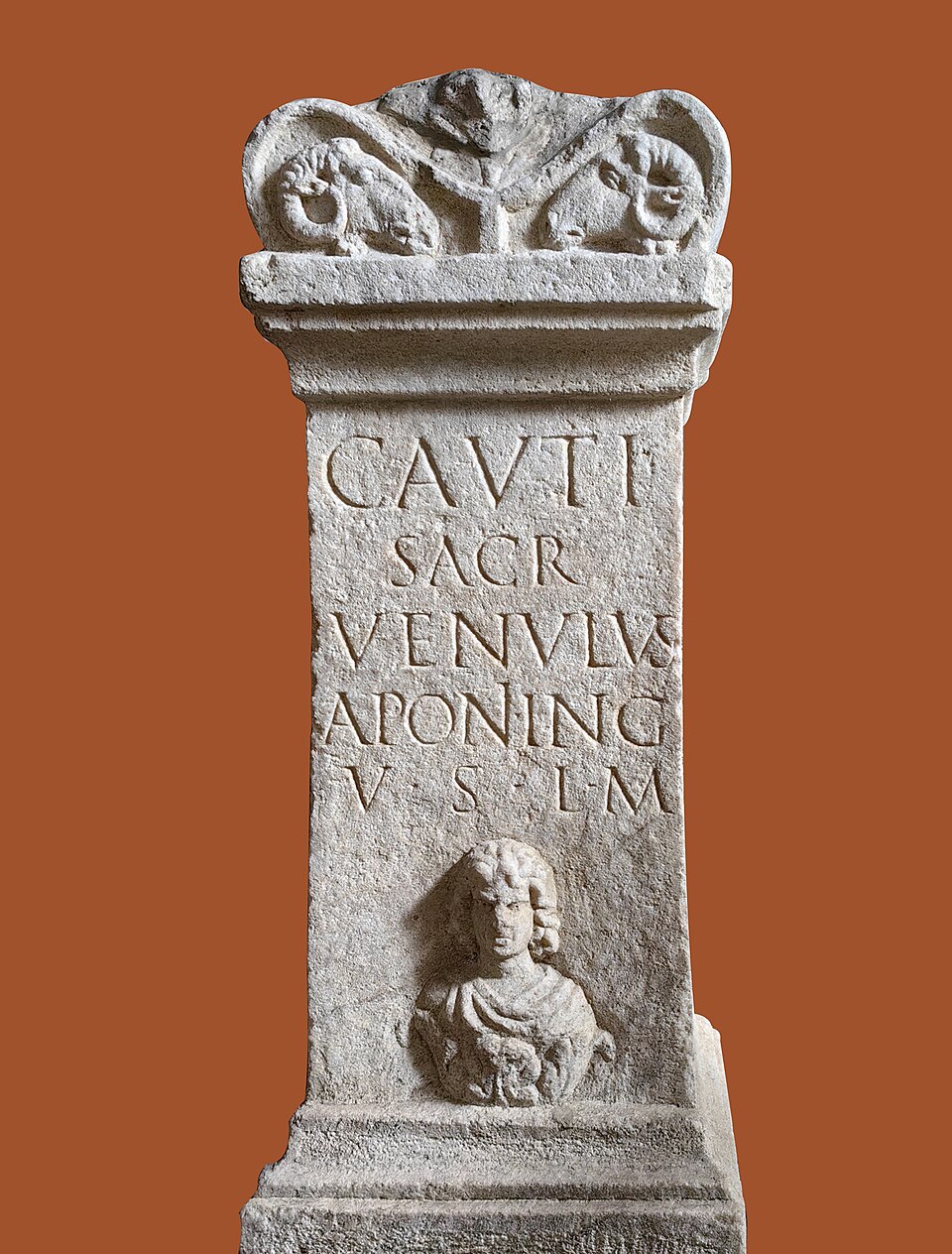
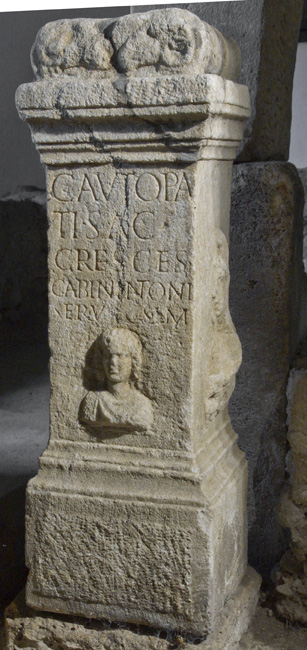
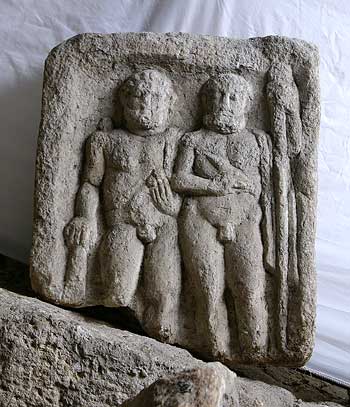
In the western part of Roman Poetoviona, in today’s Spodnja Hajdina, the oldest Mithras shrine in the provinces of the Upper Danube was discovered by Wilhelm Gurlitt, an archaeologist from Graz, Austria, between 1898 and 1899. The shrine was immediately after having been unearthed covered by a protective house. Dedications show that the shrine was built in the middle of the 2nd century by administrators of the Illyrian customs based in Poetoviona. The shrine was partly dug into a gentle slope and covered by interwoven branches of a willow. The square-like temple hall is divided into the anteroom and a three-nave central part the middle of which is lowered. Above it, on the west wall, a hole shows where the main altar plate used to be. There are 12 dedication stones bearing inscriptions and relief representations, which show, among other things, myths and attributes connected with different consecration stages of their dedicators. At the entrance into the central part are two altars dedicated to gods of east and west, Cautes and Cautopates.
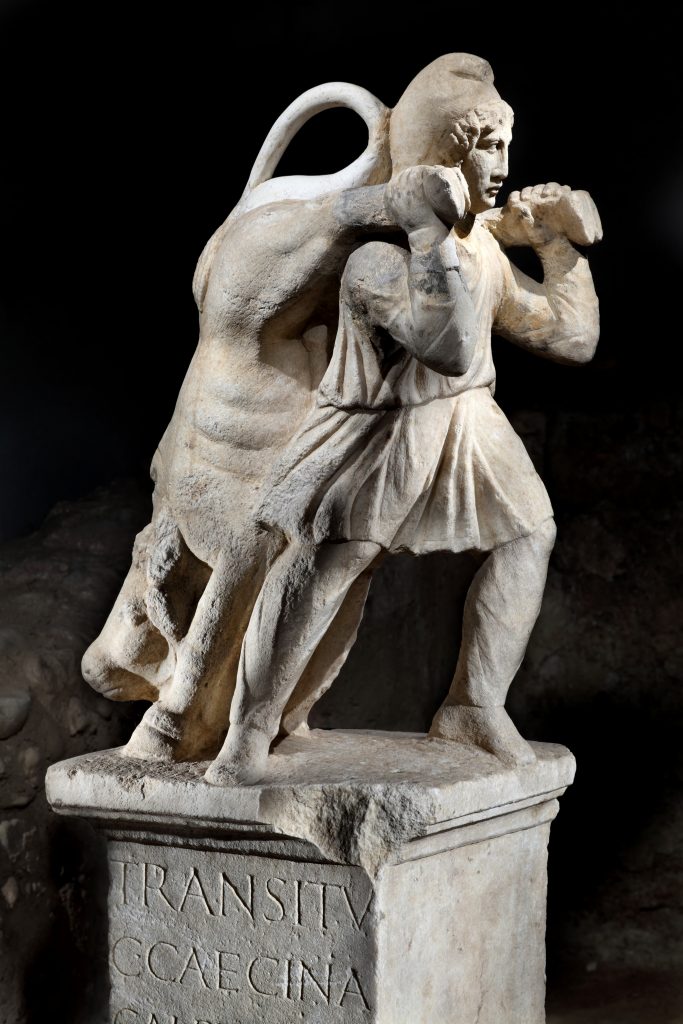
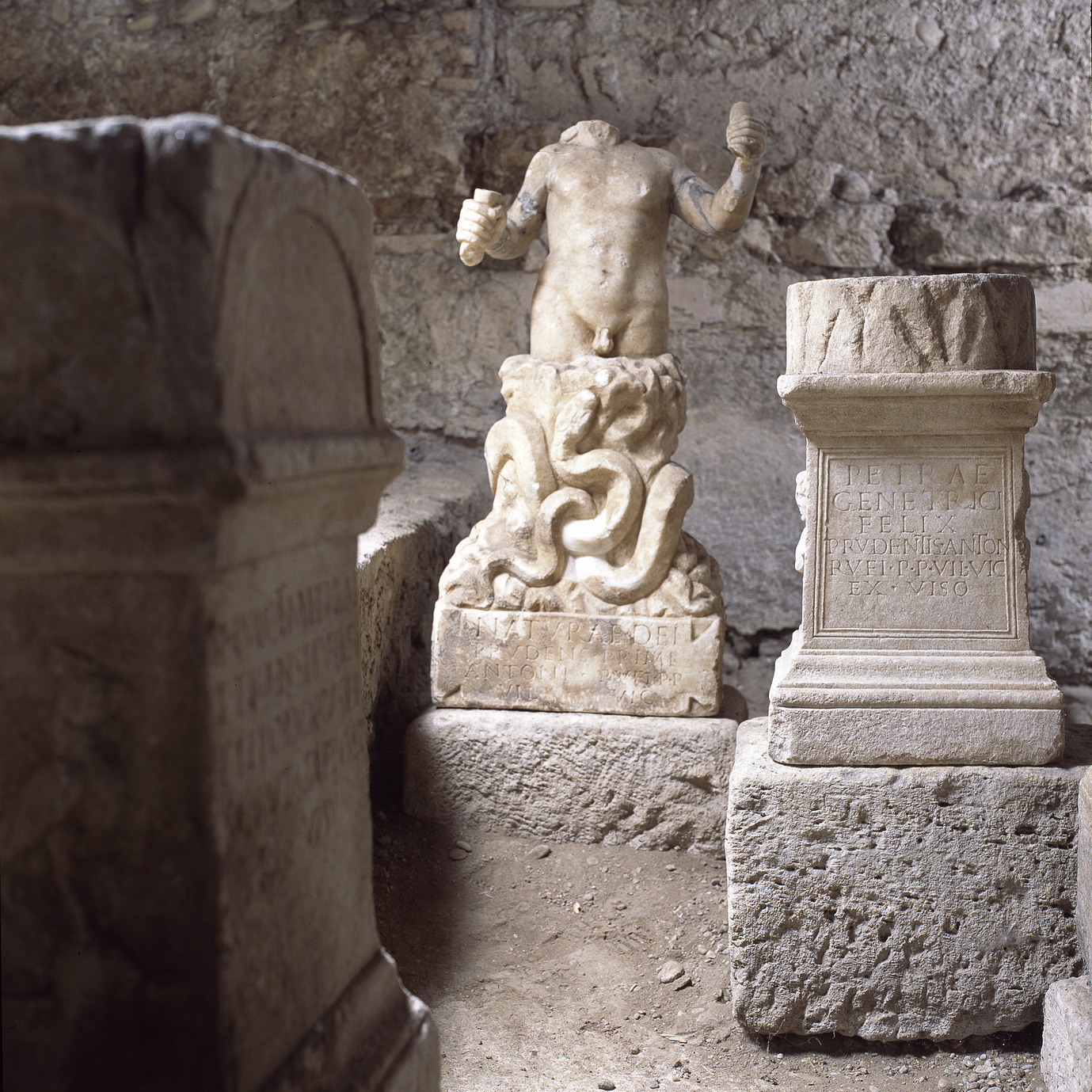
In the central lowered part, on one of the altars, a statue represents the birth of Mithras from the rock, a symbol of the earth, around which coils a snake. The torso of a young man appears from the rock holding a dagger in the left hand and a torch in the right. A special attention should be paid to the columned altar with a statue of taurophorus dedicated to the Transition (transitu). The statue of Mithras, clad in Phrygian clothes and dragging the bull to sacrifice it, and the stone base with the dedication, are both carved from one piece of stone.
All finds are in the Mithraeum.
See also
References
Gurlitt in JOAI II 1899 (Beiblatt) 87ff; MCC 1900, 91ff; Abramic, Führer P., 162ff; Saria, Karte Ptuj, 56ff; AIJ I, 133ff. See fig. 378 from Abramic, fig. 115 and Gurlitt in MCC, 91.
- Vermaseren, Maarten Jozef (1956) Corpus Inscriptionum et Monumentorum Religionis Mithriacae
- Visit Ptuj (2020) Mithras shrines. Mithraeum I and III.