This site uses cookies to offer you a better browsing experience. Find out more on how we use cookies in our privacy policy.
The full article is reserved for our members.
Log in or create a free account to access the entire site.
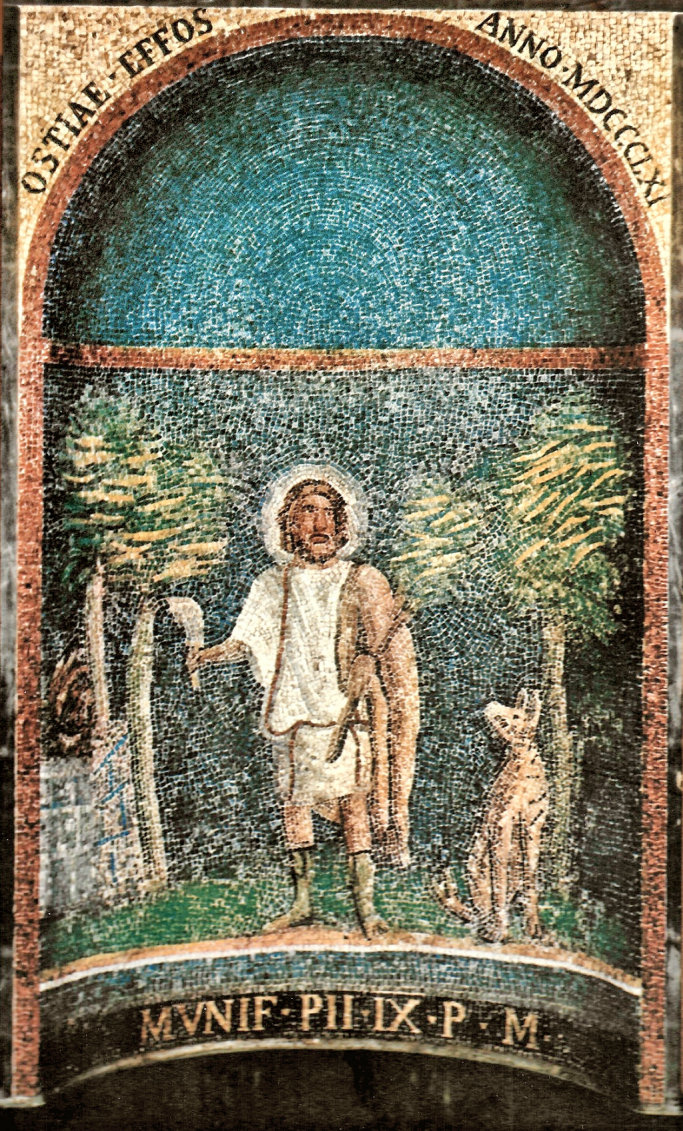
A mosaic of Silvanus, dated to the time of Commodus, was found in a niche in a nearby room of the Mithraeum in the Imperial Palace at Ostia.
A small two-wick lamp and a larger twelve-wick lamp inscribed Serapiodori inny, from the Mitreo del Palazzo Imperiale at Ostia.
A few pieces of tuff worked as rocks, forming a cone representing the remnants of the rock-birth of Mithras, found around the altar in the Mitreo del Palazzo Imperiale at Ostia.
Two marble fragments of a statue of Mithras as bull-killer, preserving the head in Phrygian cap and right hand with dagger, with traces of red paint, from the Mitreo del Palazzo Imperiale at Ostia.
A small hollow edicola of simple square structure near altar K, with an opening for lamp offerings, from the Mitreo del Palazzo Imperiale at Ostia.
Two marble heads from Ostia, including a youthful figure wearing a Phrygian cap and another identified as Mithras-Helios.
This unusual mosaic representation of the god Silvanus was found in the Mithreaum of the so-called Imperial Palace in Ostia.
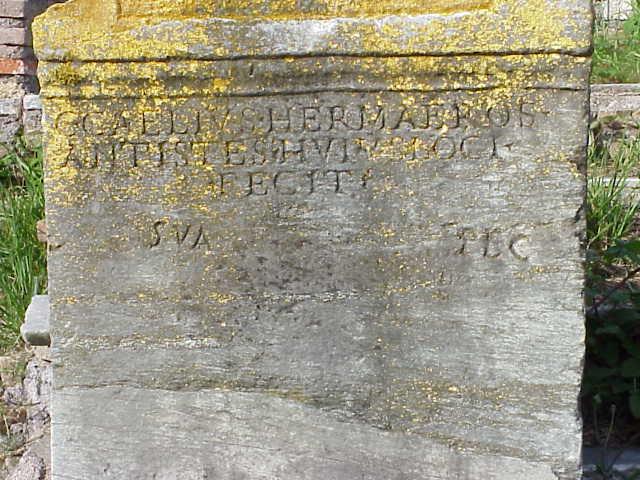
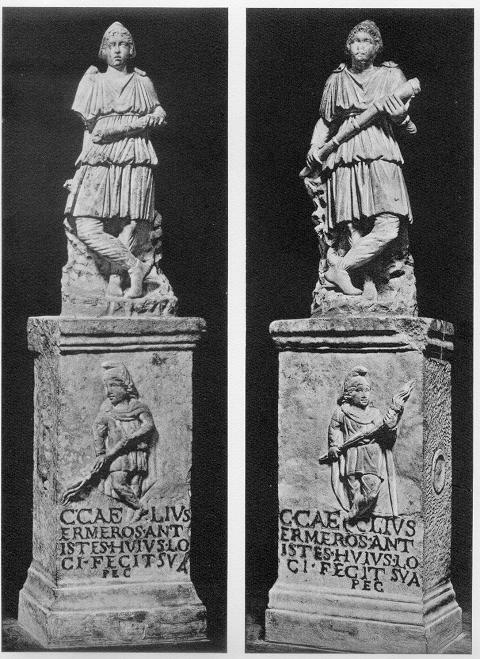
This is one of several marble inscriptions made by a certain Caelius Ermeros, who was the antistes of the Mithraeum of the Imperial Palace.
This marble statuette from Ostia depicts Cautopates lowering his torch beside a tapering rock associated with Mithras’ birth from stone.
It bears an inscription repeated on each side of the podia.
The sculptures of Cautes and Cautopates from the Mitreo del Palazzo Imperiale may have been reused from an older mithraeum in Ostia.