Phallic worship
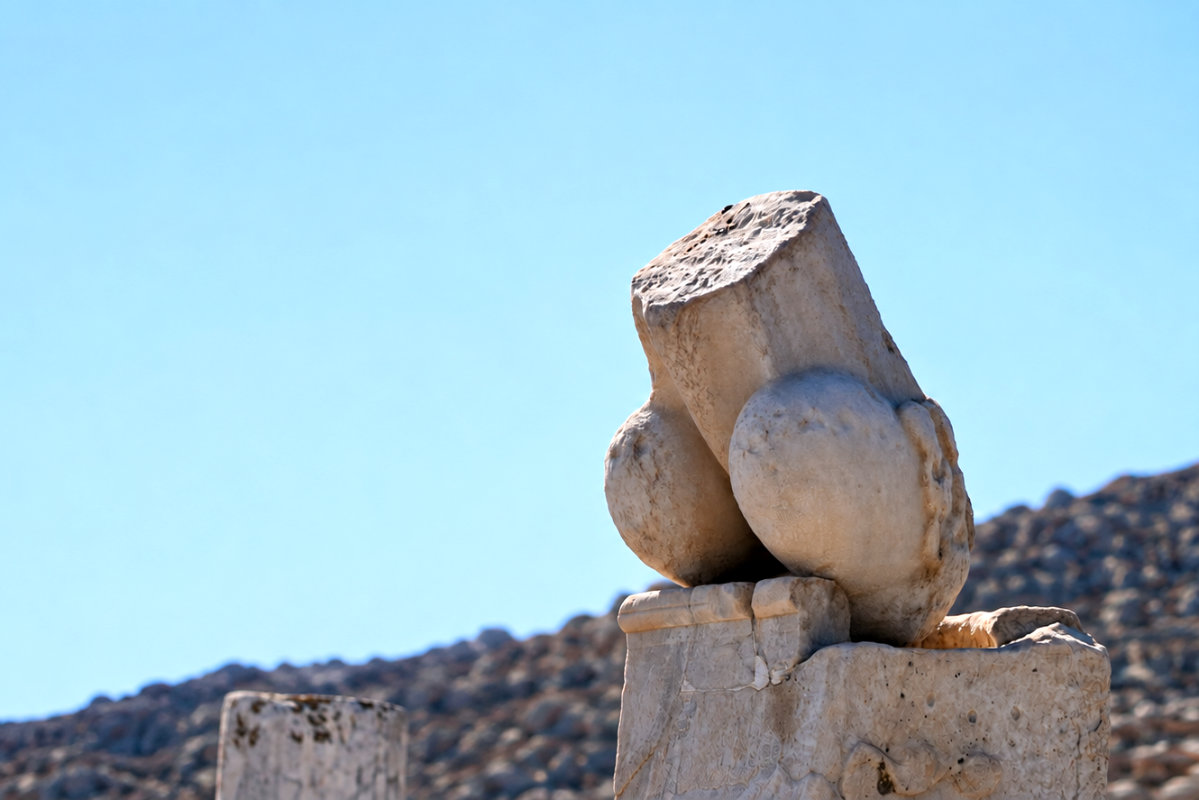
Monumental phallus from the Sanctuary of Dionysus at Delos.
Jean Housen, CC BY-SA 4.0
First of all, what’s phallic worship?
Phallic worship, aka phallicism in older times, is a broad term for religious practices and beliefs involving the phallus or male genitalia as what it always has been: a sacred symbol. Fertility is probably the most obvious connection. The penis produces semen, sex produces children, and for ancient societies fertility meant much more than having babies: it meant crops, animals, family, prosperity and ultimately the continuation of life itself. So yes, people did worship phallic gods and sacred phalluses, and some of them were not particularly subtle about it.
One of the clearest examples is the famous linga of Gudimallam in southern India, one of the oldest surviving Shiva lingas. It is an enormous stone penis, erect and anatomically quite explicit, with a figure of Shiva carved directly on its enormous shaft.1 The word linga means a sign or mark and, of course, the Shiva linga has religious and philosophical meanings that go much further than the male organ. But there is no need to pretend that the phallic imagery is not there. The linga is also associated with the yoni, the female sexual and generative organ: penis and vulva, male and female, semen and womb are rather obvious symbols for the forces that produce life.
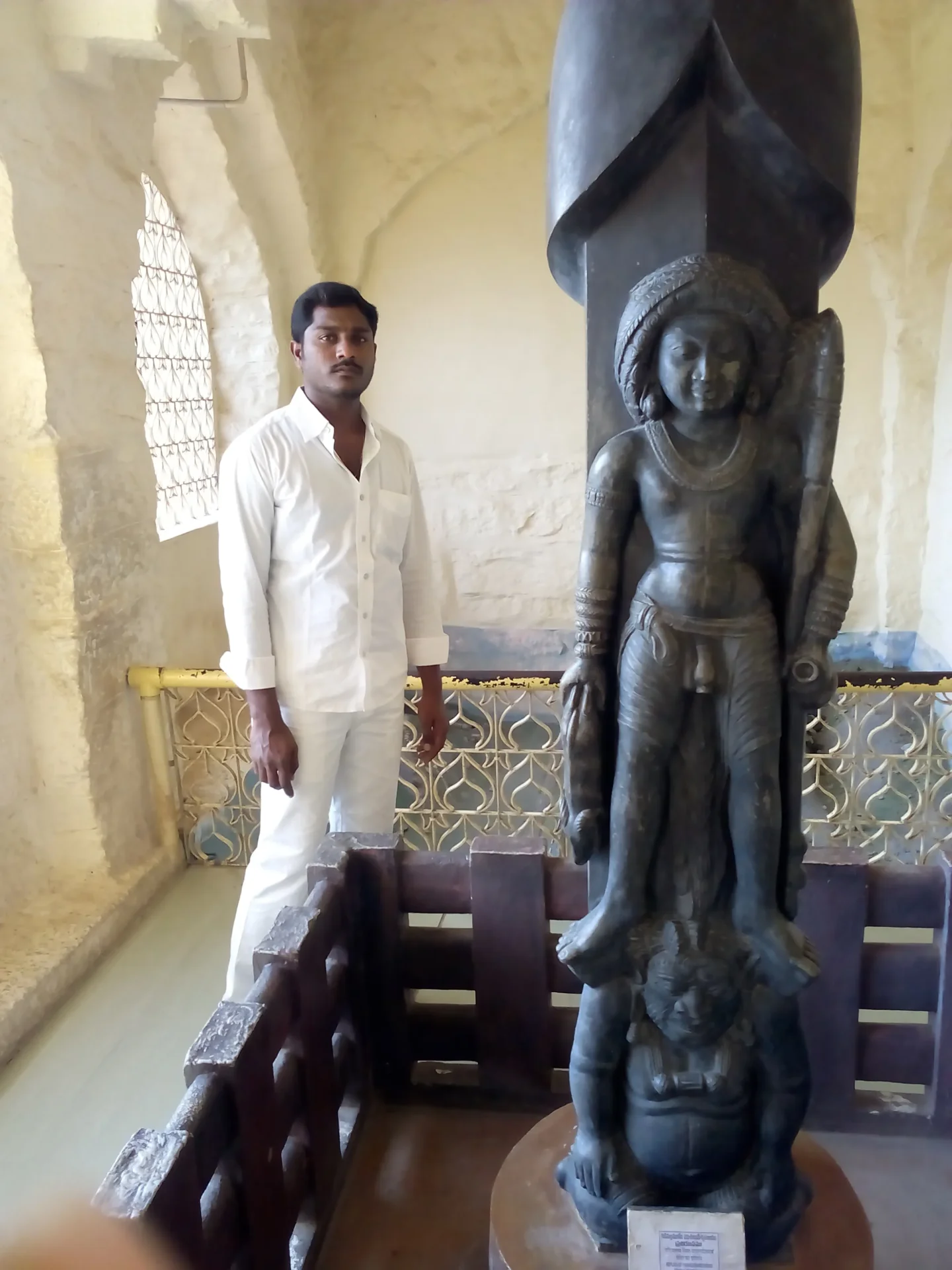
Linga of Gudimallam in Southern India.
Vedaradha
Shiva himself can be represented ithyphallic, and Alain Daniélou made this sexual and generative dimension the starting point of Le Phallus. For him, the human phallus was the visible image of a much greater creative principle, the power through which life and ultimately the universe itself are generated.2 India is certainly not the only place where people made this connection. The ancient Mediterranean is full of phalluses. They appear on statues, amulets, walls, lamps, jewellery and all kinds of everyday objects. They can be enormous or ridiculously small, provided with wings, bells or legs, turned into animals and sometimes even equipped with another phallus. The Romans seem to have been particularly fond of them.
More than sex
Not every Roman phallus was about fertility or sexual pleasure. A Roman could wear one around his neck, hang one from an object or put one on a wall or building to protect himself and his surroundings. The fascinum was used against the evil eye, envy and bad luck. Children could wear phallic amulets, while similar images occur in domestic and military contexts. Catherine Johns has shown how widespread this imagery was and how easily its protective function can be missed if we see only the sexual element.3 The phallus was therefore quite a versatile object: it could generate life, represent male sexuality and fertility, bring prosperity and at the same time frighten evil away.
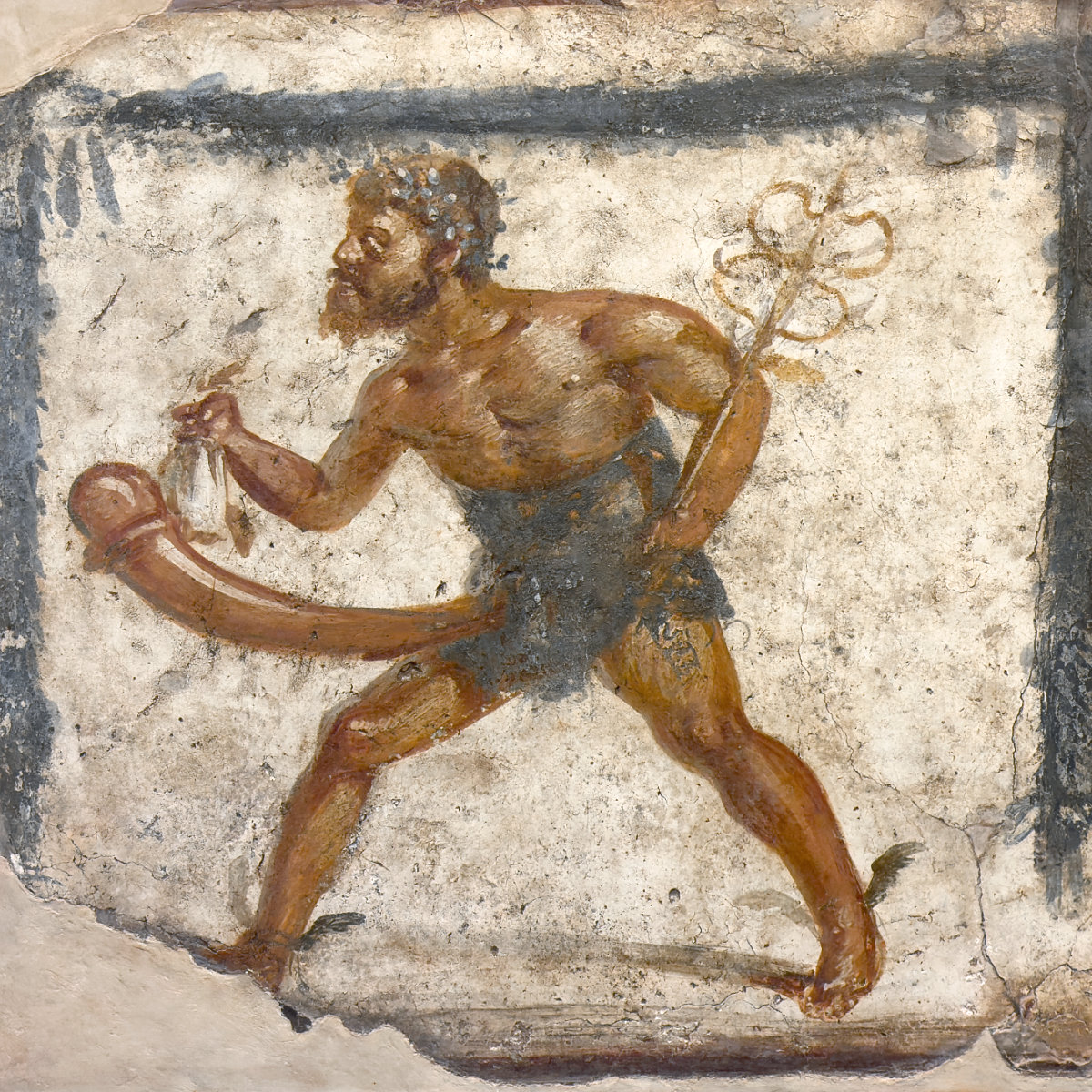
Mercury is presented striding forward in rustic style as the fertility god Priapus.
Chappsnet
And sometimes the penis belonged to a god. Priapus is the obvious example. His enormous erection is usually the first thing you notice about him, which was surely the intention. Priapus was connected with sex and fertility, but also with gardens, livestock, abundance and protection. His images guarded gardens and houses, and people actually made offerings and sacrifices to him.4 The Priapeia, an anonymous collection of poems centred on the god, is full of erections, sexual threats and very explicit humour:
Penelopes primam Didonis prima sequatur
et primam Cadmi syllaba prima Remi,
quodque fit ex illis, tu mi deprensus in horto,
fur, dabis: hac poena culpa luenda tua est.Let the first of Penelope be followed by the first of Dido,
and the first syllable of Cadmus by the first of Remus.
What these make together, thief, if I catch you in my garden,
you shall give me: with this punishment your crime must be paid.—Priapeia LXVII, c. 1st century e. c.
So those apparently random names make the pun, since pedicare litterary means to sodomise, so to fuck in the ass, if it wasn’t clear enough. Sacred, protective and obscene were not necessarily separate categories in the ancient world. Priapus himself makes the point even more explicit elsewhere:
Quod sum ligneus, ut vides, Priapus
et falx lignea ligneusque penis,
prendam te tamen et tenebo prensum
totamque hanc sine fraude, quantacumque est,
tormento citharaque tensiorem
ad costam tibi septimam recondam.Though I am, as you see, a wooden Priapus,
and my sickle is wooden and my penis wooden,
I shall still seize you and hold you fast,
and all of this, as big as it is, without cheating,
stiffer than cord or lyre-string,
I shall bury in you as far as your seventh rib.—Priapeia V, c. 1st century e. c.
So was this “penis worship”? In some cases, why not? A sacred erect penis could be an image of a god or divine power and could receive cult. But phallic worship is a convenient modern name covering a much bigger mix of gods, fertility, sex, magic, protection and humour.
And what about Mithras?
At Tiddis, ancient Castellum Tidditanorum in Algeria, an inscription records a group of cultores of Invictus Mithras who built something there at their own expense: I(nvicto) M(ithrae) cultore/s de suo a s/olo / (a)edifi[c]arun(t). A nearby rock-cut sanctuary was identified by André Berthier as a Mithraeum and later included by Maarten J. Vermaseren in his Corpus5. Two rather extraordinary stone reliefs of phalluses are also known from Tiddis. They are not just penises. They have legs, feet and spurs and have been transformed into cocks. Cocks that are also actual cocks.
The phallic stones were placed on pillars at the entrance to the sanctuary identified as Mithraic, which obviously makes them interesting for us. Were they protecting the entrance, as phallic symbols did elsewhere in the Roman world? Did they have some more particular meaning for the cultores of Mithras? Could sexuality or dirty jokes have played some role in the local cult? We simply don’t know even though we can always imagine. Charles M. Daniels questioned the identification of the sanctuary itself, so two stone penises are obviously not enough to invent a lost Mithraic sex ritual.5 But neither is there much point in ignoring them. At Tiddis, phallic imagery appears in a place associated with people who explicitly called themselves worshippers of Mithras, and that alone makes the case worth looking at.
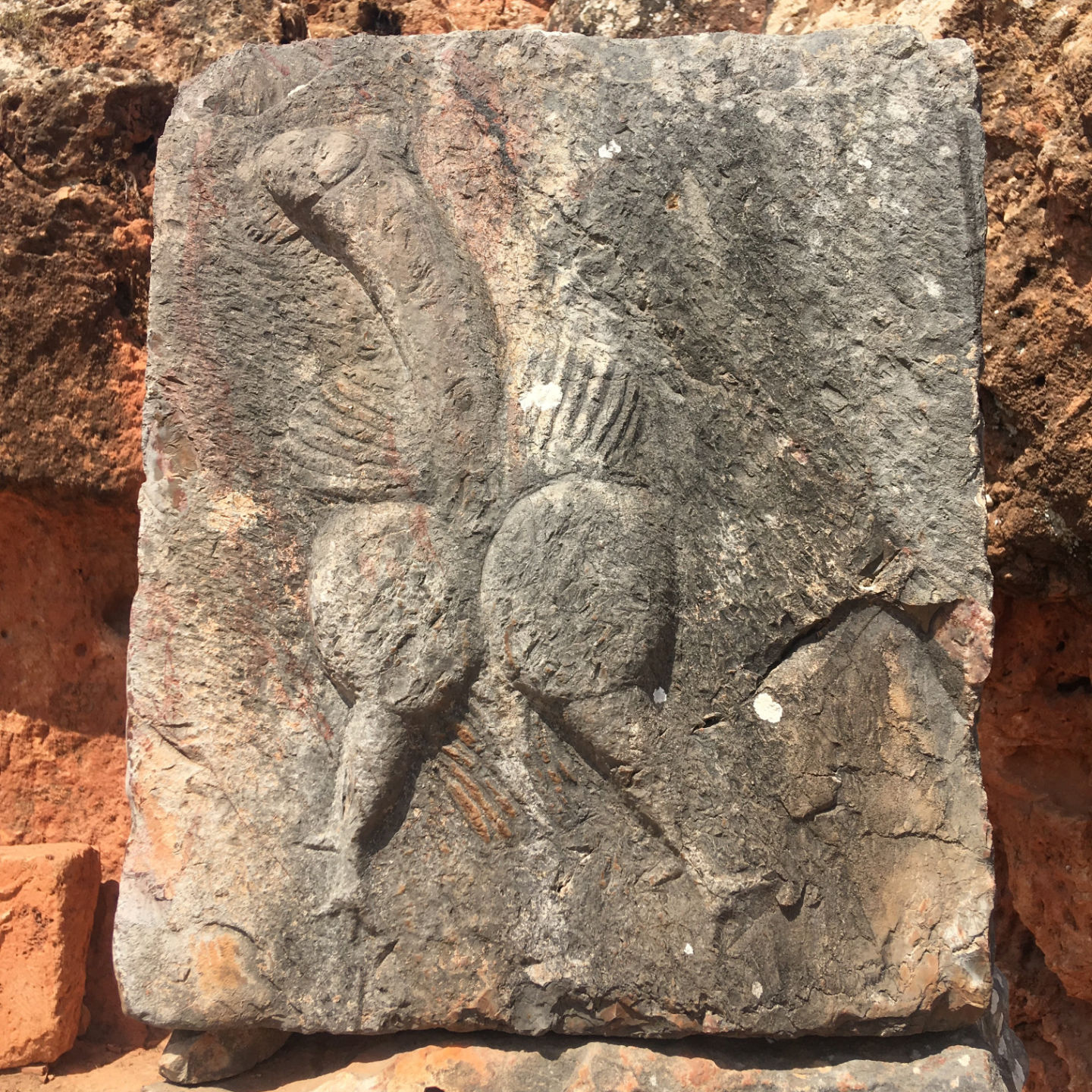
Phallus cock from Tiddis Mithraeum.
James Patterson
So where does the concept “phallic worship” come from?
The objects are ancient, but the idea of phallic worship as a great category of comparative religion is much more recent. A foundational text came in 1786, when Richard Payne Knight published An Account of the Remains of the Worship of Priapus. Knight collected sexually explicit antiquities and interpreted them as remains of an ancient religion centred on generation and the productive powers of nature.6 During the nineteenth century, phallic worship, phallic religion and phallicism became surprisingly popular subjects. Writers compared Greek and Roman objects with Egyptian gods, Indian lingas, sacred stones, fertility customs and sexual symbols from cultures around the world. The phallus became, for some of them, the surviving sign of a very ancient religion of nature and generation.
Jana Funke, Kate Fisher, Jen Grove and Rebecca Langlands have traced how this idea developed through antiquarianism and nineteenth-century scholarship and eventually entered early twentieth-century sexual science.6 Ancient objects were important, but so were illustrations and reproductions of them, which allowed readers to put naked gods, erect phalluses and erotic antiquities from completely different cultures side by side. This is where many of those wonderful old titles come from: Phallic Worship, Phallicism, Phallic Miscellanies and many others. Some are serious antiquarian works, some are speculative comparative religion, and some seem to enjoy their subject rather more than their scholarly titles would suggest.
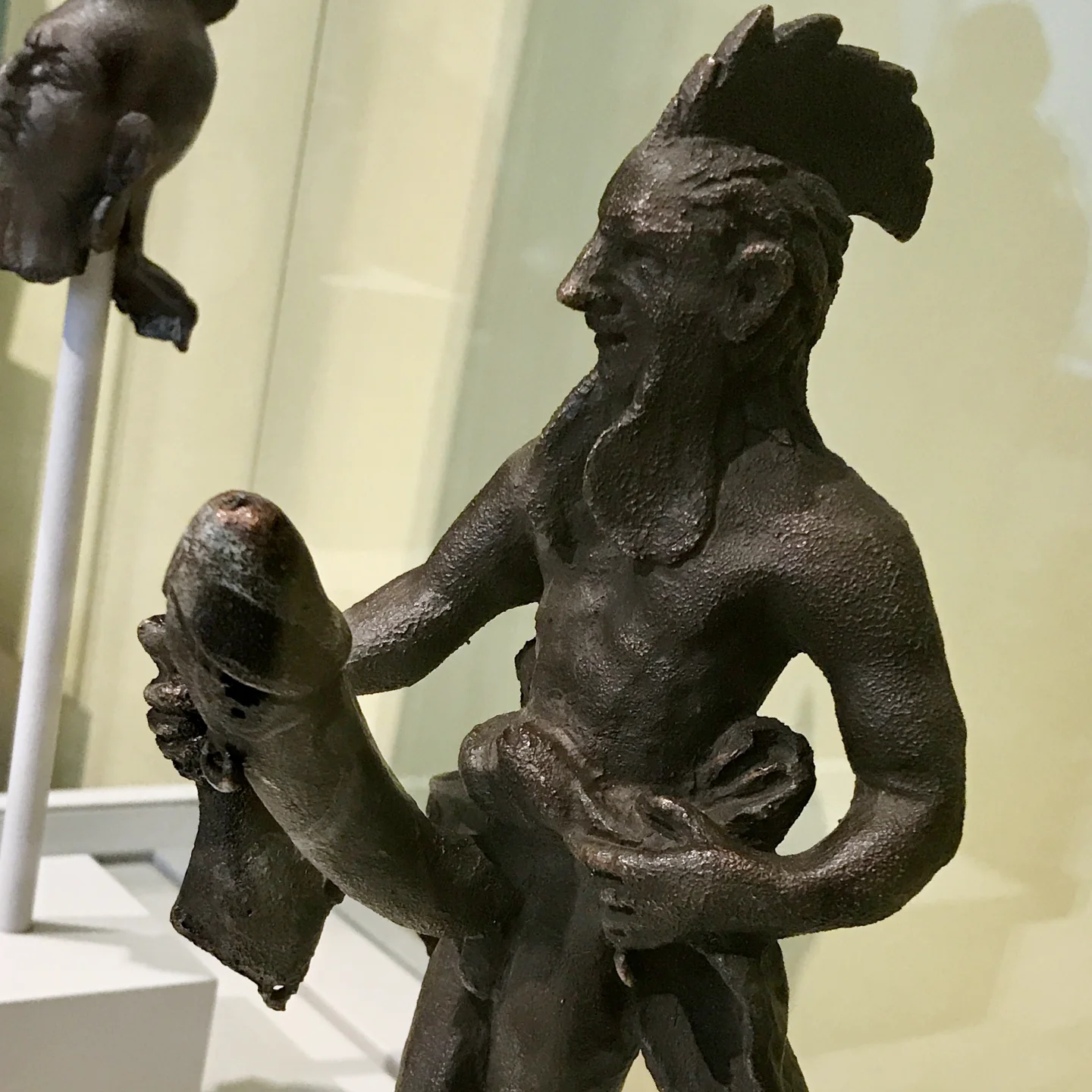
Priapus as a cock with an oversized phallus in the Garden of Delights at the Altes Museum, Berlin.
Jorge Gallo
Scott, Daniélou and the great phallic religion
George Ryley Scott was still working very much in this tradition when he published The Phallic Worship in 1941. He gathered sexual customs, fertility rites, genital symbols and religious practices from an enormous range of cultures and periods.7 Alain Daniélou took the idea much further in Le Phallus. India was central to his argument because there the worship of the linga was not an archaeological survival but a living religious tradition. For Daniélou, the phallus was sacred for a very simple reason: it creates life. The penis of an individual man was the visible form of a universal creative force. Sexual pleasure, semen, the linga, the yoni and the union of male and female therefore belonged to a religious understanding of creation rather than standing outside religion.2
Daniélou found echoes of the same idea in prehistoric Europe, Egypt, Greece, Dionysian religion, Priapus and other traditions, including the cult of Mithras. This is where his argument becomes more speculative. A phallus in Roman Italy and a linga in India do not by themselves prove the survival of one prehistoric religion stretching across thousands of kilometres and years. But the basic observation behind all this is much simpler: human beings knew that sex creates life. They wanted children, fertile animals, good harvests and protection from death and misfortune, so it is hardly surprising that penises, vulvas, semen, pregnancy and sexual union entered religion. Or, to put it in Daniélou’s terms, sex lies at the very roots of religion.
References
- T. A. Gopinatha Rao, Elements of Hindu Iconography, vol. II, part I. Madras: Law Printing House, 1914. See also his earlier discussion of Gudimallam in The Indian Antiquary XL (1911). ↑
- Alain Daniélou (1993) Le Phallus ↑
- Catherine Johns (1982) Sex or Symbol? Erotic Images of Greece and Rome ↑
- Robert Parker, “Priapus”, Oxford Classical Dictionary. Oxford University Press, 2016. ↑
- Maarten Vermaseren (1956 – 1960) Corpus Inscriptionum et Monumentorum Religionis Mithriacae ↑
- Jana Funke, Kate Fisher, Jen Grove & Rebecca Langlands (2017) ‘Illustrating phallic worship: uses of material objects and the production of sexual knowledge in eighteenth-century antiquarianism and early twentieth-century sexual science’. Word & Image, pp. 324–337 ↑
- George Ryley Scott (1941) The Phallic Worship. A History of Sex and Sex Rites in relation to the Religions of All Races from Antiquity to the Present Day ↑