Rewriting the story of Carmona’s Elephant Tomb
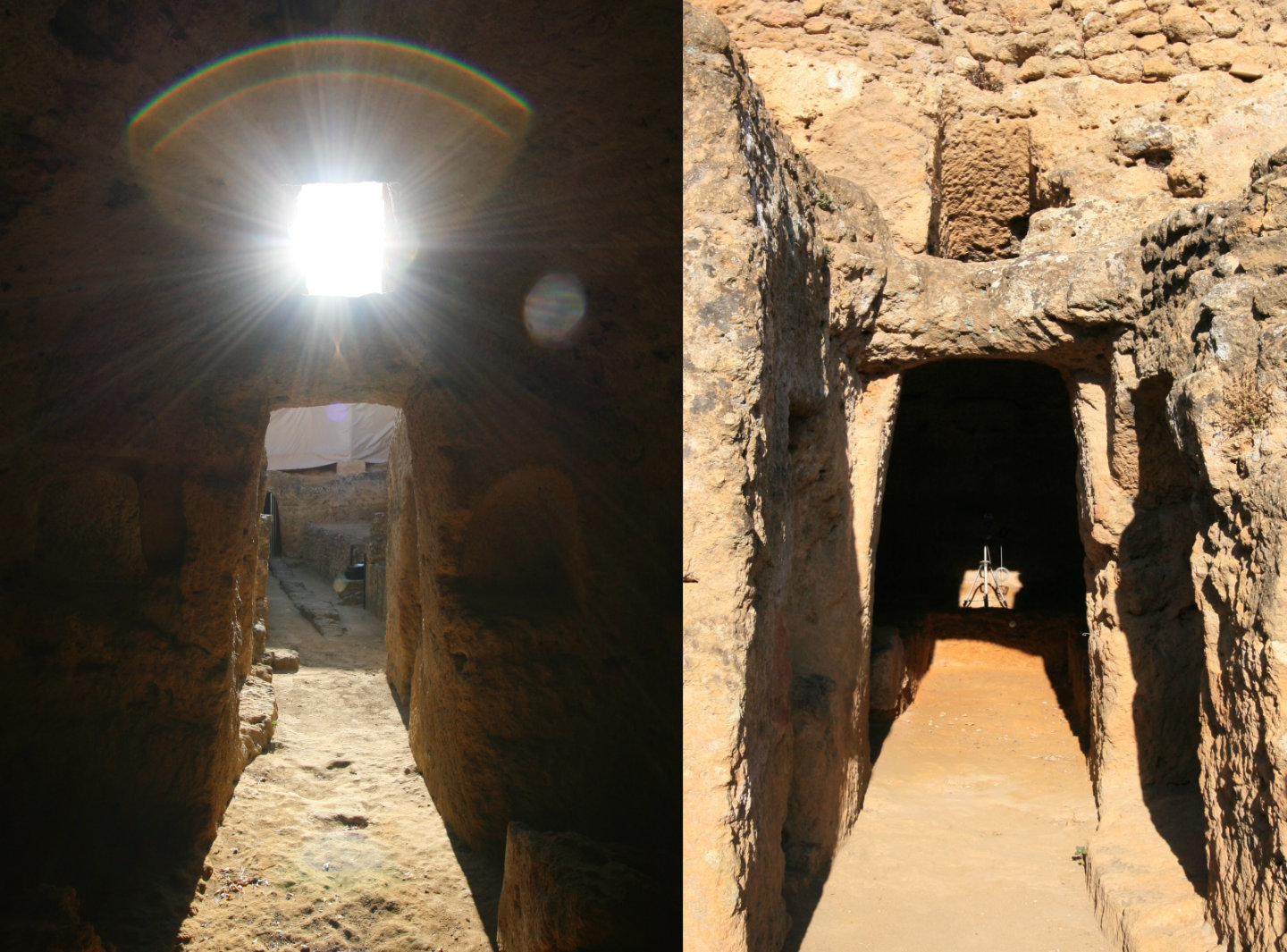
Entrance to the Tomb of the Elephant with its distinctive inclined window.
Conjunto arqueológico de Carmona
For more than a century, one of Spain’s most remarkable Roman monuments has posed a deceptively simple question: what exactly was it built for?
Hidden beneath the landscape of the Roman necropolis of Carmona, near Seville, the so-called Tomb of the Elephant has long puzzled archaeologists. Its underground chambers, ceremonial dining spaces, hydraulic installations, and enigmatic sculptures make it unlike any other funerary monument in Roman Hispania. Although generations of scholars have regarded it as an elaborate family tomb, new research suggests that its original purpose may have been something entirely different.
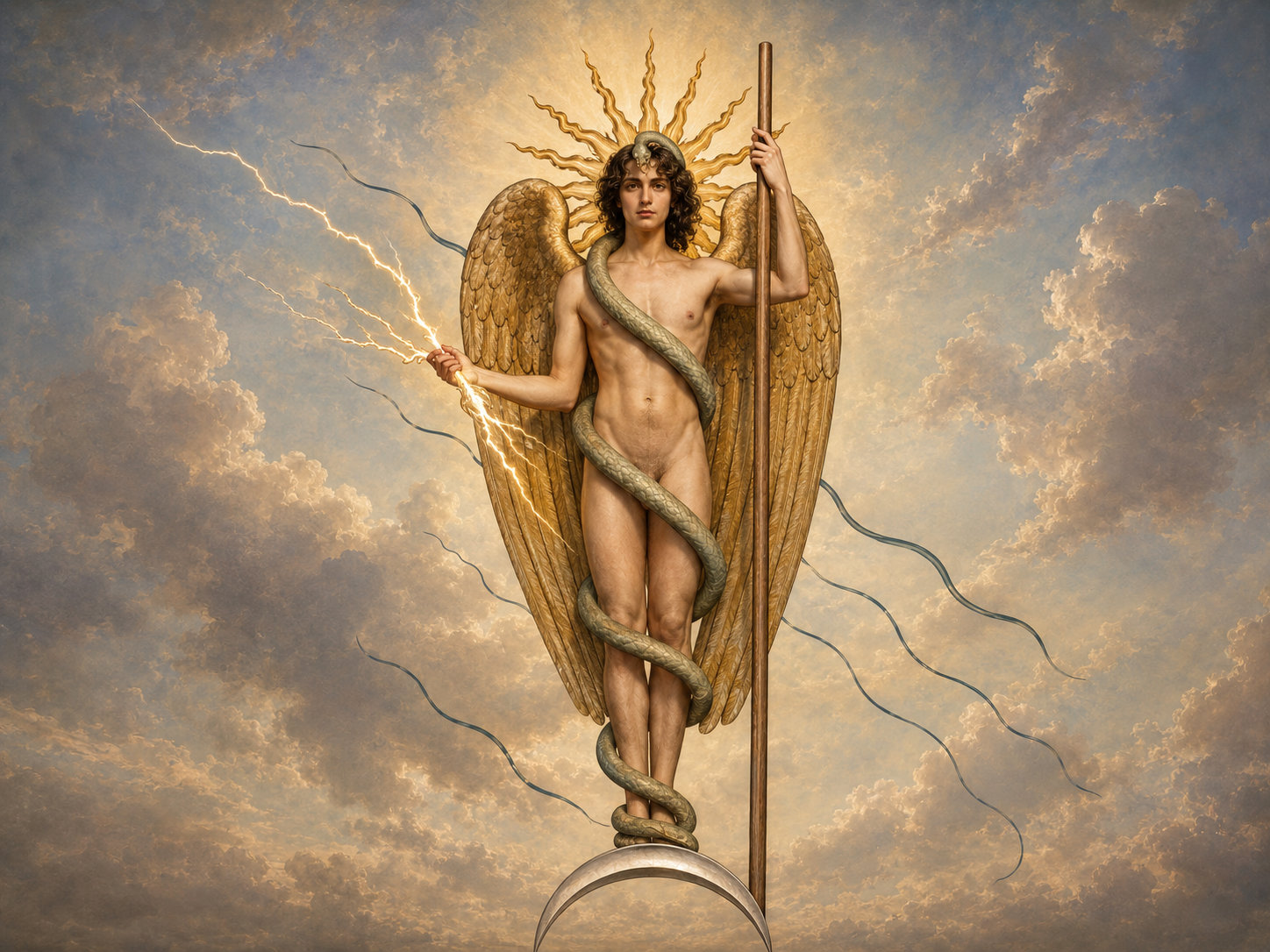
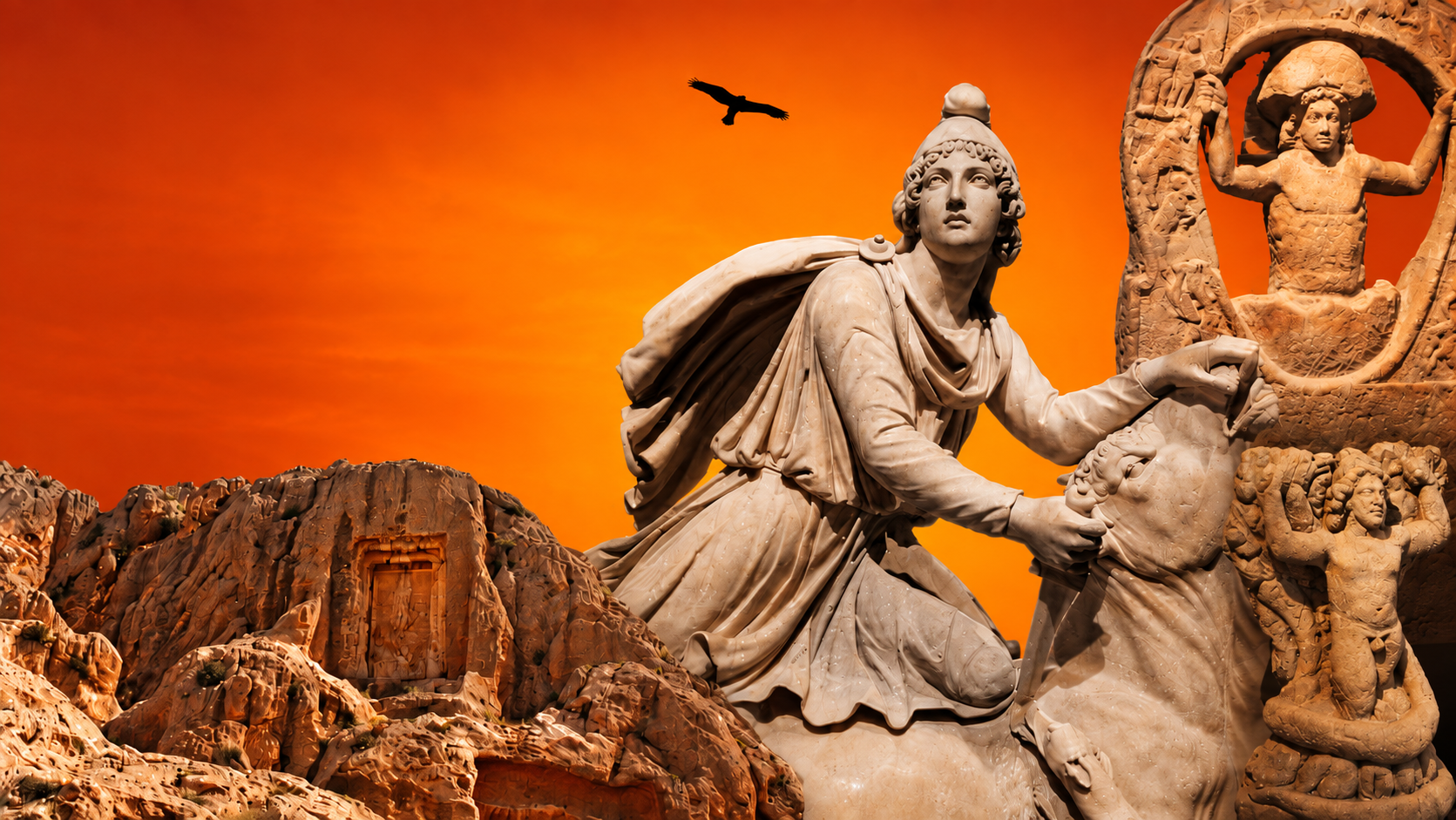
A comprehensive re-examination by Alejandro Jiménez Hernández and Inmaculada Carrasco Gómez combines architectural archaeology with digital surveying and archaeoastronomy to offer a striking new interpretation. Rather than a tomb from the outset, the monument may have begun its life as a Mithraeum—a sanctuary dedicated to the mystery cult of the Roman god Mithras—before later being adapted for funerary use.
Revisiting a nineteenth-century discovery
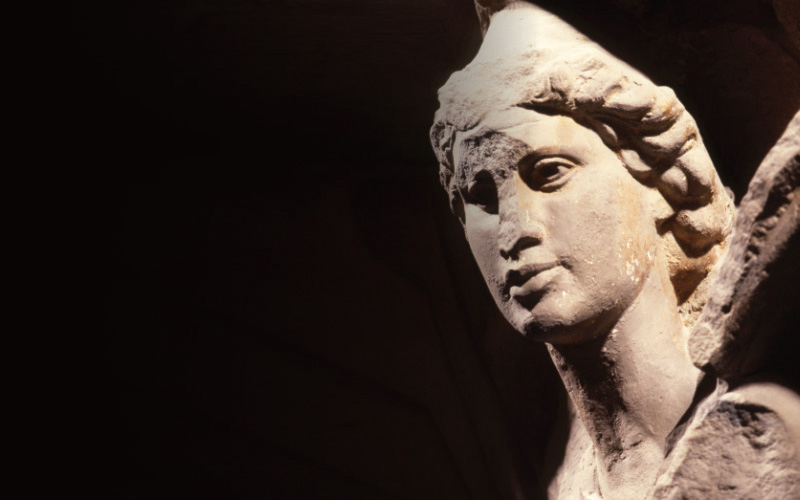
The monument was first excavated between 1885 and 1886, during the pioneering years of archaeology in Spain. The excavators uncovered an extraordinary rock-cut complex comprising a monumental entrance staircase, underground chambers, banquet rooms (triclinia), a sophisticated water system fed by a well and fountain, and several sculptures, including a stone elephant that would eventually give the monument its modern name.
Even its earliest investigators struggled to explain what they had found. The building seemed too elaborate to be an ordinary tomb, yet many of its features resisted straightforward interpretation.
Throughout the twentieth century, competing hypotheses emerged. Some researchers viewed it as the burial place of a wealthy Roman family, while others suggested that it had served a funerary association. In 1976, archaeologist Manuel Bendala proposed a more ambitious interpretation, arguing that the monument functioned as a sanctuary dedicated to Cybele and Attis, two deities associated with mystery cults in the Roman world.
The new study does not simply revisit this debate—it fundamentally reframes it.
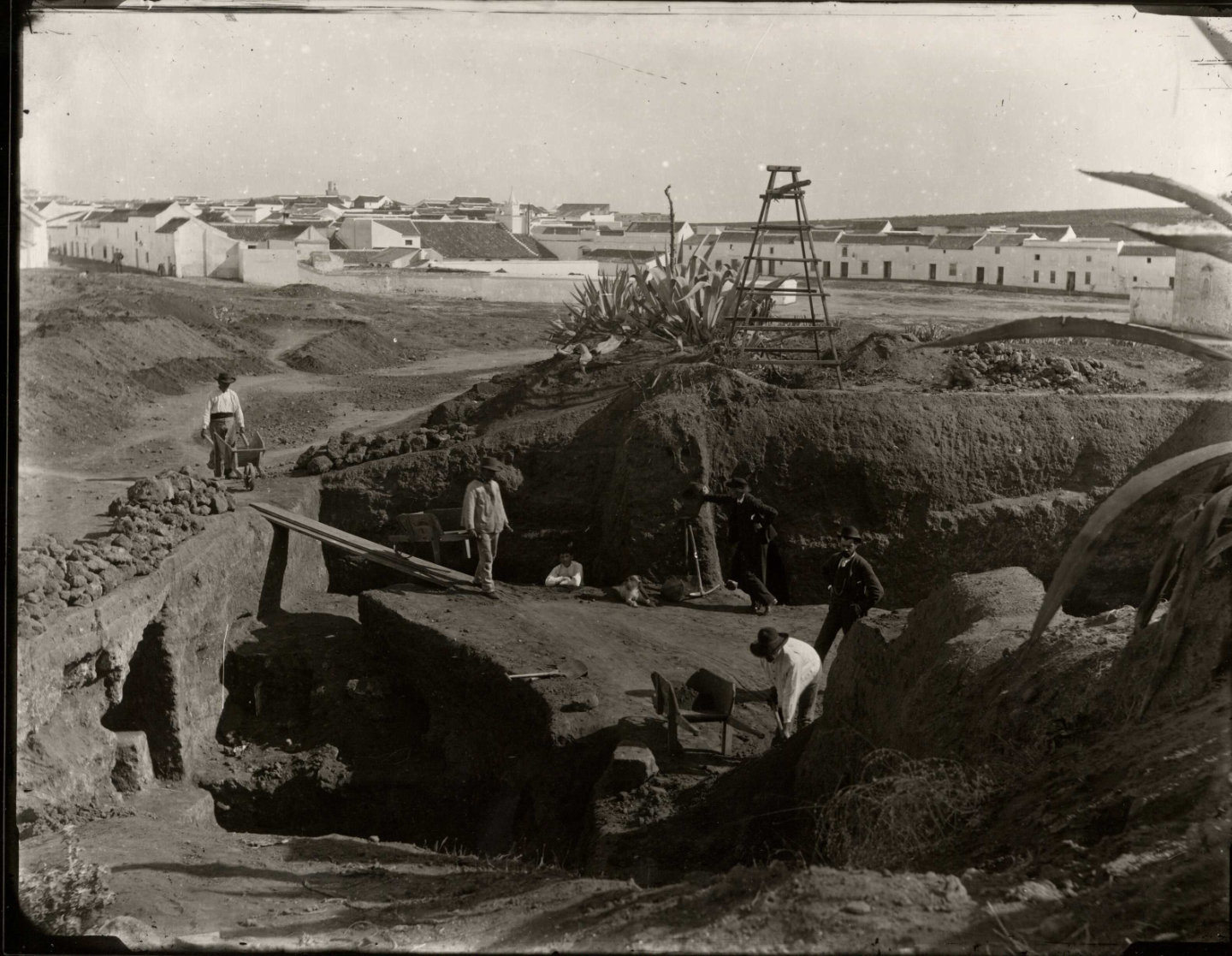
Excavation of the Tomb of the Elephant in 1885.
Jorge Bonsor photographic collection, Archivo General de Andalucía
Reading buildings like archaeological layers
One of the study’s greatest strengths lies in its methodology. Rather than focusing primarily on sculptures or artefacts, the researchers treated the building itself as archaeological evidence.
Using high-resolution laser scanning, they created an exceptionally detailed three-dimensional model of the monument. Every carved surface, construction joint, and later modification could then be analysed with remarkable precision.
This architectural reading revealed something previous generations of scholars had overlooked: the monument was not the product of a single building campaign.
Instead, it evolved over time.
The original structure consisted of a large subterranean ceremonial hall connected to several subsidiary rooms, a carefully designed hydraulic system, and an imposing principal chamber illuminated by an unusual inclined window. Significantly, there was no funerary chamber in this earliest phase.
Only later was a burial chamber carved into the complex. Still later, large dining rooms, garden features, and pergolas were added before the building was eventually abandoned and partially filled with debris.
Rather than representing a single-purpose monument, the Tomb of the Elephant appears to have had a long and changing biography.
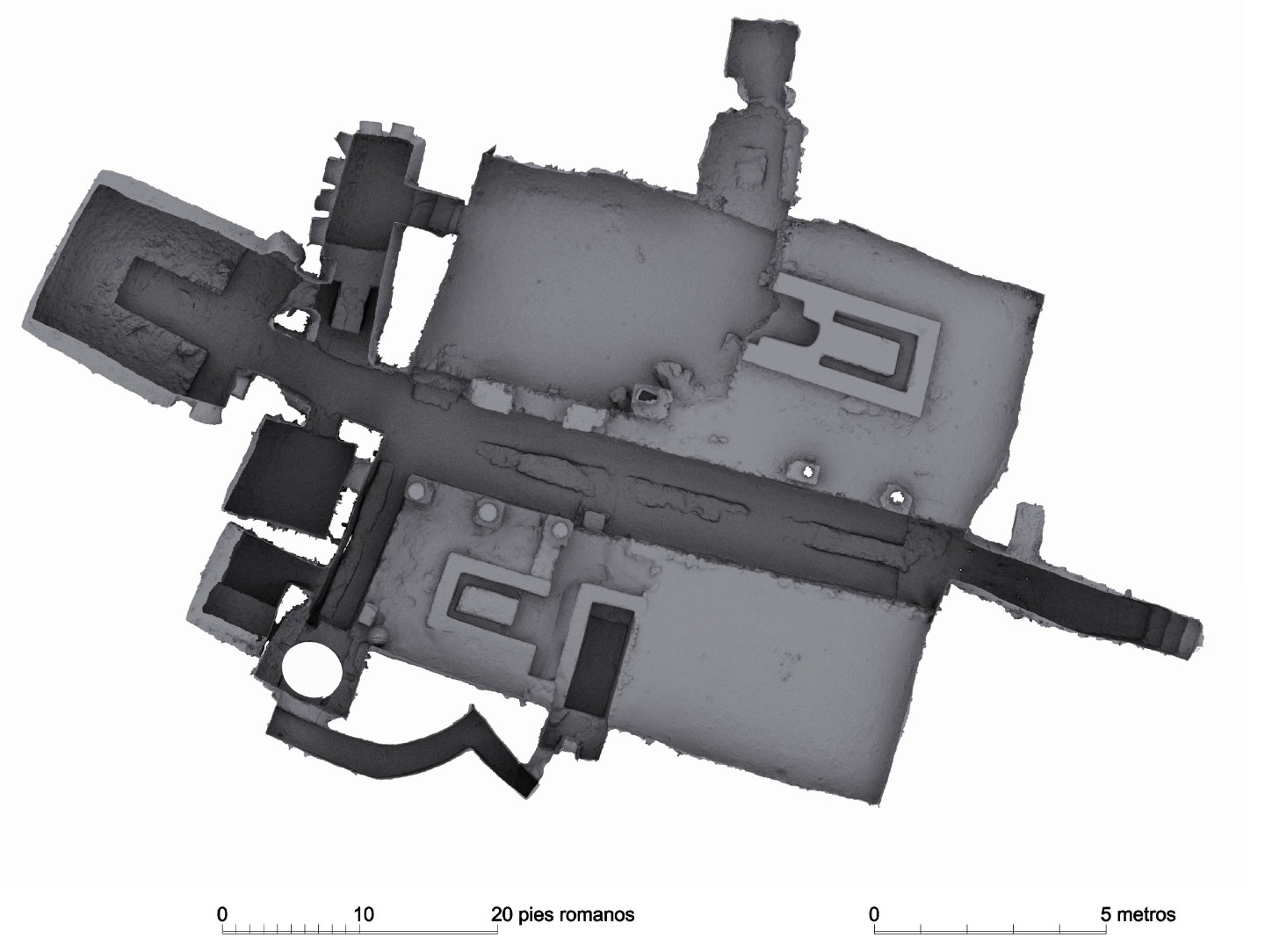
Plan of the Tomb of the Elephant showing its architectural layout.
TCA Cartografía y Geomática
A window that was never meant to light the room
Perhaps the most intriguing feature of the monument is a narrow inclined window cut above the entrance to the principal chamber.
For decades, archaeologists suspected that the opening must have served a symbolic purpose. Its orientation seemed too deliberate to be accidental, yet no one had been able to explain exactly how it functioned.
Digital modelling finally provided the answer.
Contrary to earlier assumptions, the window was not designed to admit the rising sun at dawn. Instead, it captures sunlight exactly three hours after sunrise on both the spring and autumn equinoxes. At that precise moment, a beam of light reaches the centre of the principal chamber. During the summer and winter solstices, the sunlight falls on different parts of the room, creating a carefully orchestrated sequence of seasonal illuminations.
This is far more than clever architecture. It represents a sophisticated manipulation of light that was almost certainly intended to support ritual activity.
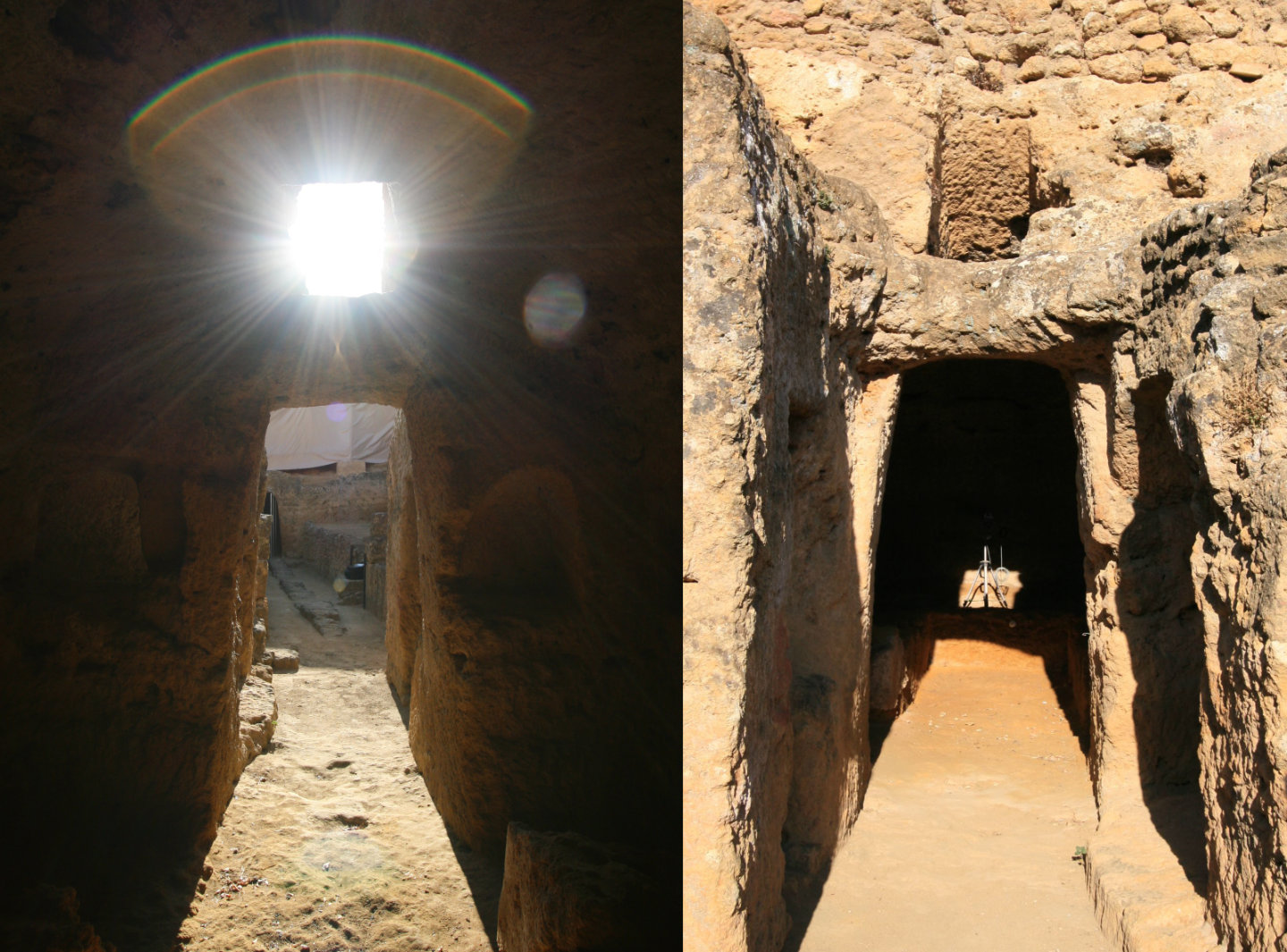
Entrance to the Tomb of the Elephant with its distinctive inclined window.
Conjunto arqueológico de Carmona
Looking beyond the Sun
The investigation did not stop with the movement of sunlight.
Using astronomical software, the researchers reconstructed the appearance of the sky over Roman Carmona during the first and second centuries AD. They discovered that the moment when sunlight penetrated the chamber—three hours after sunrise on the equinoxes—coincided with a very specific celestial configuration. As the beam illuminated the centre of the sanctuary, the constellations Taurus, Scorpio, Leo, and Aquarius occupied positions in the sky that closely corresponded to the symbolic figures represented in the Mithraic iconography of the Tauroctony.
This observation becomes even more compelling when compared with another important Mithraic sanctuary: the Mithraeum of Hawarte, in modern-day Syria.
There, researchers have demonstrated that sunlight also entered the sanctuary at carefully chosen moments, creating dramatic illumination effects that coincided with significant astronomical configurations. Although the architectural solutions adopted at Hawarte and Carmona differ, both sanctuaries appear to have been designed so that the ritual use of light unfolded against a celestial backdrop meaningful to Mithraic initiates.
At Hawarte, the sun’s rays illuminate the altar on the winter solstice, two hours before sunset. At that moment, the constellations in the sky were the same as those visible when the sun entered the chamber of the Elephant Tomb, three hours after sunrise on the spring equinox.
This fact is no coincidence. It is a direct correspondence that cannot be explained by chance, demonstrating the Mithraic nature of the Elephant Tomb. For decades, historians of religion have argued that this dramatic scene should be understood not as a literal sacrifice but as a symbolic representation of the cosmos. The astronomical evidence from both Carmona and Hawarte now provides an architectural dimension to this interpretation, suggesting that Mithraic ritual may have been deliberately choreographed to mirror the celestial order.
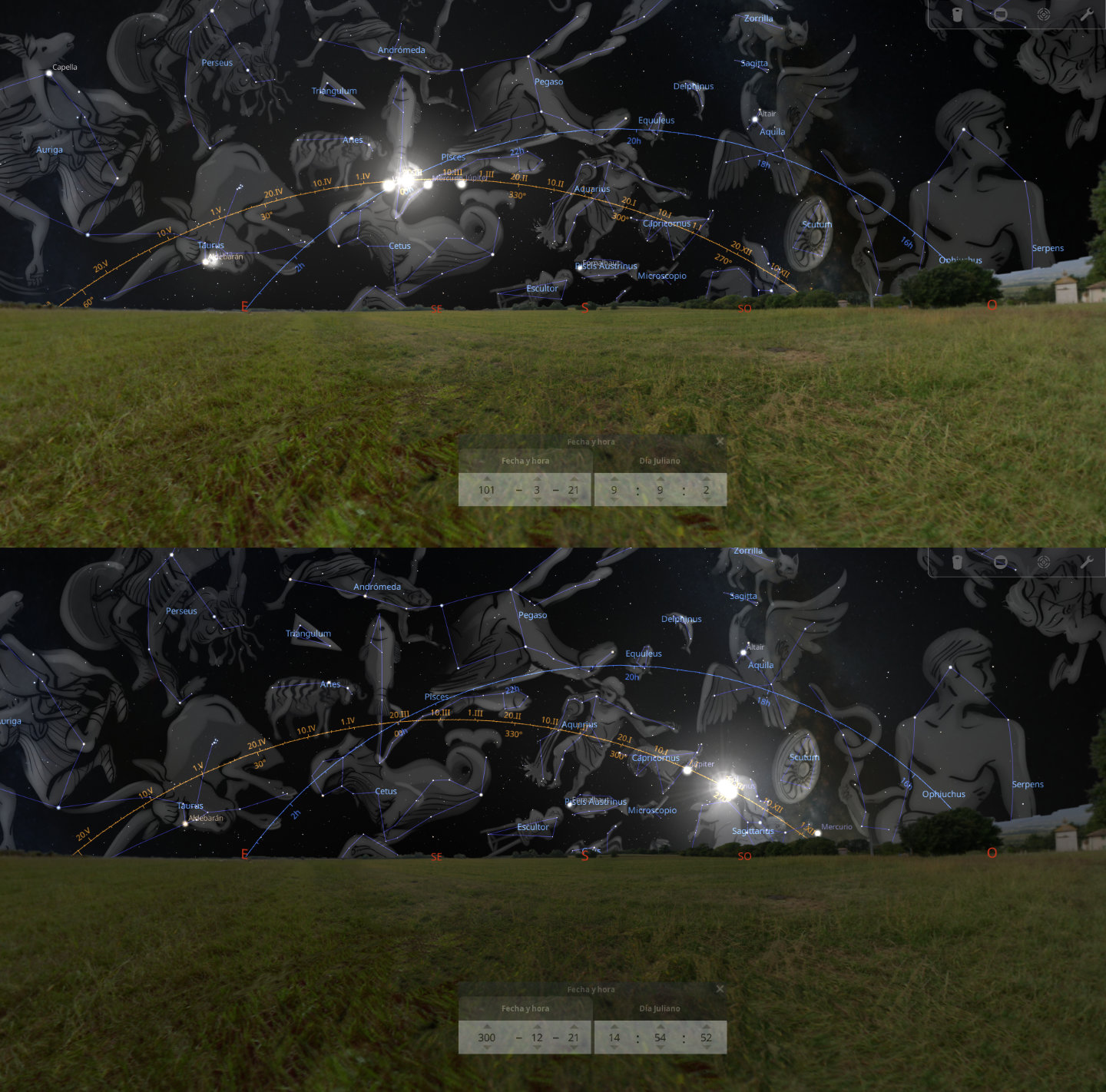
Reconstruction of the sky over Roman Carmona at the moment when sunlight enters the principal chamber.
Stellarium
A sanctuary hidden beneath a necropolis?
Several strands of evidence now converge.
The building’s elongated underground plan resembles known Mithraic sanctuaries elsewhere in the Roman Empire. Its ritual dining spaces would have accommodated communal banquets characteristic of Mithraic worship. The carefully engineered play of sunlight recalls similar lighting effects documented in Mithraea from Italy and elsewhere. Even the hydraulic installations may have played a symbolic role within ritual practice.
Perhaps most importantly, the archaeological sequence demonstrates that the funerary installations belong to a later phase of the monument’s history. Burial was therefore not necessarily its original purpose.
The authors argue that the simplest explanation is that the complex was initially conceived as a Mithraic sanctuary before being transformed into a funerary monument as its function evolved.
Why this matters
The reinterpretation of the Tomb of the Elephant is about much more than solving a local archaeological puzzle.
It illustrates how advances in archaeological science can fundamentally reshape our understanding of monuments excavated generations ago. Technologies such as laser scanning, digital modelling and archaeoastronomical simulation allow researchers to ask entirely new questions of familiar sites, revealing patterns that earlier scholars simply could not detect.
Whether every aspect of this new interpretation ultimately withstands future investigation remains to be seen. Archaeology is, after all, a discipline built on continual reassessment. Yet the study convincingly demonstrates that the Tomb of the Elephant is far more than an unusual Roman burial monument.
Instead, it may preserve one of the clearest examples of Mithraic architecture in the western Roman Empire—a place where architecture, astronomy and ritual were woven together with extraordinary sophistication.
More than a century after its discovery, the monument still has new stories to tell. The difference is that today we have the tools to hear them.
References
- Alejandro Jiménez Hernández & Inmaculada Carrasco Gómez (2012) La Tumba del Elefante de la Necrópolis Romana de Carmona. Una revisión necesaria desde la Arqueología de la Arquitectura y la Arqueoastronomía
- Michal Gawlikowski, Arkadiusz Sołtysiak & Krzysztof Jakubiak (2011) A Ray of Light for Mithras
- Alejandro Jiménez Hernández & Inmaculada Carrasco Gómez (2015) Arqueoastronomía y mitraísmo. El mitreo de la Tumba del Elefante de la necrópolis romana de Carmona (Sevilla, España)