The Mithraic evidence documented in Roman Syria reflects the province’s exceptional importance as a crossroads of military, commercial and religious exchange in the eastern Mediterranean and Near East. The material illustrates the diffusion of Mithraic practices through major urban centres, frontier environments and long-distance imperial networks.
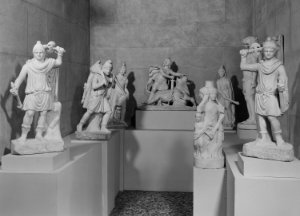
People attested in Syria
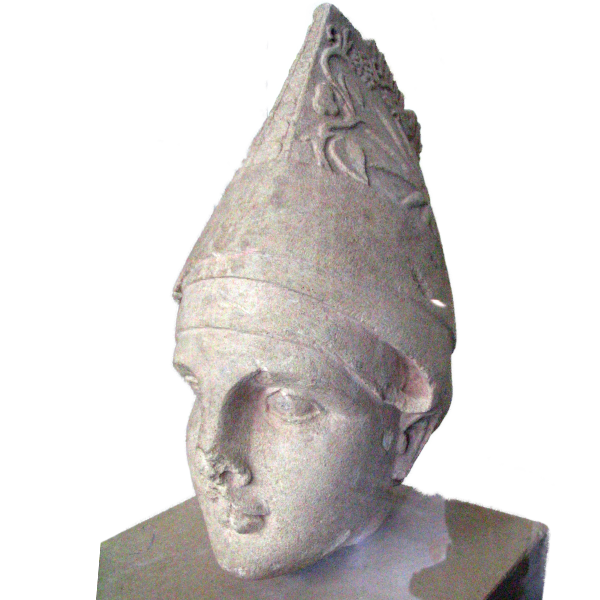










Provinces of Syria
Syria-Coele
Syria-Coele formed one of the principal urban and cultural centres of the Roman Near East where diverse religious traditions coexisted.
Syria-Palestina
Syria-Palestina occupied a complex religious landscape shaped by imperial administration, pilgrimage and eastern Mediterranean mobility.
Places in Syria
Antiochia ad Orontem
Antioch was the capital of Roman Syria and gateway between the Mediterranean and the eastern provinces.
Arsameia
Arsameia on the Nymphaios is an ancient city located in Old Kâhta in Kâhta district, Adıyaman Province, Turkey.
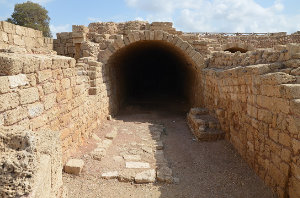
Caesarea Maritima
Caesarea was first settled by the Phoenicians in the 4th century BC. In 63 BC, the Romans annexed the region and Caesarea became the seat of the Roman procurators.
Commagene
Commagene was an ancient Greco-Iranian kingdom ruled by a Hellenized branch of the Iranian Orontid dynasty that had ruled over Armenia.
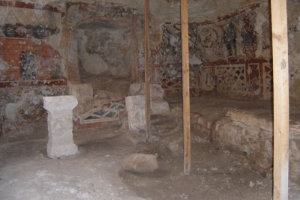
Dura Europos
Dura-Europos was a Hellenistic, Parthian and Roman frontier city built on the Euphrates River. It was founded around 300 BC by Seleucus I Nicator. The Romans took Dura-Europos in 165 AD.
Hawarte
Al-Ankawi is a Syrian town located in the Ziyarah Subdistrict of the al-Suqaylabiyah District in Hama Governorate.
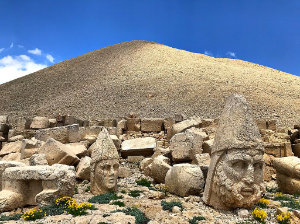
Nemrut Dağı
Mount Nemrut or Nemrud is a 2,134-metre-high mountain in southeastern Turkey, notable for the summit where a number of large statues are erected around what is assumed to be a royal tomb from the 1st century BC.
Samosata
Samsat, formerly Samosata is a small town in the Adıyaman Province of Turkey, situated on the upper Euphrates river.
Sidon
Alexander the Great seized Sidon from the Persians in 333 BC. It became a Roman colony during the reign of Elagabalus.
Zeugma
Zeugma was an ancient Hellenistic era Greek and then Roman city of Commagene; located in modern Gaziantep Province, Turkey.
Inscriptions from Syria
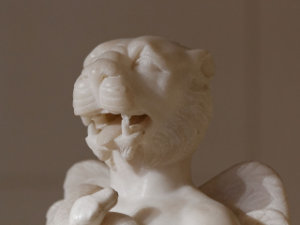
Lion-headed Aion from Sidon
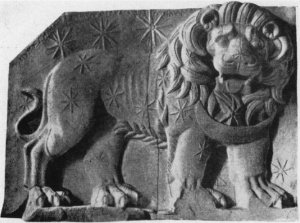
Lion relief from Nemrut Dağı
Tauroctony from Absalmos
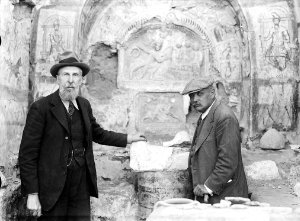
Main Tauroctony relief from Dura Europos
Inscription on the restoration of the Mithraeum of Dura Europos
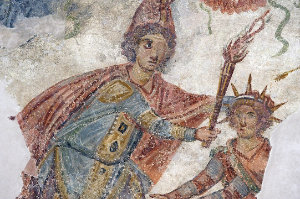
Fresco with tauroctony and seven cypresses
Hekataion of Sidon
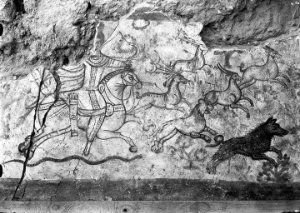
First Tauroctony relief of Dura Europos
In good memory. Made by Ethpeni the strategist, son of Zabdē’ā, commander of the archers who are in Dura. In the month of Adar in the year 480.
Taurcotony sculpture from Sidon
Graffiti to Kamerios from Dura Europos Mithraeum
Column with inscription from Dura Europos
Engraved column by Maximus of Dura Europos
References
- Attilio Mastrocinque (2017) The Mysteries of Mithras. A Different Account
- David Walsh (2018) The Cult of Mithras in Late Antiquity. Development, Decline and Demise ca. A.D. 270-430
- Ernest Will (1950) La date du mithréum de Sidon
- Frank Edward Brown, Michael Ivanovich Rostovtzeff & Charles Bradford Welles (eds.) (1939) The Excavations at Dura-Europos. Preliminary Report of the Seventh and Eighth Seasons of Work, 1933–1934 and 1934–1935
- J. R. Hinnells (ed.) (1975) Mithraic Studies. Proceedings of the First International Congress of Mithraic Studies
- Laurent Bricault & Philippe Roy (2021) Les cultes de Mithra dans l’Empire romain
- Lisa R. Brody & Gail L. Horffman (eds.) (2001) Dura Europos. Crossroads to Antiquity
- Maarten Vermaseren (1960) Mithra, ce dieu mystérieux
- Multiple authors & Roger Jehu Bull (2017) The Mithraeum at Caesarea Martima. The joint expedition to Caesarea Maritima excavation reports, volume II
