
Biography
of Successus
- Successus, a slave, is attested as a member of a Mithraic community (syndexios) at the Mitreo de Cabrera de Mar.
- Also recorded as Imperial slave (servus Caesaris).
- Attested at Iluro, Tarraconensis, Hispania in mid-2nd century (TNMM 472).
TNMP 81
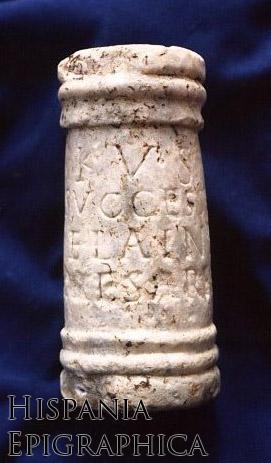
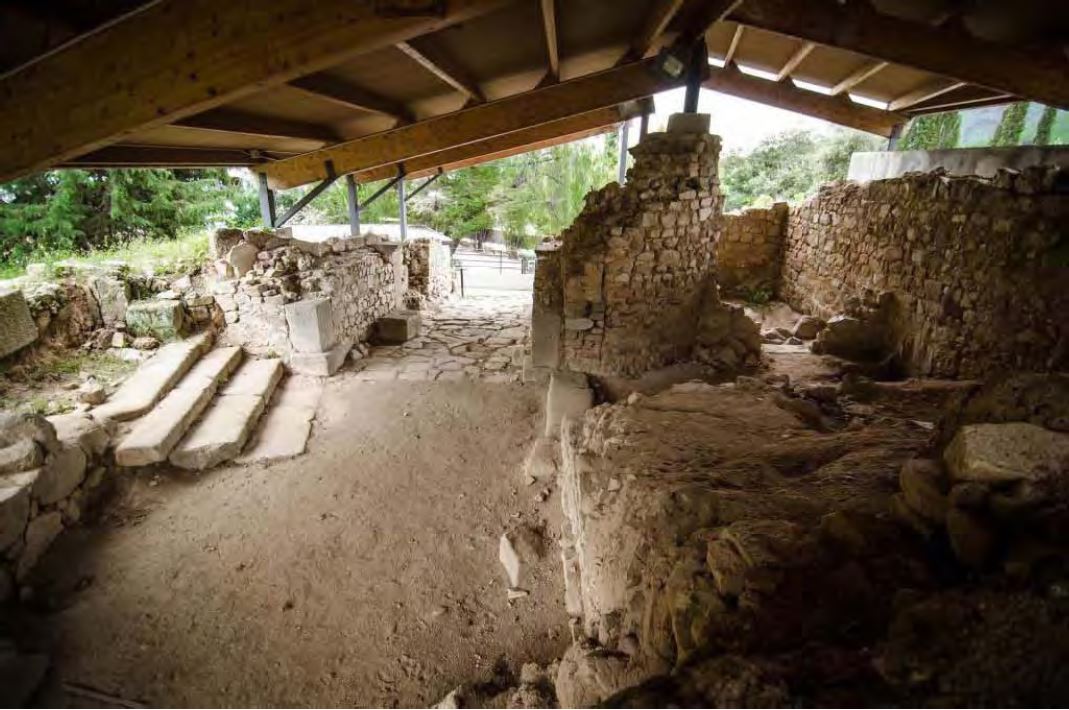
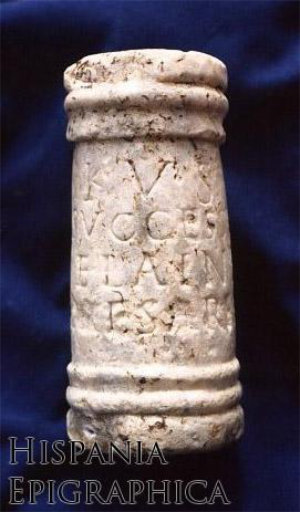
Successus is known from a small cylindrical marble altar discovered in 1987 in the northern sector of the cryptoporticus at Can Modolell, near ancient Iluro (modern Cabrera de Mar). The inscription records the fulfilment of a vow to Cautes by Successus and Elaine, both designated as slaves of the emperor: K(auti) v(otum) s(olverunt) / Successus / Elaine / Caesaris (“For Cautes. Successus and Elaine, Caesar’s slaves, fulfilled their vow”). The monument constitutes one of the clearest pieces of evidence linking the sanctuary of Can Modolell with the worship of Mithras and his torchbearers in north-eastern Hispania (TNMM 472; Mayer and Rodà 1992; Fabre, Mayer and Rodà 2002; Alvar 2018; Chalupa 2023).
Unlike Elaine, whose name is exceptionally rare, the cognomen Successus is well attested throughout the Roman world and is particularly common among slaves and freedmen. Alvar notes that the name is documented within the familia Caesaris from the Flavian period onward and therefore supports the interpretation that both dedicants belonged to the imperial household. Their presence at Can Modolell has been connected with the possible existence of an imperial estate in the region, to which they may have been permanently attached.
The chronology of the inscription remains disputed. Some scholars have preferred a date in the mid-second century based on broader reconstructions of the diffusion of Mithraism in Hispania, whereas others have argued that both the altar and the associated sanctuary may belong to a considerably earlier phase, perhaps even the Flavian period. If the earlier dating is accepted, Successus would represent one of the earliest known worshippers associated with the cult of Mithras in the Iberian Peninsula. Nevertheless, the interpretation of the Can Modolell complex and the precise significance of the dedications to Cautes continue to be debated in modern scholarship.
References
- Aleš Chalupa (2023) Římský kult boha Mithry. Atlas lokalit a katalog nálezů I.
- Jaime Alvar Ezquerra (2018) El culto de Mitra en Hispania.
- Epigraphic Database Heidelberg. Cilindric arula from Cabrera de Mar in EDH.
- Alfred Shenington Geden. Cilindric arula from Cabrera de Mar in EDCS.
- Hispania Epigraphica. Cilindric arula from Cabrera de Marin HE.
- Mitra en Hispania. Cilindric arula from Cabrera de Mar in MEH.
- Mitra en Hispania. Mitreo de Cabrera de Mar in MEH.
Attestations
Mitreo de Cabrera de Mar
TNMM 30
The Roman villa of Can Molodell had a sanctuary that has been related to the cult of Mithras.
