Founded by Darius I in the late sixth century BC, Persepolis served as the ceremonial capital of the Achaemenid Empire and remained one of the most important political and religious centres of ancient Persia. Although abandoned long before the emergence of the Roman cult of Mithras, the city preserves inscriptions and monuments that attest to the worship of Mithra within the official religious tradition of the Achaemenid kings, providing an important source for the study of the deity’s early history.
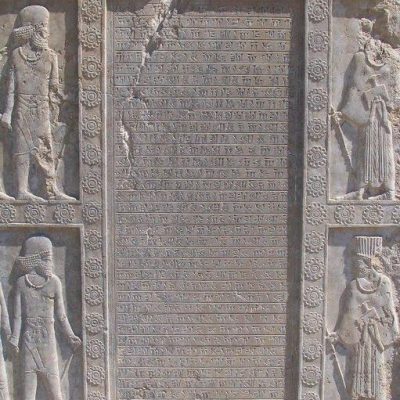
Inscriptions from Persepolis
Slab from the Palace of Darius at Persepolis
Thâtiy / Artakhshatrâ khshâyathiya / imam / ustashanâm / athâganâm / mâm / upâ / mâm / kartâ.
Thâtiy / Artakhshatrâ / khshâyathiya / mâm / Auramazdâ / utâ / M[i]thra / baga / pâtuv / utâ / imâm / DAHyum / utâ / tya / mâm kartâ.
Thâtiy / Artakhshatrâ / khshâyathiya / mâm / Auramazdâ / utâ / M[i]thra / baga / pâtuv / utâ / imâm / DAHyum / utâ / tya / mâm kartâ.
King Artaxerxes says: This stone staircase was built by me in my reign.
King Artaxerxes says: May Ahuramazda and the god Mithra preserve me, my country, and what has been built by me.
King Artaxerxes says: May Ahuramazda and the god Mithra preserve me, my country, and what has been built by me.
References
- Livius.org (2004) A3Pa - Livius.org
- Pierre Lecoq (1997) Les inscriptions de la Perse achéménide
