Although the Roman cult of Mithras developed within the religious and social environments of the Roman Empire, Persia remained closely associated in ancient and modern interpretations with the figure of Mithra and broader Iranian religious traditions. The region occupies an important place in discussions concerning cultural transmission, eastern influences and the complex relationship between Roman Mithraism and Iranian religious worlds.

People attested in Persia

Provinces of Persia
Places in Persia
Ectabana
Ecbatana was an ancient city, which was first the capital of Media in western Iran, and later was an important city in Persian, Seleucid, and Parthian empires.
Kermanshah
Kermanshah is a city in the Central District of Kermanshah province, Iran, serving as capital of the province, the county, and the district.
Persepolis
Ceremonial capital of the Achaemenid Empire and one of the foremost cities of ancient Persia.
Inscriptions from Persia
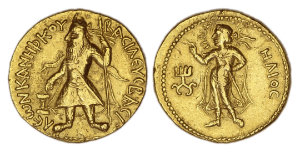
Coin of the Kushan Emperor Kanishka I
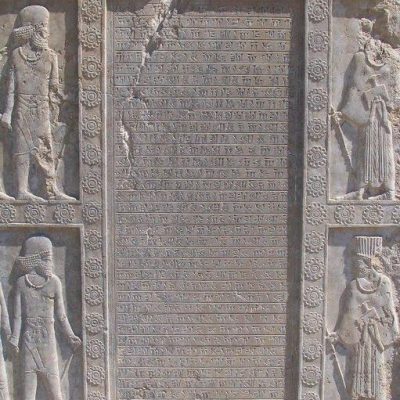
Slab from the Palace of Darius at Persepolis
Thâtiy / Artakhshatrâ / khshâyathiya / mâm / Auramazdâ / utâ / M[i]thra / baga / pâtuv / utâ / imâm / DAHyum / utâ / tya / mâm kartâ.
King Artaxerxes says: May Ahuramazda and the god Mithra preserve me, my country, and what has been built by me.
