Support The New MithraeumThe New Mithraeum is an independent, non-profit project dedicated to Mithraic studies, ancient religions and classical culture.Developed and maintained independently since 2007, the site exists without advertising, paywalls or institutional funding. If you have found value in its articles, interviews, photographs or database, please consider supporting the project with a contribution.Every contribution helps keep The New Mithraeum open, free and alive.Thank you.
Supposed fragments of Tauroctony from Artashat(Artaxata)
"During excavations at Artashat in 1971, at the same site not far from a previously mentioned statue, another fragment of a marble statuette was found, representing the torso of a youth with a small animal skin and a child’s leg with a dangling heel, indicating the dynamism of the depicted figure (Plate XVIII2). Another marble fragment was discovered near the remains of a sanctuary dedicated to the sun god. It is assumed that this fragment depicts the hoof of a bull. Does this not suggest that the sanctuary once contained a statue of Mithra slaughtering a sacrificial bull?" (p. 23) https://arar.sci.am/publication/410263я
S. Obukhov cites this part from the text and comments on this find: "...Thus, G.A. Koshelenko sees in the tauroctony a reinterpretation of the late Babylonian rite of Kalu. In his opinion, the New Year’s rite, when a white bull was sacrificed - the personification of the generative forces of nature—was even more important (citing F. Thureau-Dangin and G. Widengren). It is known that the rite of taurobolium was celebrated in the mithraeum at Uruk-Varka, as evidenced by the discovery of a clay stamp depicting a tauroctony scene. Sculptural remains of a tauroctony scene were also discovered in layers dating from the first centuries AD in the ancient Armenian city of Artashat. This rite, apparently in a reinterpreted form, is described in the Armenian folk epic about David of Sassoun."

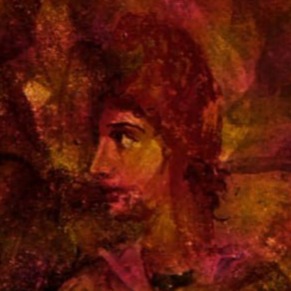
![Supposed fragments of Tauroctony from Artashat(Artaxata)
"During excavations at Artashat in 1971, at the same site not far from a previously mentioned statue, another fragment of a marble statuette was found, representing the torso of a youth with a small animal skin and a child’s leg with a dangling heel, indicating the dynamism of the depicted figure (Plate XVIII2). Another marble fragment was discovered near the remains of a sanctuary dedicated to the sun god. It is assumed that this fragment depicts the hoof of a bull. Does this not suggest that the sanctuary once contained a statue of Mithra slaughtering a sacrificial bull?" (p. 23) https://arar.sci.am/publication/410263я
S. Obukhov cites this part from the text and comments on this find: "...Thus, G.A. Koshelenko sees in the tauroctony a reinterpretation of the late Babylonian rite of Kalu. In his opinion, the New Year’s rite, when a white bull was sacrificed - the personification of the generative forces of nature—was even more important (citing F. Thureau-Dangin and G. Widengren). It is known that the rite of taurobolium was celebrated in the mithraeum at Uruk-Varka, as evidenced by the discovery of a clay stamp depicting a tauroctony scene. Sculptural remains of a tauroctony scene were also discovered in layers dating from the first centuries AD in the ancient Armenian city of Artashat. This rite, apparently in a reinterpreted form, is described in the Armenian folk epic about David of Sassoun."
Sources:
1: Аракелян, Б. Н. - Очерки по истории искусства Древней Армении ([ref:6a9f1ba5e8702])
1: Խաչատրյան, Ժ. Դ. - Արտաշատ II ([ref:6a9d9eb8b7f4c])
2: Обухов, С. В. - Пантеон и царский культ в Коммагене. Эпоха Митридата I Каллиника и Антиоха I Теоса: историко-археологическое исследование](https://www.mithraeum.eu/album/post/bb5a228be876916a.jpg)
 arar.sci.amОчерки по истории искусства Древней АрменииA survey of the art of ancient Armenia from the sixth century BCE to the third century CE, bringing together archaeological evidence for sculpture, architecture…