
Graeco-Armenian polytheist and researcher.

 t.me֎ Hetanos ☤ Հեթանոս ֍Անտիկ հեթանոսություն, հայկական, հելլենիստական, տարածաշրջանային հավատալիքներ։ Древнее язычество…

![Seal from Artashat (Artaxata) with Parthian inscription of Mithra
Zhores Khachatryan proposes the following interpretation:
"N1021 (3 specimens): Parthian. (1) mtr > Mihr (or Miθr); (2) BYRT: fortress. In the documents on the Nisa ostraca, *Mtrdtkrt BYRT* = *Mihrdātkirt diz* "Mihrdātkirt Fortress" (V. A. Livshits). According to Livshits, in some documents, the abbreviated form *Mtr* appears instead of *Mtrdtkrt*. In other words, this is the seal of the Mihrdātkirt fortress, with which there was some official or commercial connection. "
Source:
Ժորես Խաչատրյան - Հայ-իրանական կապերը ըստ Արտաշատի կնքադրոշմների [ref:6aa51dd35a124]](https://www.mithraeum.eu/album/post/ab803b1cd3337e43.png)
 arar.sci.amՀայ-իրանական կապերը ըստ Արտաշատի կնքադրոշմների - Համահայկական թվանշային գրադարանNasza Biblioteka Cyfrowa is... Here put the description for the main page matadata, visible e.g. when sharing on Facebook.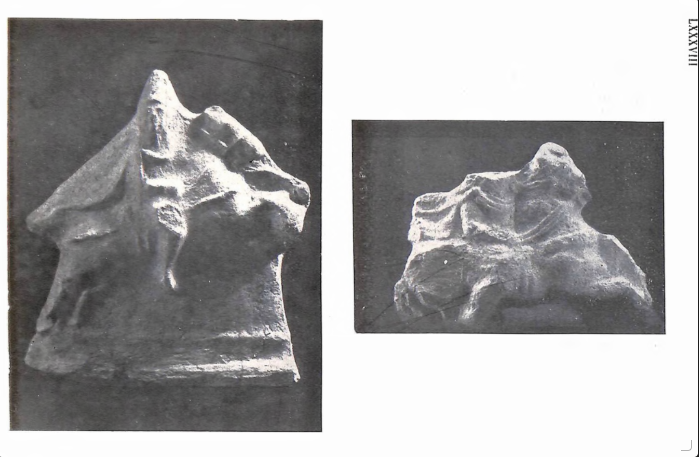
![Clay figurine of Mithra (Mihr) from Artashat (Artaxata)
It is interesting to note the following details: the artifact’s resemblance to the specimen from Hoghmik, as well as the presence of a bull behind Mithra.
"...Thus, it can be assumed that not only were the myths of the Great Mother and the dying-and-rising gods built upon a shared conceptual framework, but their iconography was also similar. Attis, Ara, Mihr, and Eros are depicted as extraordinarily beautiful and are associated with vegetation. Like Attis and Adonis, Ara dies from a fatal blow. The cult of Attis and Adonis bears a resemblance to the cult of the Armenian figure Ara the Beautiful. Attis has been depicted in various compositions—merged with other deities, winged, performing a sacred dance, playing the reed pipe, and so forth. The statuettes of Attis discovered in Armenia are winged, indicating a fusion with Eros; he was also identified with Mihr, Men, and other deities. Terracotta figurines from the Hellenistic period, depicting Attis in his characteristic attire and with the wings of Eros, have been discovered in Myrina (Asia Minor) and in regions along the northern Black Sea coast. Literary sources from the Late Antique period attest that reed pipes were also played during the rituals of Cybele and Attis and their associated deities. Attis was also a shepherd; figurines depicting him playing the reed pipe—both with and without a shepherd’s crook—are known to exist." (p.200-201)
"The aforementioned clay figurines discovered in Armenia enrich our understanding of the material and spiritual culture of the ancient period. We hope that future excavations will yield significant new material regarding Armenian pagan mythology—specifically the worship of Anahit and Mihr—and provide an opportunity to reinterpret various issues related to these cults."
Source:
ZHORES KHACHATRYAN - THE ICONOGRAPHY OF CLAY FIGURINES [ref:6aa51835e3f17]](https://www.mithraeum.eu/album/post/8b50b9469dd5f5c0.png)
![A terracotta figurine of Mithra. I-III centuries AD, from the Hoghmik sanctuary complex
"...For the solution of our problem, it is important to refer to the Hellenistic temple complex of Hoghmik, located to the north of Gyumri. Here, we shall focus on two buildings among the complex’s numerous rooms and auxiliary structures.
The first is Room No. 1 (Fig. 7), which measures approximately 13 m in length and 9 m in width. Along the southern wall runs an elongated stone mastaba, approximately 0.5 m in both height and width, constructed on a pavement about 2 m wide. A second mastaba was built along another wall, although it is interrupted in two places. In the center of the room, between the two mastabas, stood a poorly preserved altar. In the northwestern corner, archaeologists uncovered a stone box containing burnt animal remains, probably those of a goat. In front of the box, along the edge of the wall, a rectangular opening was identified, which was probably intended for an idol.
The room itself is divided into three sections by four pairs of columns. The four central columns are positioned at some distance from one another, leaving sufficient space for a garret—a feature characteristic of the main room of the traditional Armenian house. Two sanctuaries and an iwan were also erected adjacent to the building.
Our initial suggestion was that the three east-oriented sections of the room were dedicated to the supreme gods of the Armenian pantheon. These structures were built in the 2nd century BC and remained in use for approximately four centuries, until the adoption of Christianity as the state religion of Armenia.
Approximately twenty meters north of these structures, another room was uncovered containing evidence of numerous animal sacrifices, as well as mastabas, altars, and idols. Between these buildings, in one of the rooms, archaeologists discovered a clay figurine identified as Mihr-Mithra (Fig. 7c)."
Source:
Hayk Hakobyan - ON THE ORIGIN OF ROMAN MITHREUMS [ref:6aa3afffde57d]](https://www.mithraeum.eu/album/post/ca17d863e2a3b0b1.png)
![Roman(?) Altar from Dvin (Armenia) with Mithraistic symbols, II c. AD(?)
Sun from the south, Raven from the north, Bull from the west, Cancer from the east.
Source:
Hayk Hakobyan - ON THE ORIGIN OF ROMAN MITHREUMS [ref:6aa3afffde57d]](https://www.mithraeum.eu/album/post/bcda5a575e27f334.png)
![Supposed fragments of Tauroctony from Artashat(Artaxata)
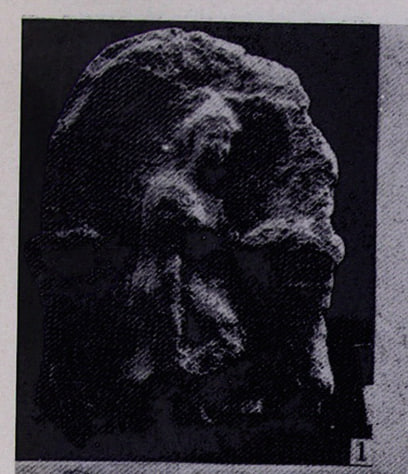
"During excavations at Artashat in 1971, at the same site not far from a previously mentioned statue, another fragment of a marble statuette was found, representing the torso of a youth with a small animal skin and a child’s leg with a dangling heel, indicating the dynamism of the depicted figure (Plate XVIII2). Another marble fragment was discovered near the remains of a sanctuary dedicated to the sun god. It is assumed that this fragment depicts the hoof of a bull. Does this not suggest that the sanctuary once contained a statue of Mithra slaughtering a sacrificial bull?" (p. 23) https://arar.sci.am/publication/410263я
S. Obukhov cites this part from the text and comments on this find: "...Thus, G.A. Koshelenko sees in the tauroctony a reinterpretation of the late Babylonian rite of Kalu. In his opinion, the New Year’s rite, when a white bull was sacrificed - the personification of the generative forces of nature—was even more important (citing F. Thureau-Dangin and G. Widengren). It is known that the rite of taurobolium was celebrated in the mithraeum at Uruk-Varka, as evidenced by the discovery of a clay stamp depicting a tauroctony scene. Sculptural remains of a tauroctony scene were also discovered in layers dating from the first centuries AD in the ancient Armenian city of Artashat. This rite, apparently in a reinterpreted form, is described in the Armenian folk epic about David of Sassoun."
Sources:
1: Аракелян, Б. Н. - Очерки по истории искусства Древней Армении ([ref:6a9f1ba5e8702])
1: Խաչատրյան, Ժ. Դ. - Արտաշատ II ([ref:6a9d9eb8b7f4c])
2: Обухов, С. В. - Пантеон и царский культ в Коммагене. Эпоха Митридата I Каллиника и Антиоха I Теоса: историко-археологическое исследование](https://www.mithraeum.eu/album/post/bb5a228be876916a.jpg)
 arar.sci.amОчерки по истории искусства Древней АрменииA survey of the art of ancient Armenia from the sixth century BCE to the third century CE, bringing together archaeological evidence for sculpture, architecture…
![Temple of Khaldi in Ardini-Musasir
Bas-relief from room XIII of the royal palace of Khorsabad: the sack of the temple of the god Haldi at Musasir by the Assyrian troops, scene from the eighth campaign of Sargon II, 714 BC.
What is Interesting in the framework of Mithraic studies is that the city of Ardini-Musasir is described as “the city of Raven".
Apart from that, when Assyrians looted the temple, apart from the statue of Khaldi, they also took the bull of Astartes: "[...............] with horns šêlalâte, aštartu of its doors, which were cast of pure gold weighing 2 talents..."
Sources:
1. [ref:6a9e8af85b44f]
2. [ref:6a9e8af8baad2]
3. [ref:6a9e8af6b7bea]](https://www.mithraeum.eu/album/post/4f716d1180350824.jpg)
 archive.orgHaldi and Mithra/Mher : Armen Petrosyan : Free Download, Borrow, and Streaming : Internet ArchiveHaldi and Mithra/Mher, by Armen Petrosyan, from Aramazd: Armenian Journal of Near Eastern Studies 1(2006), pp. 222-238, in 19 searchable pdf pages. Internet...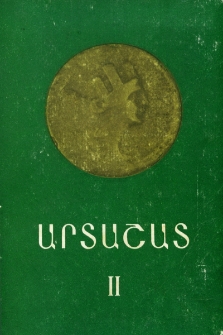
![The Bull’s Head from Garni
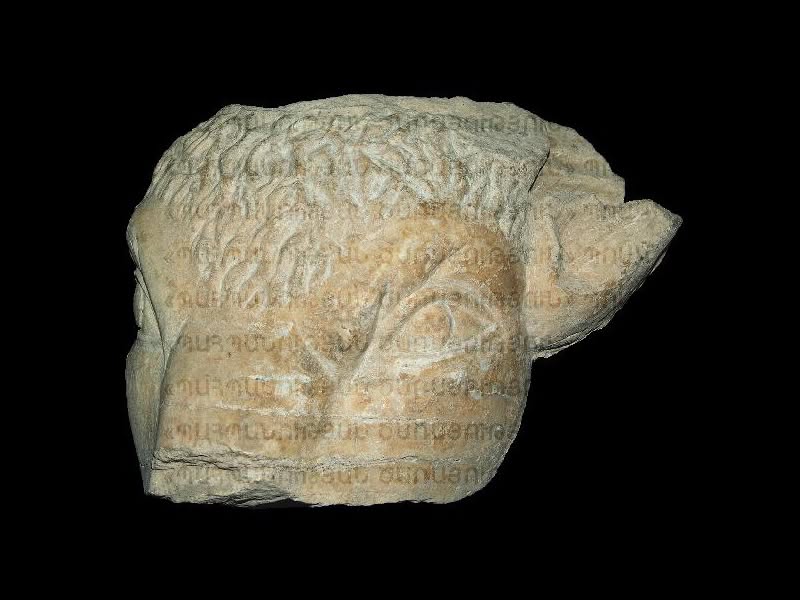
Now for something more interesting: a relatively new and rarely mentioned artifact - the marble bull’s head from Garni, about which very little information is available. I will refer to the official channel of the Historical Monuments Preservation Service:
[One of the exceptional artifacts held in the collections of the State National Cultural Organization “Service for the Protection of the Historical Environment and Historical-Cultural Museums and Reserves” is a marble bull’s head discovered several years ago in the Garni Gorge.
After Christianity was proclaimed the state religion in Armenia in 301, although the fortresses and defensive complexes remained intact, pagan places of worship were razed to the ground. Only in a few places were some temples adapted to the new religion and rebuilt as Christian sanctuaries.
The Garni Temple is an exception, as it has been preserved in its original form and was used as a secular building. According to the account of Movses Khorenatsi, the “father of Armenian historiography” (presumably born around 410—died in 490), the Garni Temple was converted into the summer residence of Khosrovadukht, the sister of King Trdat III.
Followers of the new religion smashed to pieces and threw into the gorge the marble statue of Mithra, the sun god and bull-fighter, which had been installed in the apse.
Centuries later, during excavations near the temple, a bull’s hoof carved from white marble was discovered, which, according to experts, was part of this sculptural group. Two other fragments—a marble bull’s head and a fragment of the sculptural group’s pedestal—were discovered by chance in 2011 on a steep slope of the gorge.]
Source: [ref:6a9da5cce342f]](https://www.mithraeum.eu/album/post/b52d0a7b17185ac6.jpg)
 facebook.com«Գառնի» պատմամշակութային արգելոց-թանգարան / Garni Templehttps://www.facebook.com/149391158512910/posts/3017610305024300/
![The Door/Gate from Ashotakert (Yeşilalıç Kapı)
Although the gates near Van Fortress are the most famous, few people know that there is also a gate at Ashotakert. Such gates/doors were associated iwth God Haldi, who was later equated with Mihr/Mher in the Armenian pantheon.
"Yeşilalıç Kapı (Yeşilalıç Gate) is an Urartian open-air cult monument, located near the village of Yeşilalıç (formerly known as Pagan), approximately 60 km east of the city center of Van and 35 km south of the Özalp district center. The monument lies on the southern slopes of Mount Nazarabad, about 1,5 km southeast of the village as the crow flies. Although the area is now far from main roads, in the Urartian period it was situated on a major route connecting the Lake Van region to northwestern Iran."
"Among locals, it is also known as the Stone Gate or Ashotakert (Ashot Gate)—the latter being the former name of the region. The monument was first discovered and its inscription copied by J. Wünsch, who visited the region in 1882, and it was first published by D. H. Müller in 1886.
The monument is carved into the southern face of a rock outcrop, and in terms of shape and dimensions, it is similar to Meher Kapı, though it is about 1 meter taller. Inside the niche is a 10-line cuneiform inscription (A 3‑2), and just like at Meher Kapı, the same text is repeated twice. However, this inscription is significantly shorter. The inscription indicates that the monument was built during the joint reign of King Išpuini and his son Minua, in the last quarter of the 9th century BCE, same like Meher Kapı. Nevertheless, researchers believe that the Yeşilalıç monument predates Meher Kapı slightly.
In front of the monument is a platform carved into the rock, accessible by a set of steps. On this platform are stele sockets arranged in two groups of three. Although no stelae have survived in the area, it is believed that these sockets once held stelae similar to the uninscribed ones found side-by-side at Altıntepe.
The word “susi”, which appears in the Yeşilalıç Kapı inscription, is generally associated with tower-type Urartian temples, leading researchers to link this monument to a nearby temple structure. One hypothesis suggests that such a temple may once have existed within the ruins of a small fortress located about 100 meters west of the monument. More recent studies propose that the foundation traces identified on the rock directly above Yeşilalıç Kapı could indicate the former presence of a temple structure at that location."
Source:
[ref:6aa51f9a6cd1d]](https://www.mithraeum.eu/album/post/921b372f354cf785.jpg)
Although the gates near Van Fortress are the most famous, few people know that there is also a gate at Ashotakert. Such gates/doors were associated iwth God Haldi, who was later equated with Mihr/Mher in the Armenian pantheon.
"Yeşilalıç Kapı (Yeşilalıç Gate) is an Urartian open-air cult monument, located near the village of Yeşilalıç (formerly known as Pagan), approximately 60 km east of the city center of Van and 35 km south of the Özalp district center. The monument lies on the southern slopes of Mount Nazarabad, about 1,5 km southeast of the village as the crow flies. Although the area is now far from main roads, in the Urartian period it was situated on a major route connecting the Lake Van region to northwestern Iran."
"Among locals, it is also known as the Stone Gate or Ashotakert (Ashot Gate)—the latter being the former name of the region. The monument was first discovered and its inscription copied by J. Wünsch, who visited the region in 1882, and it was first published by D. H. Müller in 1886.
The monument is carved into the southern face of a rock outcrop, and in terms of shape and dimensions, it is similar to Meher Kapı, though it is about 1 meter taller. Inside the niche is a 10-line cuneiform inscription (A 3‑2), and just like at Meher Kapı, the same text is repeated twice. However, this inscription is significantly shorter. The inscription indicates that the monument was built during the joint reign of King Išpuini and his son Minua, in the last quarter of the 9th century BCE, same like Meher Kapı. Nevertheless, researchers believe that the Yeşilalıç monument predates Meher Kapı slightly.
In front of the monument is a platform carved into the rock, accessible by a set of steps. On this platform are stele sockets arranged in two groups of three. Although no stelae have survived in the area, it is believed that these sockets once held stelae similar to the uninscribed ones found side-by-side at Altıntepe.
The word “susi”, which appears in the Yeşilalıç Kapı inscription, is generally associated with tower-type Urartian temples, leading researchers to link this monument to a nearby temple structure. One hypothesis suggests that such a temple may once have existed within the ruins of a small fortress located about 100 meters west of the monument. More recent studies propose that the foundation traces identified on the rock directly above Yeşilalıç Kapı could indicate the former presence of a temple structure at that location."
Source:urartianmonuments.comYeşilalıç Kapı - Urartian MonumentsYeşilalıç Kapı, is a sacred place for Urartu civilization. It is called Gate of Haldi.