Your selection gave 112 results.

Greek inscription from Serdica, Thracia, dedicated to the invincible god by Caius Iulius Maximus for himself and his children.

White marble tauroctony relief from Sofia, ancient Serdica in Thracia, found near the Church of St. Kral, depicting the standard bull-slaying with the full iconographic programme.
Lower part of a sandstone altar from Svichtov, probably transported from Novae in Moesia Inferior, dedicated to Invicto by Caius Iulius Maximus, praefectus castrorum of Legio I Italica.
Marble slab fragment from Steklen, ancient Novae in Moesia Inferior, depicting Mithras and Sol in a two-horse chariot with the bust of Oceanus above.
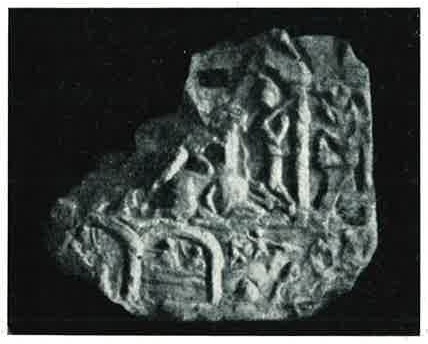
Marble tauroctony relief fragment from Steklen near Svichtov, ancient Novae in Moesia Inferior, preserving the right part of a bull-slaying scene with a serpent and the grotto border.
Eight uninscribed sandstone altars from the rock sanctuary at Kreta, Moesia Inferior.
Sandstone altar with patera from the rock sanctuary at Kreta, Moesia Inferior, bearing a Greek inscription of uncertain reading, possibly a thanksgiving to Mithras.
Sandstone altar with patera from the rock sanctuary at Kreta, Moesia Inferior, bearing a Greek inscription dedicating an altar to Helios Mithras by Marcus Sikis Dossis.
Sandstone base with a hollow at the back from the rock sanctuary at Kreta, Moesia Inferior, probably supporting a cult statue.
Mithraic sanctuary excavated in a quarry at Kreta near Nikopol, Moesia Inferior, carved into the rock and including a small niche with a sandstone tauroctony relief, a base, and several altars.
Limestone relief from Ragasch near Philippopolis, Thracia, cited in MMM without further details.
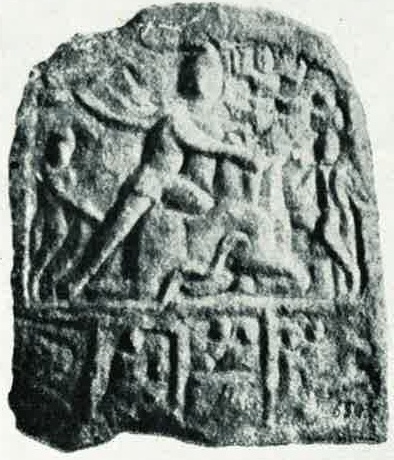
Small arched marble tauroctony relief from Philippovtsi near Sofia, Thracia, divided into two parts by a horizontal rim.

Storgosia was a Roman road station and later a fortress, located in the modern Kaylaka Park in the vicinity of modern Pleven (North-central Bulgaria). Pleven is today the seventh most populous city in Bulgaria.
Oescus, Palatiolon or Palatiolum was an important ancient city on the Danube river in Roman Moesia.
Plovdiv is the second-largest city in Bulgaria, standing on the banks of the Maritsa river in the historical region of Thrace, behind the state capital Sofia.
Serdika or Serdica is the historical Roman name of Sofia, now the capital of Bulgaria. Currently, Serdika is the name of a district located in the city.
Novae was initially one of the few great Roman legionary fortresses along the empire’s border, forming part of the defences along the Danube in northern Bulgaria. It lies about 4 km east of the modern town of Svishtov.
Nicopolis ad Istrum or Nicopolis ad Iatrum was a Roman and Early Byzantine town. Its ruins are located at the village of Nikyup, 20 km north of Veliko Tarnovo in northern Bulgaria. The site was placed on the Tentative List for consideration as a Wo
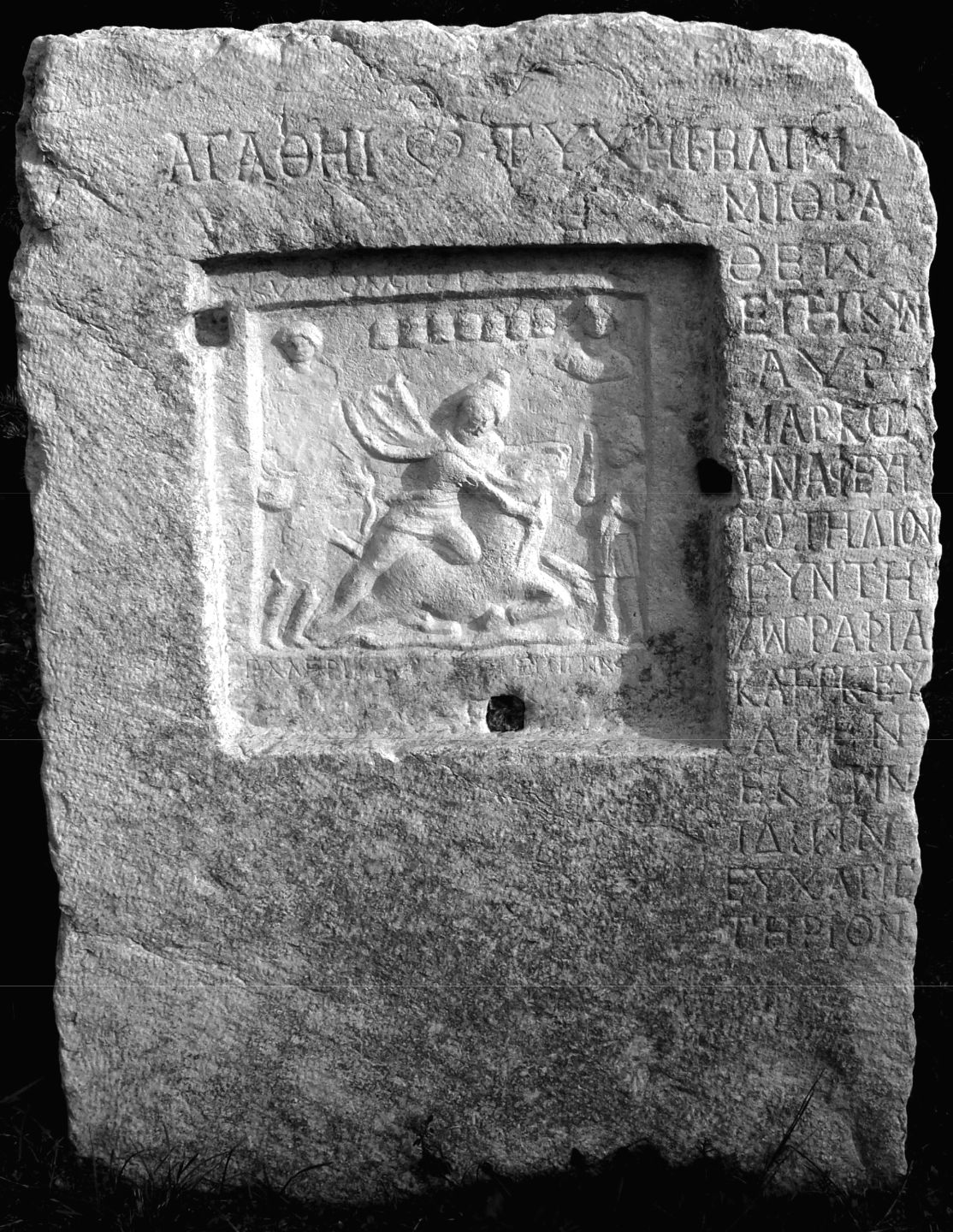
The Tauroctony of Nicopolis ad Istrum is unique as it is the only Mithraic stele befitting a Greek donor.
