Your selection gave 41 results.
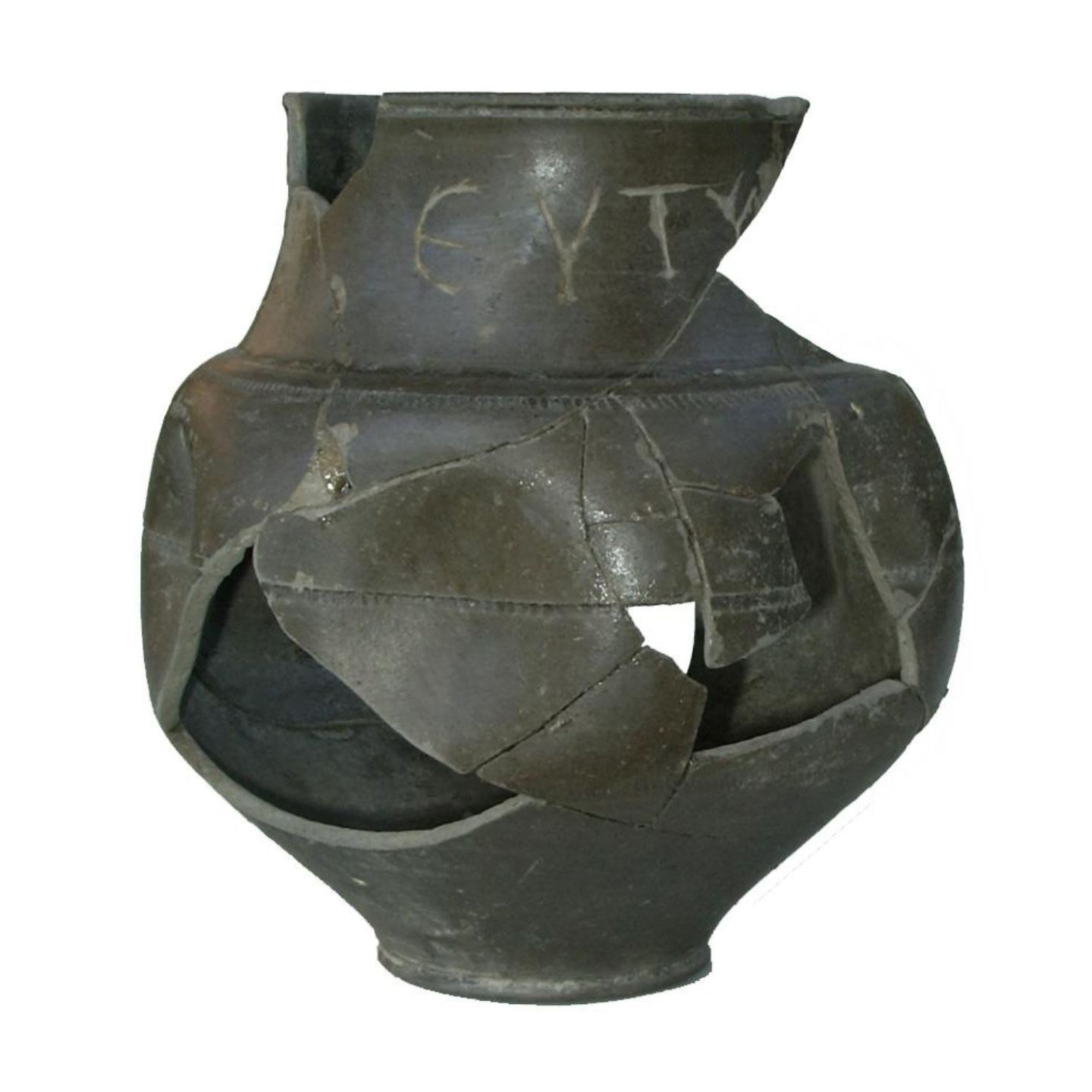
Ceramic cup inscribed with a Greek graffito and recovered from the Mithraeum of Martigny, providing evidence for the use of inscribed vessels within the sanctuary assemblage.

Vindonissa served as one of the principal legionary bases of the Upper Rhine frontier.
Allmendingen near Thun occupies a strategic position between the Swiss plateau and Alpine communications routes.
Stein am Rhein occupied a strategic position near the western limits of the Danubian frontier system.
Leusonna developed on the shores of Lake Geneva and formed part of the regional communications network of western Helvetia.
The colonia of Iulia Equestris, modern Nyon, overlooked the shores of Lake Geneva and controlled regional routes.
Augusta Rauricorum became one of the principal urban centres of the Upper Rhine region.
Aquae Helveticae developed around important thermal springs in the territory of modern Baden in Switzerland.
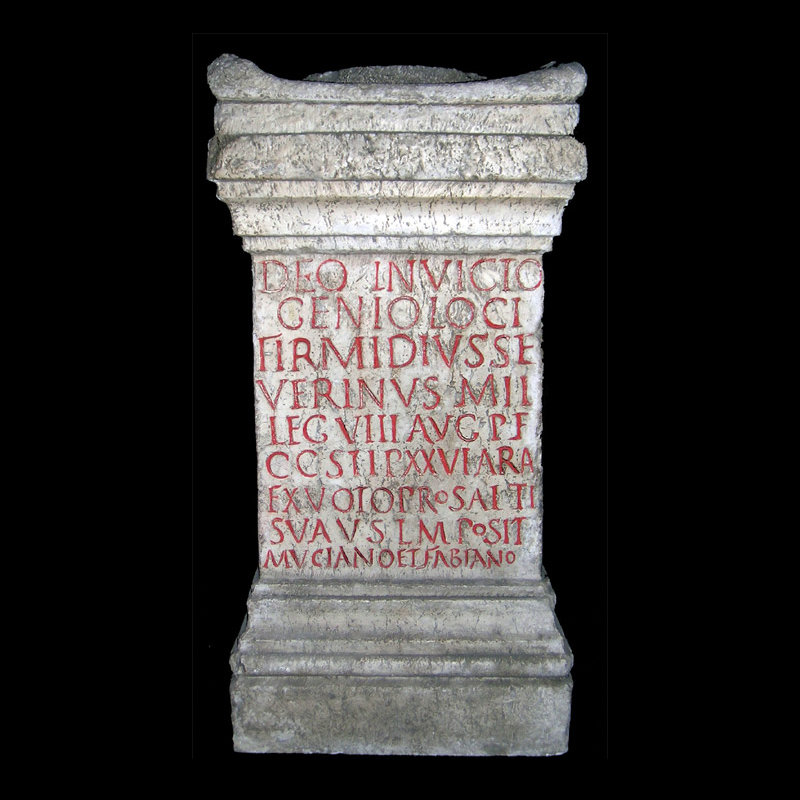
This limestone altar bears an inscription from its donor, Firmidius Severinus, in honour of Mithras after 26 years of service in the Legio VIII Augusta.

Life-sized sandstone head with long curly hair and Phrygian cap, found at the foot of the Hohenklingen near Stein am Rhein, Raetia; probably belonging to a statue of Cautes or Cautopates.
Limestone statue fragment from Nyon, ancient Colonia Iulia Equestris, depicting a lion encircled by a serpent with schematic scorpions engraved in small triangles on each flank; a composition associated with Mithraic lion symbolism.
Small red limestone altar from Nyon, ancient Colonia Iulia Equestris, dedicated to Invicto by Atius ex voto; one of the few Mithraic monuments from this site.
Underground oblong room at Nyon, ancient Colonia Iulia Equestris, situated on the edge of a second Forum dating to the second half of the first century AD, with a series of pillars along the side walls consistent with Mithraic architecture; its interpretation as a Mithraeum remains tentative…
Dark-red clay vase from the refuse pit of the Roman camp at Windisch, ancient Vindonissa, with three handles each encircled by a coiling serpent; a vessel type closely associated with Mithraic ritual.
Altar from Vidy near Lausanne, ancient Leusonna, dedicated to Soli Genio Lunae sacrum by Publius Clodius Primus, curator of the vici Lousonnenses, sevir Augustalis, and curator of the Roman citizens of the Helvetian conventus; not earlier than AD 161–169…
Serpent-vases (Schlangengefässe) attested at Augst, ancient Augusta Rauricorum, a ceramic type commonly associated with Mithraic cult assemblages in the Rhine provinces.
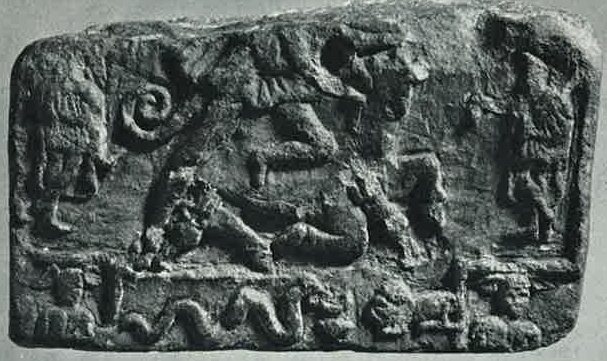
Small limestone tauroctony relief from Augst, ancient Augusta Rauricorum, depicting the bull-slaying with dog and scorpion, flanked by cross-legged torchbearers in Oriental dress; Cautes holds a pedum alongside the upraised torch.
Round perforated bronze plaque from Augst, ancient Augusta Rauricorum, bearing a dedication of an aurichalcum image of Sol to Deo invicto; interpreted by Cumont as evidence for identifying the dedicatee as Mithras.
Small altar from Augst, ancient Augusta Rauricorum, dedicated to Deo invicto by Secundus; found in the early nineteenth century and subsequently transferred to Colmar.
Lost stone altar from the thermal baths at Baden, ancient Aquae Helveticae, dedicated to Deo invicto by Tiberius Cassius Sanctus and Tiberius Sancteius Valens following a vision.
