Filtering by Country: Greece gave 32 results.

Athenae remained one of the foremost intellectual and cultural centres of the eastern Mediterranean under Roman rule.
Philippi became an important Roman colony in eastern Macedonia along the Via Egnatia.
The island of Thasos occupied an important position in the northern Aegean maritime network.
Rhodes is the largest of the Dodecanese islands of Greece and is their historical capital. The island has been known as Ρόδος (Ródos) which in ancient Greek was used to describe the pomegranate, whilst in modern Greek the same word is also used to…
Running the virtual Mithraeum in Roman region in opensim: https://opensimworld.com/hop/78477
Thessalonike became one of the principal urban centres of the Balkans and the Via Egnatia corridor.
Elefsina or Eleusis is a suburban city and municipality in Athens metropolitan area.
Patras is Greece's third-largest city and the regional capital and largest city of Western Greece, in the northern Peloponnese, 215 km west of Athens.
The region of Argolis occupied a central position in the northeastern Peloponnese and preserved important religious traditions into the Roman period.
Palaiopoli is an ancient city on the west coast of Andros in the Cyclades Islands, Greece, and was the capital of Andros, called Andros, during the Classical period.
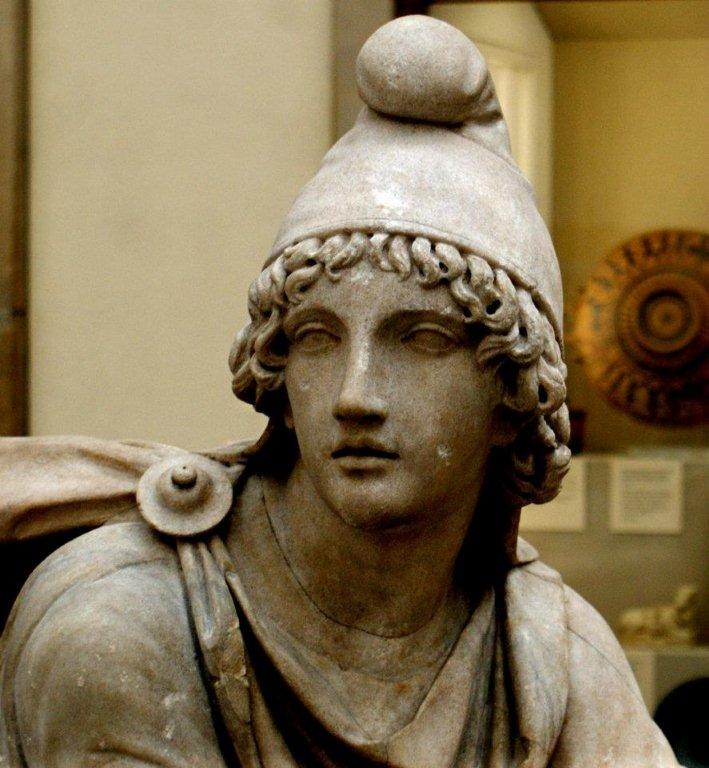
Writer & Filmmaker in love with the Ancient World. Writing a novel about the early days of Mithraism

Roman Archaeologist from Greece (BA, MA), particularly interested in funerary sculpture and mystery cults of the roman world.
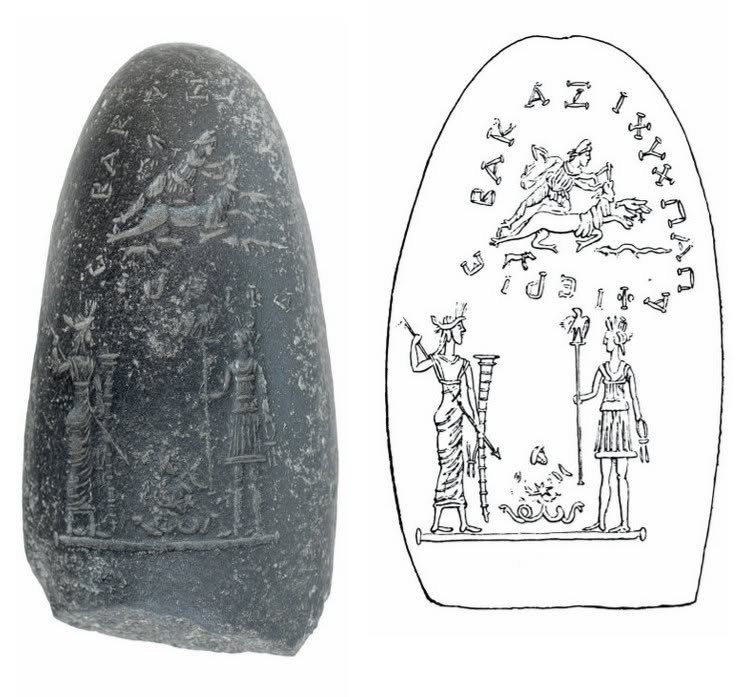
Black polished cone-shaped prehistoric axe from Argolis, now in the Athens National Museum, interpreted by some scholars as having Mithraic votive associations.

Two embroidered pieces from an Egyptian grave, dated to the early centuries AD, now in the Benaki Museum in Athens, depicting a Mithraic procession with figures on horseback and attendants.
Small altar found in the foundations of a school building in the Piraeus, near Athens, dedicated to Helios Mithras.
Greek inscription from Athens, recording that Acrisius dedicated a gift to Mithras in honour of Chrysippos.
Marble bust from the south-east slope of the Acropolis at Athens, from the Attic mountain Pentelikon, depicting a man with an uncovered breast and mantle; probably Mithras, though the head is lost.
Marble altar from Thessalonike, Macedonia, with a dedication on the front and a pedum on the left side and a caduceus on the right — attributes associated with Mithraic cult furniture.
Marble head from the south-west walls of Thasos, Macedonia, found in 1920, with long curly hair, Phrygian cap, and a pathetic expression; possibly Mithras or Attis.
