Your selection gave 353 results.
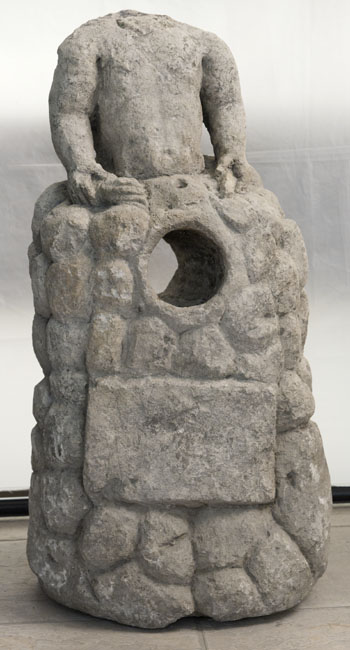
This sculpture from Dobrosloveni, Romania, depicts the petrogenesis of Mithras, with a hole through the generative rock from which water flowed.

Colonia Ulpia Traiana Augusta Dacica Sarmizegetusa was the capital and the largest city of Roman Dacia, later named Ulpia Traiana Sarmizegetusa after the former Dacian capital, located some 40 km away. The city was destroyed by the Goths.
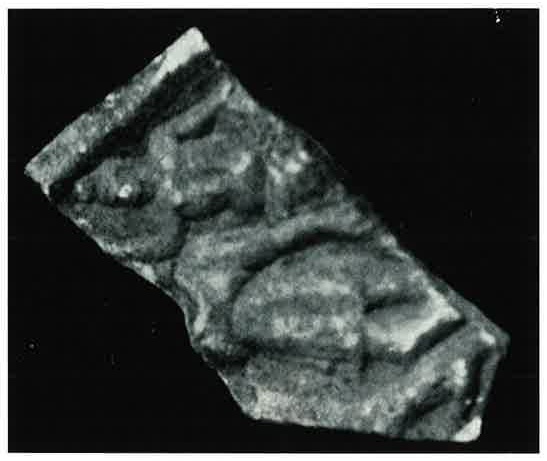
Tauroctony relief fragment with torchbearer and scene of Mithras’ rockbirth from Romula, Romania.
Romula or Malva was an ancient city in Roman Dacia, later the village of Reşca, Dobrosloveni Commune, Olt County, Romania.
Sighișoara is a municipality on the Târnava Mare River in Mureș County, central Romania.
Under Roman rule from the 1st century CE, Histria was incorporated into the province of Moesia. The city is noted on the Tabula Peutingeriana, which places it 11 miles from Tomis and 9 miles from Ad Stoma.
Potaissa was a castra in the Roman province of Dacia, located in today's Turda, Romania.
Tibiscum was a Dacian town mentioned by Ptolemy, later a Roman castra and municipium.
Apulum, now within Alba Iulia, was a Roman settlement first mentioned by the mathematician, astrologer and geographer Ptolemy. Its name comes from the Dacian Apoulon.

This relief of Mithras slaying the bull incorporates the scene of the god carrying the bull and its birth from a rock.
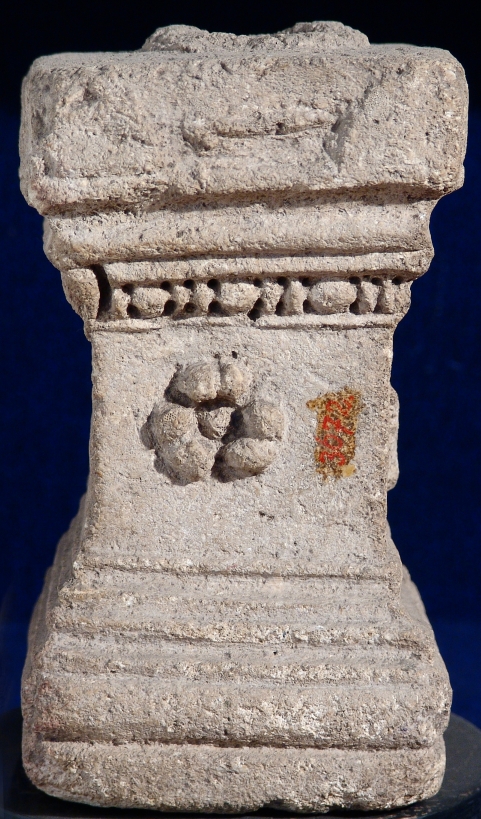
This limestone altar from Roman Dacia preserves a dedication to Mithras by a commander of the Ala II Pannoniorum.
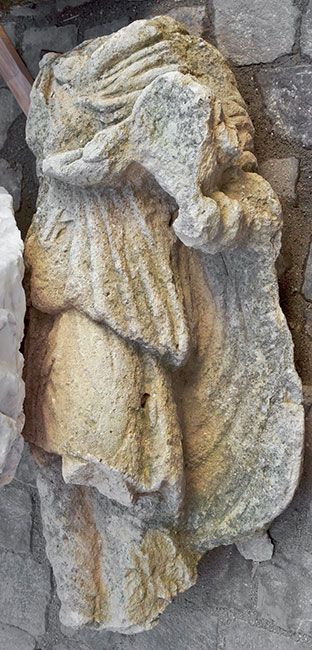
This weathered limestone statue from the Mithraeum of Apulum depicts a standing figure in Oriental attire holding the head of a bull or ram.

The remains of this Mithraeum were discovered in 1930 in the Cetatea district of Alba Iulia, ancient Apulum.
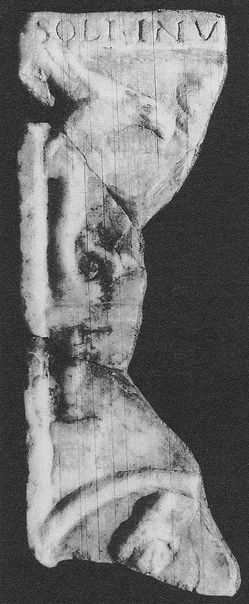
This marble fragment from Apulum preserves the head of Mithras beneath an arch together with a raven and the remains of Sol’s radiate crown.
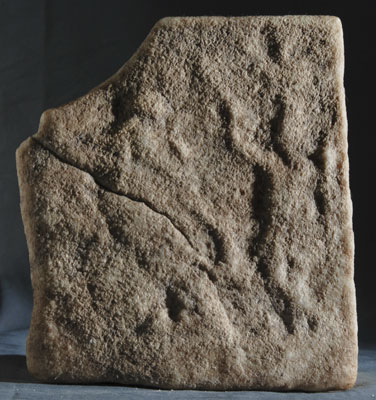
This small weathered marble fragment preserves part of a tauroctony with Cautes, Luna, the serpent, and a leaping dog.
