Filtering by Region: Gallia in monuments gave 140 results.
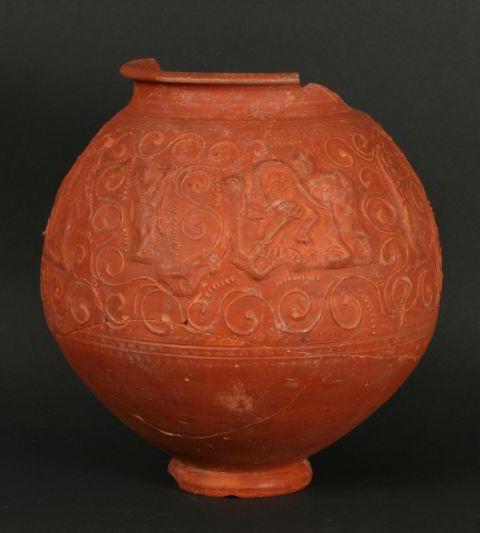
This terracotta vase features prolific decoration, including Mithras Tauroctonos, Fortuna, Cautes, a dog and Pan playing a syrinx.
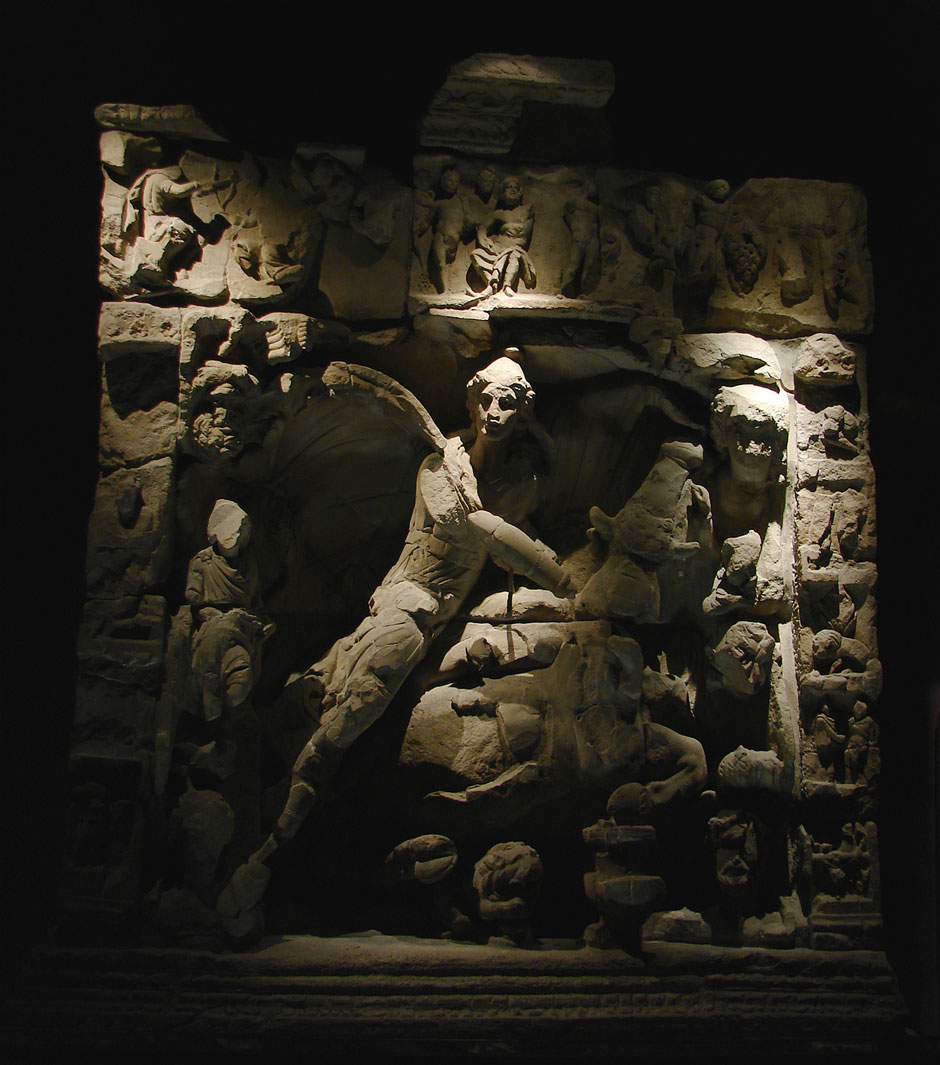
The Tauroctony of Saarbourg (Sarrebourg, ancient Pons Sarravi), France, contains most of Mithras deeds known in a single relief.

Lost altar dedicated by Lucius Apronius Chrysomallus on the occasion of his initiation into the Mithraic grade of Perses, the only known inscription explicitly recording admission to this grade.
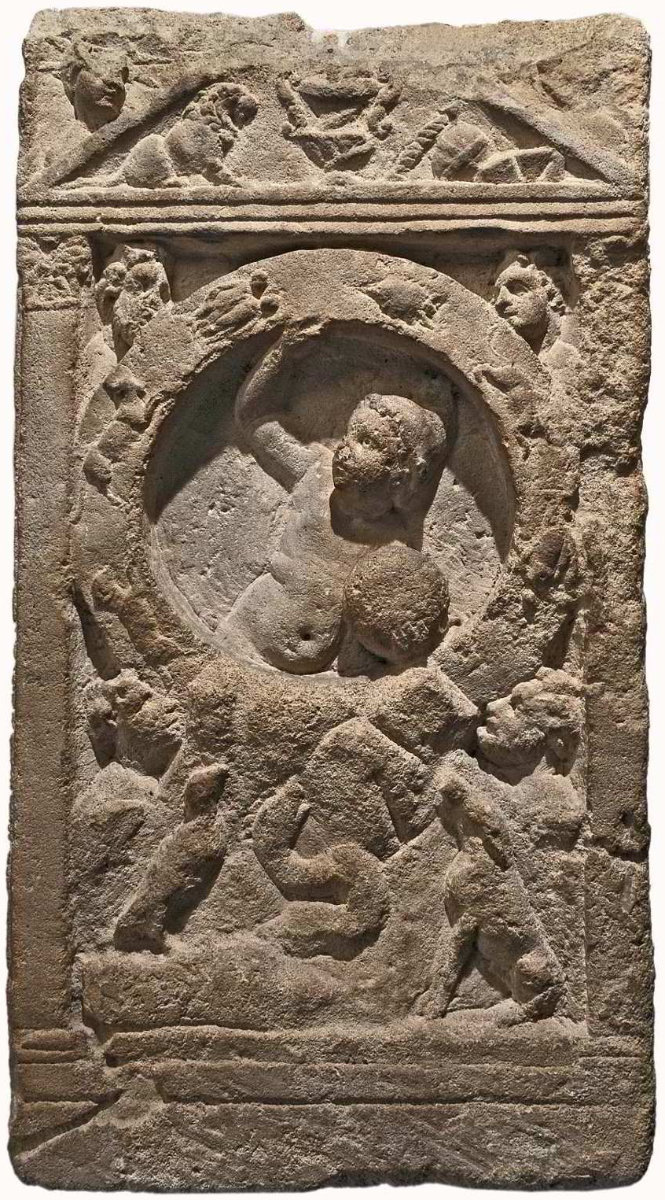
Temple-front relief from Trier showing Mithras’ rock birth within the zodiac, surrounded by the four Winds and associated divine and animal figures.

Discovered beneath the church of Vieu-en-Valromey in 1869, this Mithraeum formed part of the monumental religious centre of ancient Venetonimagus.

A funerary cippus, dated to the 2nd–3rd century, commemorating Publius Anthius Logus, pater sacrorum, and erected by Cornelia, daughter of Lucius, found at Sextantio near modern Montpellier in Narbonensis.
A head in a Phrygian cap, possibly belonging to a torchbearer statue, formerly kept at St. Wendel in Belgica but possibly transported to the Provinzialmuseum in Trier, where it may be identical with CIMRM 993.
Two small stone altars from Apt (ancient Apta Iulia) in Narbonensis, one bearing a carved upraised torch representing Cautes and the other a downturned torch representing Cautopates.
A silver votive leaf from Deneuvre in Belgica, bearing a dedication to the unconquered god by a devotee named Germanus, with an archaic spelling of invicto.
Two stone relief fragments from Interanum (modern Entrains-sur-Nohain) in Lugdunensis: one showing the dressed bust of Luna with a whip and crescent, and another showing the head of Sol with a crown of seven rays and a raven on the cave border.
A scholarly note recording that the concentration of Mithraic finds at Interanum (modern Entrains-sur-Nohain) in Lugdunensis indicates the existence of one or more Mithraea there, with stone heads in the Delimoges collection possibly being Mithraic representations…
A fragment of a limestone relief from Interanum (modern Entrains-sur-Nohain) in Lugdunensis, with the bull best preserved showing a belt round its body, together with traces of polychromy and remnants of the dog and serpent.
A fragment of a stone relief from Interanum (modern Entrains-sur-Nohain) in Lugdunensis, showing the arched end of Mithras's flying cloak and an ear emerging from the bull's tail, possibly belonging to CIMRM 946.
A fragment of a stone relief from Interanum (modern Entrains-sur-Nohain) in Lugdunensis, preserving only the head of Mithras in his Phrygian cap and vague remnants of the flying cloak.
A fragment of a white stone relief from Interanum (modern Entrains-sur-Nohain) in Lugdunensis, preserving only Mithras's right foot pressing on the bull's hindleg, a visible scorpion, and the shod foot of a torchbearer.
A fragment of a pebble relief showing Mithras as bullkiller, with the collar-wearing dog holding its head near the wound, found in the bed of a stream at Interanum (modern Entrains-sur-Nohain) in Lugdunensis.
An inscription on the base CIMRM 940 from Interanum (modern Entrains-sur-Nohain) in Lugdunensis, recording a dedication to Augustus and to the unconquered god Mithras Sol, made by a dedicant named Castor.
A small stone base with a rectangular decorated box on its right side, found in the bed of the river Nohain during railway construction at Interanum (modern Entrains-sur-Nohain) in Lugdunensis, bearing on its top the feet of a statue and the inscription of CIMRM 941…
A suggestion by H. Corot that a Mithraeum may have existed near the sources of the Seine (ancient Sequana) in Lugdunensis, a hypothesis awaiting archaeological confirmation.
A funerary inscription from Besançon (ancient Vesontio) in Belgica, bearing the title mater sacrorum, but correctly excluded from the Mithraic corpus, as women were barred from Mithras sanctuaries.
