Your search Al-Bahnasa gave 3013 results.

A fragmentary inscription on the right side of a marble slab from Tortona (ancient Dertona) in Liguria, partially legible as a dedication to Deus Sol Mithras Invictus.
A small pottery fragment of uncertain find-spot, probably from Augusta Treverorum (modern Trier) in Belgica, showing a lion walking to the right before a bull's head, with palm-like foliage, tentatively interpreted as Mithraic by Loeschcke but considered too doubtful by Vermaseren…
Three fragments of a pottery plate bearing a relief of Mithras as bullkiller, with Cautes holding an upraised torch and sickle-shaped object and the bust of Luna above, found in the pottery workshops along the Ziegelstrasse at Augusta Treverorum (modern Trier) in Belgica…
A small limestone head of Cautopates, facing right, with a damaged nose and a stone pin on the reverse indicating it belonged to a relief, found on the slope of a hill near Heiligkreuz at Augusta Treverorum (modern Trier) in Belgica.
A small terracotta lamp from the Mithraeum at Pons Saravi (modern Saarburg) in Belgica, bearing a beardless head on its upper surface and the inscription SOLI on its underside, found among numerous lamp fragments.
A stone hand of more than natural size from the Mithraeum at Pons Saravi (modern Saarburg) in Belgica, with the thumb touching the index finger and a rectangular projection in the palm on which an object was probably fastened.
A bronze fountain mouth and a square spout, together with other fragments of round spouts, from the Mithraic sanctuary at Angleur near Liège in Belgica.
Two fragments of a bronze statuette of a lioness, with the head preserved but the mouth lost, from the Mithraic sanctuary at Angleur near Liège in Belgica.
A bronze statuette of a lion with an open mouth, in which a hole connects to another hole in the stomach, suggesting use as a fountain or conduit, from the Mithraic sanctuary at Angleur near Liège in Belgica.
A bronze statuette of a standing naked youth wearing a necklace and with outstretched hands, the thumb of the right hand touching the index finger, with a hole in the back for fastening, possibly representing Apollo, from the Mithraic sanctuary at Angleur near Liège in Belgica…
Two bronze statuettes of youthful women in flying cloaks with outstretched hands holding an object, possibly representing the Seasons, from the Mithraic sanctuary at Angleur near Liège in Belgica.
A group of bronze objects found in 1883 in a pit dug into the clay at Angleur near Liège in Belgica, proved by Cumont to have belonged to the decoration of a Mithras sanctuary, now in the Museum at Liège.
A large red and white granite marble disc surrounded by rays, possibly representing the sun, found at the building south-west of the Mithraeum at Les Bolards (ancient Venetonimagus) in Lugdunensis.
Fragments of a slab bearing an inscription mentioning Sol Aeternus and cohors II, found at the Mithraeum of Les Bolards (ancient Venetonimagus) in Lugdunensis.
Fragmentary remains of a statuette of Cautopates in a short tunic, including a thigh, knee, and hand holding the end of a torch, found near the entrance of the Mithraeum at Les Bolards (ancient Venetonimagus) in Lugdunensis.
A vase or plate bearing a representation of Mithras, reported to be in the Archaeological Seminary of the University of Vienne (ancient Colonia Iulia Vienna Allobrogum) in Narbonensis, but unpublished at the time of Vermaseren's catalogue.
A military inscription from Aquileia, dedicated to the Invincible Mithras by Flavius Exuperatus and several soldiers from the Third Italic and Thirteenth Gemina legions, acting as lustration agents for their commanders Flavius Sabinus and Aurelius Zeno, dated to around 244 A.D…
A small relief fragment from Aquileia, now in the Lapidary Museum at Trieste, preserving part of Mithras' flying cloak and the head of one of the torchbearers.
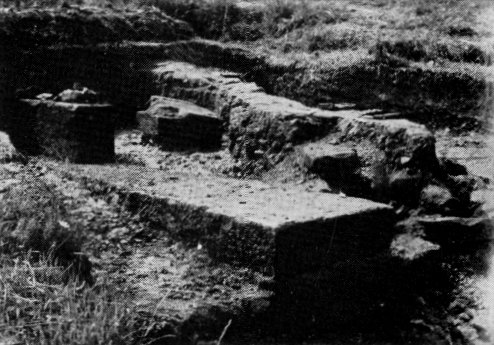
The Mackwiller Mithraeum was built in the middle of the 2nd century, during the reign of Antoninus the Pious, on the site of a spring already worshipped by the natives.
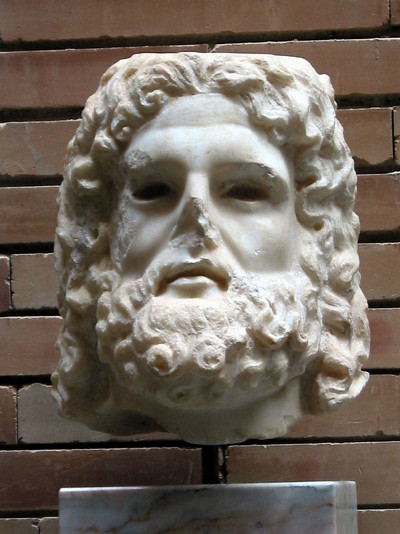
This head of Serapis from Cerro de San Albín may be unrelated to Mithras worship.
