Your search Al. N. Oikonomides gave 2979 results.

Two sandstone fragments from Mithraeum III at Carnuntum, Pannonia Superior, comprising a base with one leg and a downward torch, and a Phrygian-capped head of Cautopates; probably stood at the beginning of the benches alongside the Cautes statue.
Inscription from Mithraeum III at Carnuntum, Pannonia Superior, recording that Titus Flavius Viator built or founded something for Deo invicto; the verb condi fecit is interpreted as referring to the construction of the sanctuary.
Minor finds from Mithraeum I at Carnuntum, Pannonia Superior, comprising legionary brick stamps, burnt coal and wood, ash with ox, sheep, and goat bones, and fragments of serpent-vases; the coin evidence points to a terminus ante quem in the early third century…
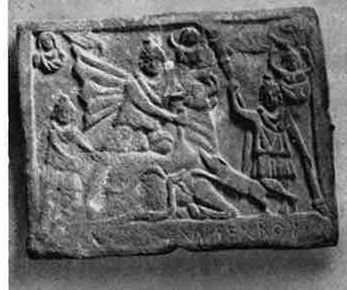
White marble tauroctony relief from Stix-Neusiedl, Pannonia Superior, depicting Mithras killing the bull with the raven perched on the rim of the god's flying cloak — an unusual detail placing the raven on the cloak rather than on the grotto border…
Fourth Mithraic sanctuary discovered at Ptuj, ancient Poetovio, at Zgornji Breg in 1937; the sanctuary (c.14 × 7 m) is oriented west–east with the standard corridor and bench division, an altar before the cult niche, and a water-basin in the pronaos.
Marble stele from Mithraeum III at Ptuj, ancient Poetovio, tapering towards the top and bearing a square hollow with five nail-holes designed to hold a small silver plaque — the plaque was removed, perhaps taken by the Mithraists themselves.
Very small marble head in Phrygian cap from Mithraeum II at Ptuj, ancient Poetovio.
Small circular marble basin from Mithraeum II at Ptuj, ancient Poetovio, probably used for libations or purification within the sanctuary.
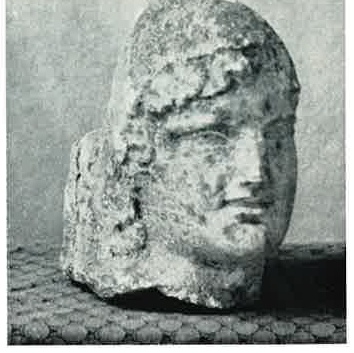
Small marble head from Mithraeum II at Ptuj, ancient Poetovio, depicting a smiling Mithras in Phrygian cap with a profiled reverse — one of the most expressive Mithraic heads from the Danubian provinces.
Small marble relief fragment from Mithraeum II at Ptuj, ancient Poetovio, preserving the central scene of the Nutrices — nursing goddesses — a rare motif in a Mithraic context.
Fragment of a marble relief from Mithraeum II at Ptuj, ancient Poetovio, preserving a woman's head adorned with a wreath; probably a secondary deity from the sanctuary's sculptural programme.
Upper portion of a marble plate from Mithraeum II at Ptuj, ancient Poetovio, decorated with a central stem flanked by leaf motifs and a small twig — a purely decorative element from the sanctuary.
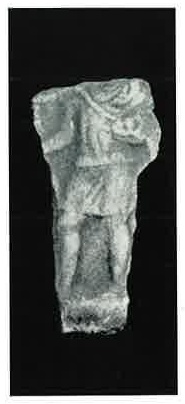
Marble relief fragment from Mithraeum II at Ptuj, ancient Poetovio, depicting a person in Oriental dress with outstretched right arm holding a small fruit basket in his left hand — probably a fragment of the sacred repast scene.
Marble torso from Mithraeum II at Ptuj, ancient Poetovio, probably representing a winged, reclining bull with two vertical attachment ligaments on the reverse.
Marble statuette fragments from Mithraeum II at Ptuj, ancient Poetovio, preserving the torsos and partial bodies of Sol's horses together with a two-wheeled car — a rare three-dimensional representation of this scene.
Inscription from Mithraeum II at Ptuj, ancient Poetovio, dedicated to Deo Soli invicto Mithrae by Ulpius, a veteran, for himself and his family.
Inscription from Mithraeum II at Ptuj, ancient Poetovio, dedicated to Deo Soli Mithrae by Ulpius Lupus for his own welfare.
Fragmentary inscription from Mithraeum II at Ptuj, ancient Poetovio, recording a dedication to Deo invicto Mithrae by Titus Flavius Restutus, IIIIvir Augustalis of the Colonia Poetovionis.
Marble lion from Mithraeum II at Ptuj, ancient Poetovio, holding a swine's head under its left fore-leg — a sacrificial animal pairing associated with the Mithraic lion grade.
Large marble water-basin on a column from Mithraeum II at Ptuj, ancient Poetovio, decorated with a central rosette; it probably stood near the entrance of the sanctuary.
