Your search Al. N. Oikonomides gave 2979 results.

Tall sandstone column base from Mithraeum I at Heddernheim, ancient Nida, with an inscription set between two columns, possibly naming Mithras
Pair of sandstone bases with small columns on the front, carved with a staircase on the reverse, from Mithraeum I at Heddernheim, ancient Nida
Small votive altar or base from Mithraeum I at Heddernheim, ancient Nida, with fragmentary inscription preserving the initials A.C.
Basalt relief from Mithraeum I at Heddernheim, ancient Nida, featuring a depiction of the goddess Epona, found in a Mithraic context
Votive inscription from Heddernheim, ancient Nida, dedicated to Fortuna by Tacitus, an eques of the Ala I Flavia Milliaria
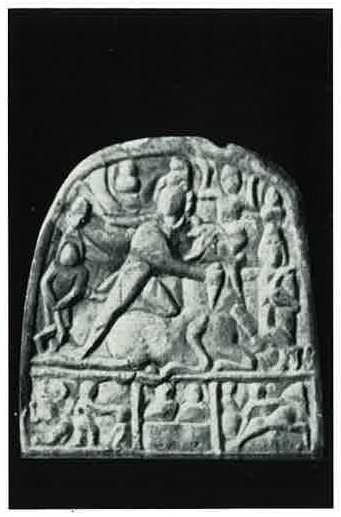
Small tauroctony relief in white marble, preserved in five fragments, from Mithraeum I at Heddernheim, ancient Nida
Miscellaneous cult objects from Ober-Florstadt including pottery, lamps, legionary stamps, coins, animal bones, and a bone flute fragment
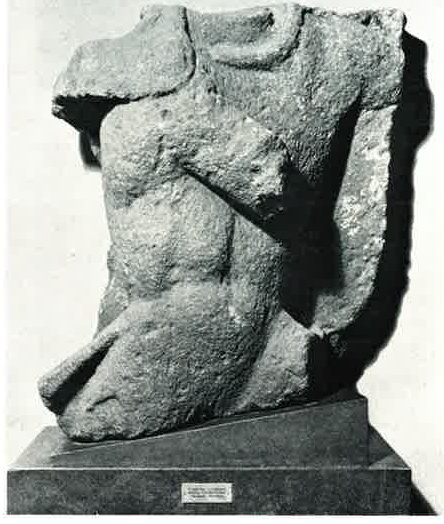
Marble relief fragment showing Mithras slaying the bull, originally belonging to a lost second Mithraeum at Friedberg.
Ritual coin deposits beneath sanctuary bases helping date the Mithraeum to the late second century A.D.
Inscribed altar from the Friedberg Mithraeum erected by the beneficiarius consularis Caius Paulinius Iustus.
Ritual terracotta offering plate decorated with a serpent and traces of white paint from the Friedberg Mithraeum.
Large quartzite tauroctony relief with torchbearers, zodiacal imagery and traces of ancient red paint from the Friedberg Mithraeum.
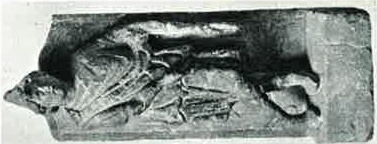
Limestone relief of the torchbearer Cautopates standing cross-legged in Oriental dress.
Subterranean Mithraic sanctuary near Dormagen with painted walls and a cult relief at the rear.
Complex military inscription invoking Apollo, Sol and Luna under Severus Alexander.
Mithraic altar inscription set up by the centurion Marcus Iulius Martius in 189 CE.
Group of altars and a base indicating the existence of a Mithraeum near the Roman camp of Vetera.
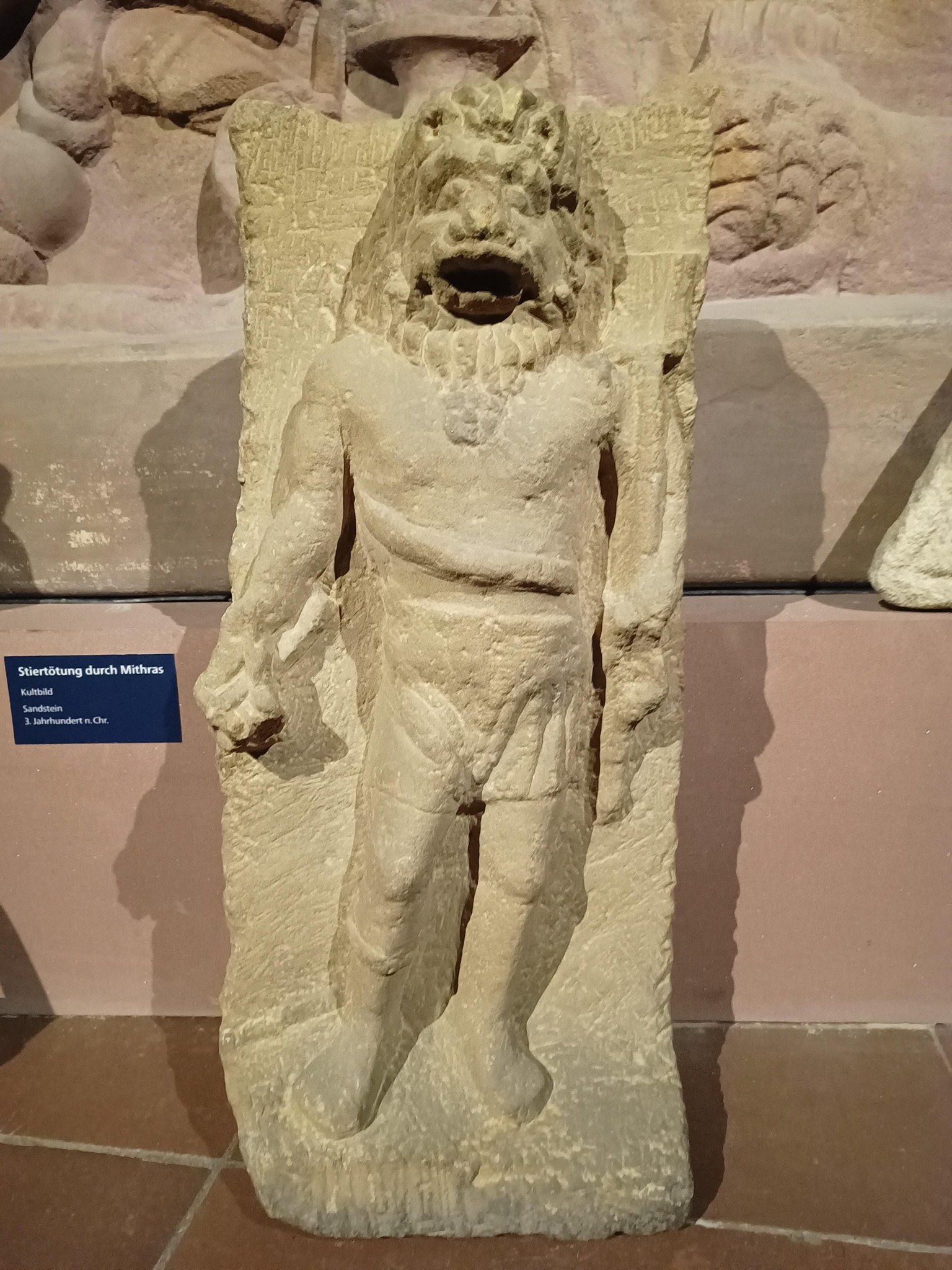
This lion-headed figure from Nida, present-day Frankfurt-Heddernheim, holds a key and a shovel in his hands.

Colonia Ulpia Traiana Augusta Dacica Sarmizegetusa was the capital and the largest city of Roman Dacia, later named Ulpia Traiana Sarmizegetusa after the former Dacian capital, located some 40 km away. The city was destroyed by the Goths.
Commagenean sanctuary preserving relief fragments of Mithras greeting royal figures at the hierothesion of Mithridates Kallinikos.
