Your search Arsha wa Qibar - Qaybar - Qeibar - Qibare, al-Hawa gave 3160 results.
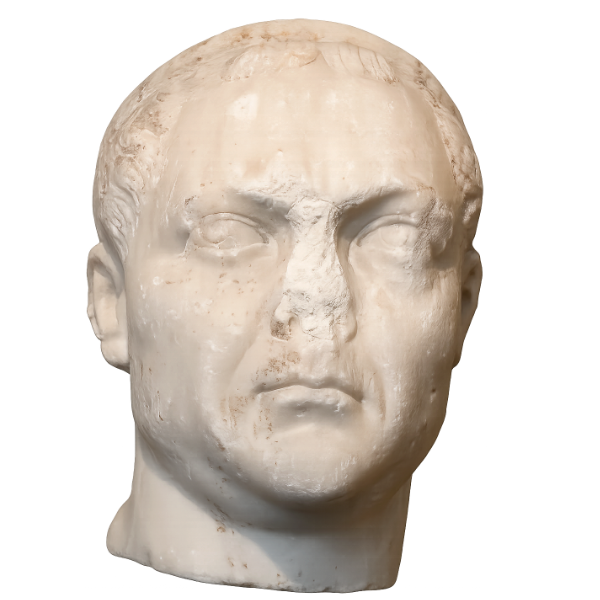
Roman emperor from 253 to 260, he was taken captive by Shapur I of Persia. He was thus the first emperor to be captured as a prisoner of war.


This sandstone altar from the Mithraeum of Vindobala (modern Rudchester) preserves a dedication to the Invincible Mithras by P. Aelius Titullus, prefect of a cohort.
A decorated altar from the Mithraeum at Vindobala (modern Rudchester), with the letters DEO crowned with vittae on the shaft, surrounded by palm-branches, a representation of Mithras' rock-birth on the capital, and on the front of the die a naked figure grasping a bull's horns…
A small limestone votive altar from Pola (modern Pula) bearing on its front face a damaged relief head of a youthful Sol with long curly hair, above which is carved the inscription Soli and below the dedicatory text by Atticus (No. 757).
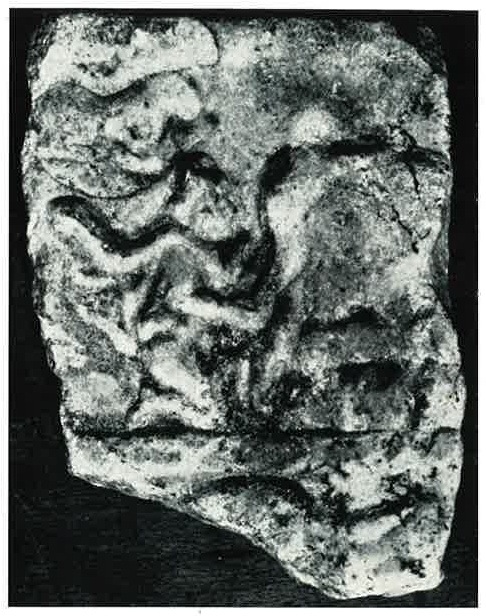
Marble tauroctony relief fragment from Dacia, preserved in Bucharest, with only Mithras's head and part of his flying cloak visible; above this a water-miracle scene and above that the bull in a small boat.

Camuni refers to the ancient people and territory of Val Camonica in northern Italy.
Luguvallium was a Roman settlement and fort in northern Britannia, today Carlisle.
The vicus Altiajensium formed part of the civilian settlement network associated with the Rhine frontier.
Allmendingen near Thun occupies a strategic position between the Swiss plateau and Alpine communications routes.
The identification of Tavalicavo remains uncertain, though it appears connected with the Balkan interior.
Schwarzerden lies within the upland frontier hinterland of southwestern Germania.
The designation Prope Apulum refers to discoveries made in the vicinity of Apulum within the wider archaeological landscape of central Dacia.
The locality known as Kral-Marko belongs to the mountainous interior of the central Balkans.
Flavia Solva became one of the principal urban centres of southern Noricum.
The hill fort of Epiacum, known today as Whitley Castle, occupied a strategic upland position south of Hadrian’s Wall.
The site of Alteburg-Heftrich formed part of the frontier landscape connected with the Upper Germanic limes.
A head in a Phrygian cap, possibly belonging to a torchbearer statue, formerly kept at St. Wendel in Belgica but possibly transported to the Provinzialmuseum in Trier, where it may be identical with CIMRM 993.
Two small stone altars from Apt (ancient Apta Iulia) in Narbonensis, one bearing a carved upraised torch representing Cautes and the other a downturned torch representing Cautopates.
An altar from Lucey in Narbonensis, dedicated to the unconquered god under the epithet Nabarze, possibly a variant of Mithras, set up by a dedicant named Severianus.
